Plan Wedding Photos for Any Weather Condition
Weather is the one thing you can't control on your wedding day. But you can absolutely control how you plan for it. A couple with a contingency plan walks into a rainy wedding calm. A couple without one walks into a cloudy wedding panicked.
Here's the eight-step approach we use to make any weather work on camera.
Quick answer
Plan weather contingencies by scouting an indoor Plan B in advance, investing in clear umbrellas and weatherproof makeup, scheduling portraits around golden hour, and hiring a photographer who's equipped for any condition. Overcast is ideal for portraits; rain can produce dramatic frames; heat requires the most careful scheduling. The goal is adaptation, not avoidance.
Step 1. Talk to your photographer early about backup plans
Three questions every couple should ask:
- How do you handle rain, wind, or harsh light?
- What backup gear do you bring?
- Can you help scout an indoor location at our venue?
A good photographer has answers before you ask. Their weather confidence is a signal of experience. Our White Glove service includes weather contingency planning as a default.
Step 2. Welcome overcast skies
Most couples dream of sunshine. Professional photographers often dream of clouds.
Overcast diffuses light, which means:
- No harsh shadows across faces
- Skin tones read softer and more even
- Colors hold depth without blowing out
- Portraits don't require squinting
Cloudy wedding photos often read as the most cinematic frames in the gallery. Stop hoping for hard sun. Start hoping for good diffusion.
Step 3. Plan for rain with clear umbrellas and weatherproof makeup
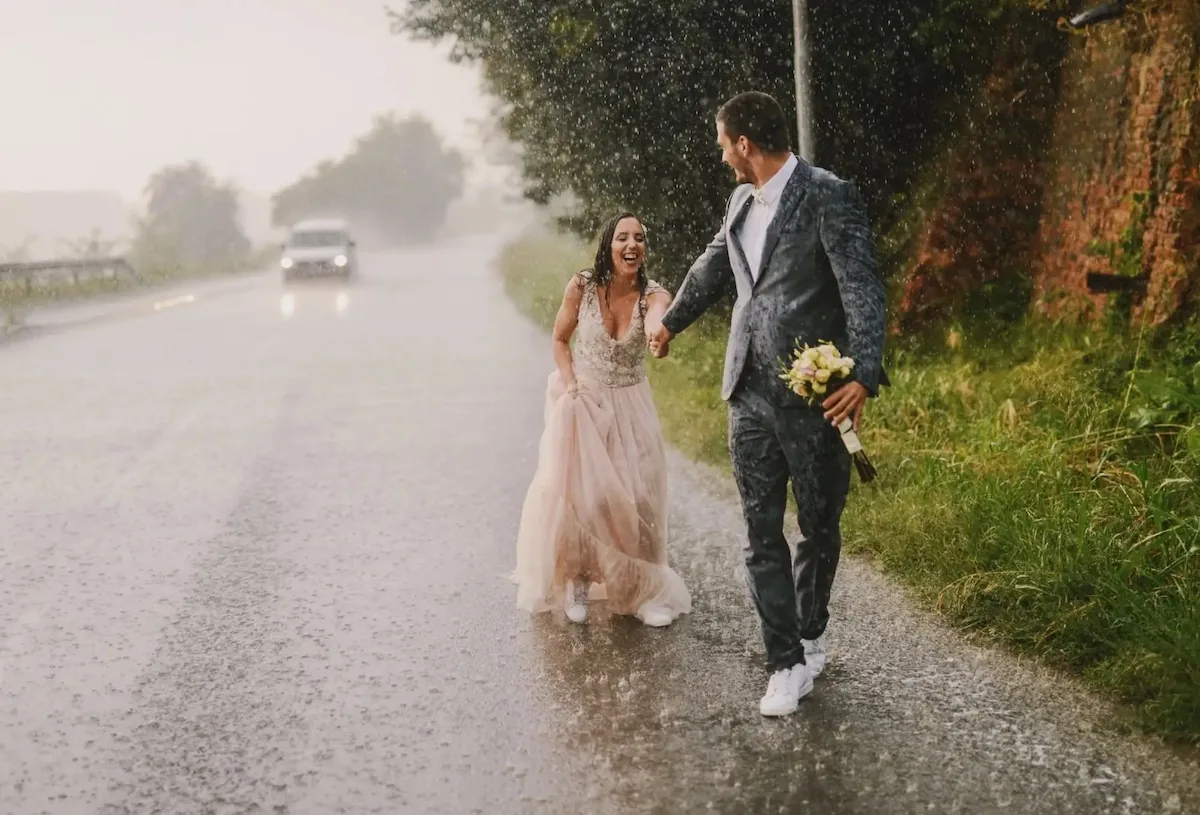
Rain doesn't ruin wedding photos — unprepared couples do. With the right prep, rainy frames become some of the most memorable in the gallery.
Bring:
- Clear or white umbrellas. Clear keeps faces lit. White adds soft diffusion. Dark umbrellas block too much light.
- Waterproof makeup. Ask your stylist to recommend weatherproof options.
- A second outfit option. If the dress gets soaked, a backup might save the night.
- Locations with natural cover. Porches, arches, gazebos, covered walkways.
Then let go. Walk in the rain. Splash. Laugh. The photographer will follow.
Step 4. Manage wind with secured styling and sheltered spots
A little breeze is dramatic. A lot of wind is destructive. For windy weddings:
- Secure long veils with extra pins
- Consider a backup hairstyle (up or half-up)
- Choose sheltered portrait locations — behind buildings, under trees, in courtyards
- Use flowing fabric deliberately — motion blur is beautiful when intentional
- Keep hair product strong but not crunchy
Coastal and mountain venues deserve extra planning. Wind is the default there.
Step 5. Schedule hot-weather portraits around the heat
Hot weather is the hardest to photograph. Make-up melts, hair wilts, people sweat, and couples look miserable. Prevention is the whole game:
- Morning or golden hour only. Never midday portraits in summer heat.
- Frequent shade breaks. Short sessions, long rests.
- Indoor getting-ready. Air conditioning matters.
- Blotting paper and setting spray for makeup touch-ups.
- Fans and cooling towels for comfort between frames.
- Hydration. Water at every portrait location.
Plan the timeline around the heat, not in spite of it.
Step 6. Scout an indoor Plan B in advance
Every outdoor wedding needs an indoor backup. Identify it before the day — don't improvise during a downpour.
Good indoor Plan B options:
- Elegant lobbies or staircases at hotels or venues
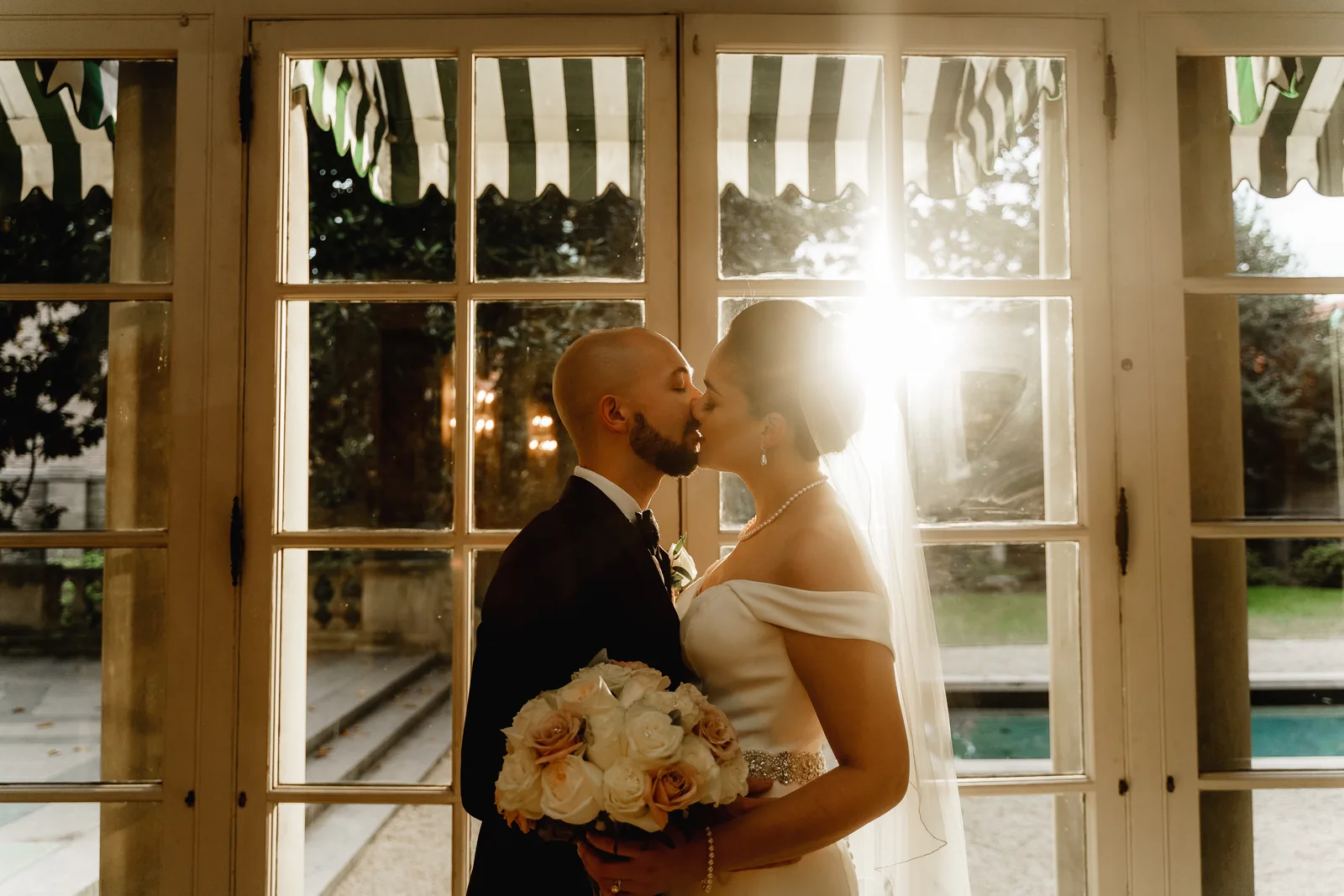
- Greenhouses or conservatories — light and atmosphere
- Museums or historic buildings near the venue
- Covered porches, pergolas, or awnings at the venue
- The couple's getting-ready suite if large enough
Ask your venue coordinator and your photographer to walk through the Plan B before the day.
Step 7. Trust the photographer's gear and experience
Professional photographers come prepared for weather:
- On-camera and off-camera flash for low light
- Low-light lenses for indoor and stormy shooting
- Natural reflectors (light-colored walls, white umbrellas)
- Weather-sealed bodies and lenses
- Backup gear — bodies, cards, batteries
You hired the pro for a reason. Trust the process when the weather turns.
Step 8. Embrace the conditions
Some of the strongest wedding galleries we've shot happened in "bad" weather. A stormy seaside ceremony. A fog-shrouded mountain first look. A thunderstorm that broke right after the vows. Rain during the exit.
The couples who embraced the conditions got photos nobody else has. The ones who fought the conditions got stressed.
Pick adaptation over apology.
What the emergency kit should include
Every well-prepared wedding has:
- Clear umbrellas (four or more)
- Weatherproof makeup and setting spray
- Blotting paper
- Extra bobby pins and hairspray
- Tissues
- Safety pins
- Bandages
- Cooling towels (hot weather)
- A change of shoes
- Towels (if there's any chance of rain)
Have one person — a coordinator, your MOH, a designated family member — responsible for the kit.
FAQ
Plan with a team that handles weather
Start a conversation and tell us your date, venue, and season. Weather contingency planning is built into every wedding we book.
Planning your wedding?
Get a personalized quote from our team