Gallery-Worthy Urban Wedding Photography: What Actually Makes It Work
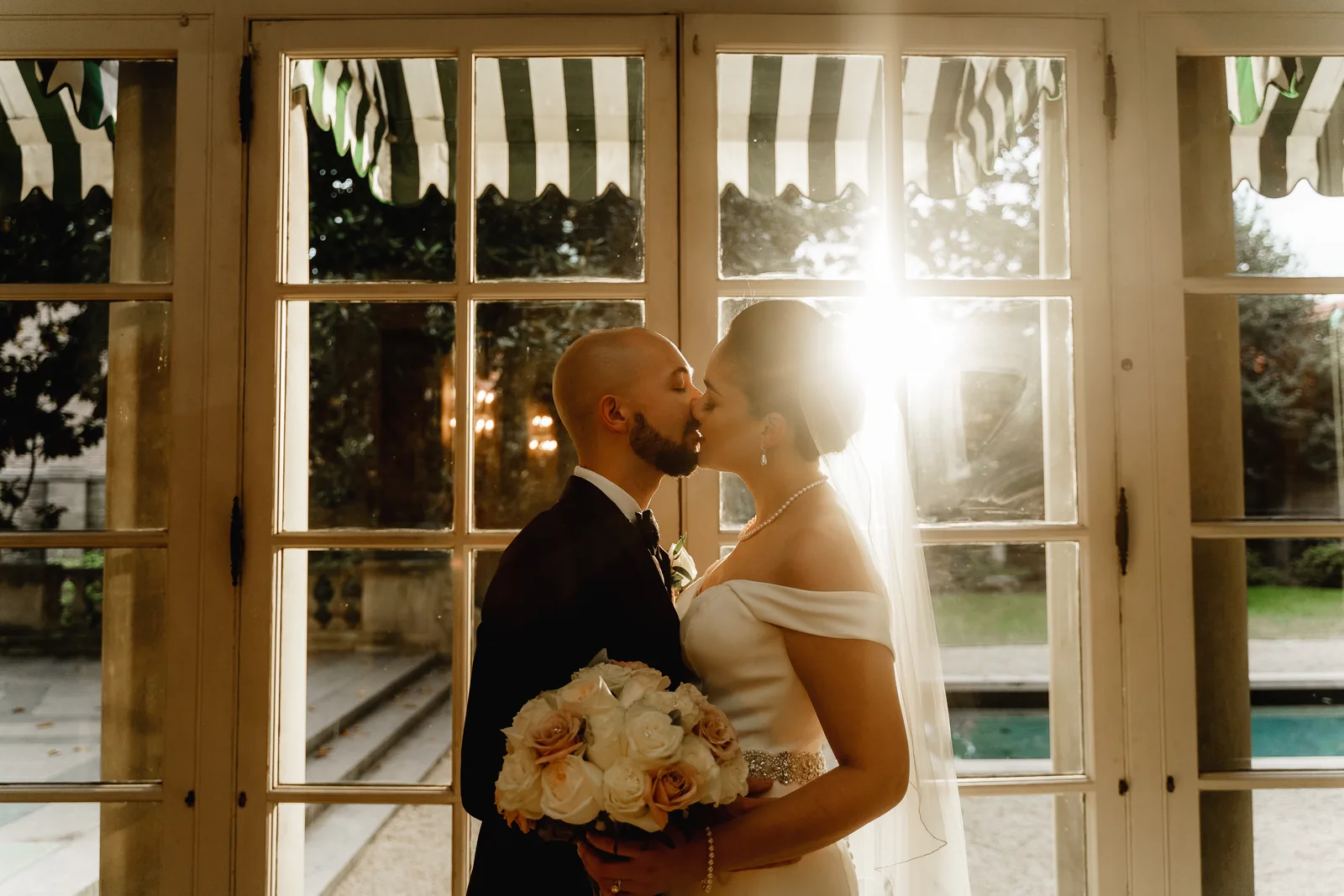
City weddings are not a compromise on scenery. The right urban backdrop, handled by a photographer who understands how to use it, produces images that no garden venue can match. Skylines. Architectural contrast. Neon at blue hour. These are tools, not obstacles. The difference between average city wedding photos and gallery-worthy ones is mostly knowing which tools to reach for and when.
What makes the city a different kind of canvas
A field gives you one thing: open sky. That's beautiful, but it's also one-dimensional. A city gives you layers. Historic stone next to glass towers. Alleyways with fire escapes. Rooftops with 30-story views. Lobby floors that reflect light like mirrors.
The best urban wedding photography doesn't treat the city as a backdrop. It treats the city as a collaborator. The architecture frames the couple. The light bouncing off buildings becomes the key light for portraits. The texture of a cobblestone street adds depth that a manicured lawn can't.
That layering is why city wedding photos tend to look editorial. The visual complexity is built in. The photographer's job is to find and organize it, not create it from scratch.
The four light conditions that define urban wedding photography
Golden hour at street level
The hour before sunset at street level in a city is unlike golden hour anywhere else. Light comes through gaps between buildings at a low angle, creating sharp, warm shafts that illuminate faces from the side. Glass buildings catch and amplify that light. Puddles reflect the sky. The warm tones in the light contrast beautifully with the cooler tones of concrete and steel.
For city weddings, plan your portrait time around this window. It's 45 minutes to an hour, it moves fast, and it cannot be recovered once it's gone.
Blue hour and city lights
The 20-30 minutes after sunset, when the sky turns a deep blue and the city's artificial lights begin to dominate, is prime time for images that look like film stills. Skylines glow. Neon signs become saturated and specific. Couples in foreground against a lit city background create an iconic compositional dynamic.
This window is shorter than golden hour and requires a photographer comfortable with mixed-light exposure. When it's executed well, blue-hour city portraits are some of the most memorable images from a wedding day.
Overcast and diffuse light
Overcast days in cities are underrated. The cloud cover acts as a giant softbox, eliminating the harsh shadow problems that midday sun creates. Colors saturate more evenly. Faces are lit cleanly without squinting. Many photographers actively prefer overcast conditions for portraits because the light is controllable and consistent.
If your wedding day is overcast, it's not a problem for city wedding photography. It's an advantage.
Challenging midday sun
Midday in a city creates uneven, harsh shadows from overhead sun filtered through gaps in buildings. This is the most technically demanding light condition. The solution is finding shade (under awnings, inside covered courtyards, in open lobbies) and using the shade line as a key light. An experienced urban wedding photographer knows to work with this rather than against it.
Venue types that produce exceptional city wedding photos
Loft spaces and industrial venues
Open ceilings, exposed brick, raw steel beams, and often rooftop access. String lights under a 20-foot ceiling at night create images that look like a design magazine spread. The visual grammar is modern without being sterile.
Portrait opportunities: rooftop at golden hour, against exposed brick for warm environmental portraits, wide-angle shots that capture the scale of the space with the couple small in frame.
Historic civic buildings and churches
Vaulted ceilings, carved stone, stained glass, and a scale that makes the couple feel simultaneously small and significant. This contrast is compositionally powerful. Light through tall windows creates soft, directional portraits that look painted.
What to watch for: ceremony orientation matters enormously in these spaces. If the couple is facing away from the primary light source, the officiant is backlit and the couple is shadowed. Discuss this with your photographer and venue coordinator before the day.
Rooftop gardens and terraces
The combination of greenery and skyline doesn't exist outside cities. Rooftop gardens offer organic texture in the foreground and the city as a living backdrop. Dawn and dusk on a rooftop, with the city below still lit, is one of the most requested portrait settings in urban wedding photography.
Logistics matter here: weather, time of day, and access. Confirm rooftop access with the venue in the contract, not verbally.
Boutique hotel lobbies and corridors
Architectural lighting inside well-designed hotel spaces is often gallery-quality on its own. Corridors with geometric tile floors, lobby bars with warm pendant lighting, curved staircases with natural light from above. These are portrait locations within walking distance of the ceremony venue.
Hotel lobbies also provide weather backup for portrait sessions. If the plan was to photograph outside and conditions change, a thoughtfully designed hotel lobby is not a compromise.
Before the wedding day: the scouting conversation
The single most effective thing you can do to improve your urban wedding photos is have a location conversation with your photographer 4 to 6 weeks before the wedding.
Walk through:
- Which portrait locations near the venue are planned and in what order
- What time the portrait session happens relative to sunset
- Which direction the ceremony space faces and how that affects light on the couple
- What the backup plan is if weather or a crowd changes access to a location
This conversation is not complicated. It takes 20 minutes. It can change the entire character of the portrait session.
See how our full-day coverage approach integrates this kind of planning, and what our portfolio shows for urban settings specifically.
Capturing the unscripted moments
Posed portraits are part of urban wedding photography. They are not the whole of it. The images that tend to travel furthest, the ones couples put on walls and send to family, are usually candid.
A couple walking hand-in-hand through an empty alley, laughing at something. The first look on a fire escape before the ceremony. The groom straightening his jacket in the lobby window reflection. These aren't staged. They happen when a photographer is present and attentive, and the couple has stopped thinking about the camera.
The best urban wedding photographers know that the city provides the stage. Their job is to stay out of the way until the right moment and then be ready for it.
For more on this philosophy, see how we think about the art of wedding photography and videography, and what distinguishes photos and films you'll treasure for decades.
If you're planning a city wedding and want to talk through the portrait plan, the locations, and how to use the environment you have, we'd love to hear from you. Our team has worked extensively across New York, DC, Chicago, and other urban markets.
Frequently asked questions
Planning your wedding?
Get a personalized quote from our team