Behind the Scenes of a Wedding Photo Shoot
When you open the gallery six months later, every frame looks effortless. That's the trick. Behind each photo is a sequence of decisions — about light, lens, timing, position, permission — most of which never made it into the couple's line of sight.
Below is what actually happens before, during, and after a wedding shoot. Not to sell the process, but because knowing it helps you hire well and plan better.
Quick answer
A wedding shoot is three phases: prep (2–4 weeks of timeline building, venue scouting, shot-list alignment), the day itself (10–12 hours of anticipating and capturing), and post (14 days of culling, editing, and gallery design). The day is the visible part, but it's the smallest phase — maybe a third of the total work per wedding.
Phase 1: The weeks before
Booking is day zero, not the wedding day. Between then and the shoot we:
- Walk through the timeline together — usually twice, once rough and once final
- Pull the venue floor plan and note ceremony orientation, window light, sunset angles
- Review the family-shot list and flag missing names before they become a crisis on the day
- Coordinate with the planner, the videographer, and any religious or cultural officiant
- Map contingencies for weather — every outdoor wedding needs a Plan B by 9am the day of
None of this shows up in the gallery. All of it shapes whether the gallery works.
Phase 2: The day itself
We arrive 15 minutes early, always. That buffer is for the lens check, the light read, and the first fifteen minutes of watching the room before the camera goes up.
Then the day unfolds:
- Morning. Details flat-lay, hair-and-makeup candids, dress or suit on, any letter exchanges. ~90 minutes.
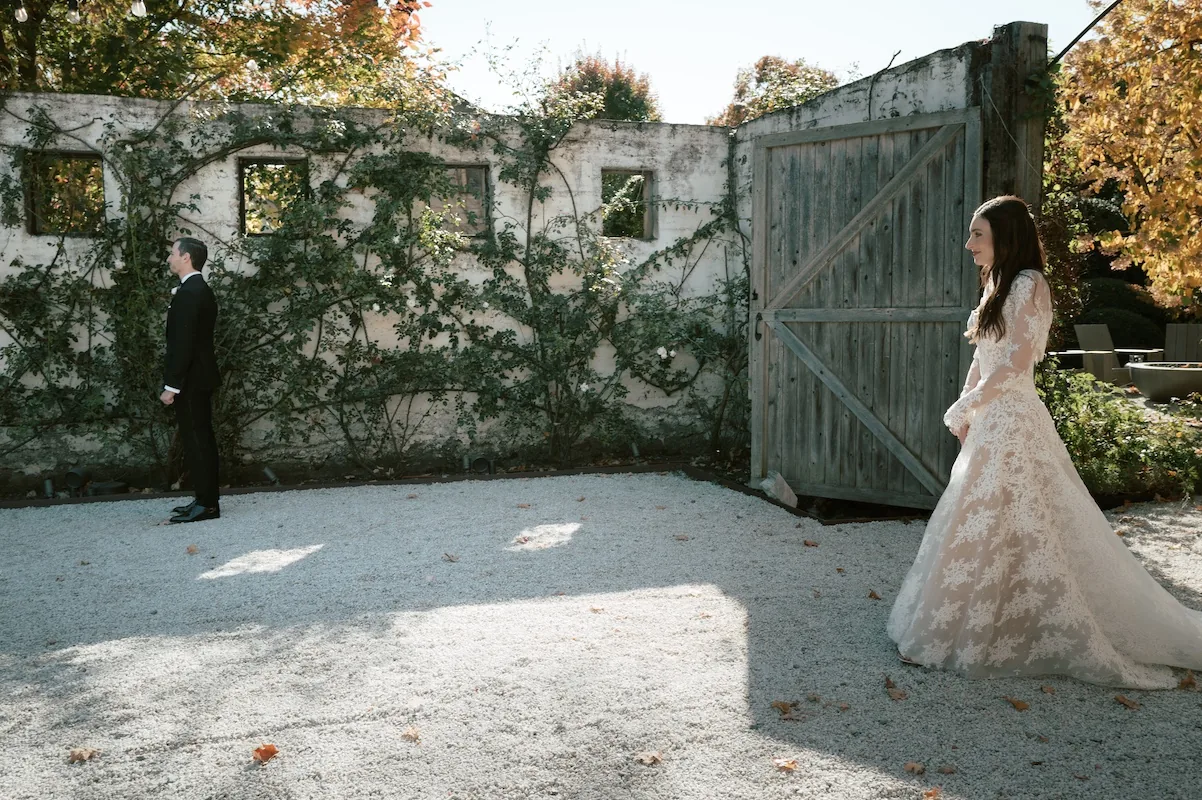
- First look (if there is one). 20–30 minutes. Usually the emotional peak of the day.
- Ceremony. Two cameras, two focal lengths. One photographer covers the couple; if there's a second shooter, they cover guest reactions and the other partner's face.
- Family portraits. 20–30 minutes right after the ceremony. This is where every delay compounds, so we run it fast and from a pre-confirmed list.
- Couple portraits. 30–60 minutes, ideally at golden hour. The part couples print most.
- Reception. Entrances, toasts, first dances, cake, open dancing. 3–4 hours of low light and fast shutter.
What we're actually doing between clicks: reading light, anticipating where the next moment will happen, staying out of the videographer's frame, communicating silently with the second shooter, and — quietly — keeping the couple calm.
Phase 3: After the party
The couple goes home. We don't.
Post-production for a full wedding day:
- Import and back up. Two drives, cloud mirror. No exceptions.
- Cull. 3,000–5,000 raw frames down to ~700. This is brutal and takes 3–4 hours for a full day.
- Color correction. Every image balanced for skin tone, white balance, exposure.
- Artistic edit. The look that makes the gallery feel consistent — our default is warm and natural.
- Skin retouching. Portraits only. Light hand. Nobody wants to look plastic.
- Gallery design. Ordered chronologically with the couple's narrative in mind.
- Delivery. Preview in 48 hours, full gallery in 14 days.
The 14-day turnaround isn't a marketing number. It's what's possible when the workflow is built for it — dual-drive ingest, consistent presets, a tight cull-to-edit pipeline. Photographers who promise 24 hours are skipping steps. Photographers who take 12 weeks are drowning.
Where it goes wrong
The failure modes we see most when couples come to us after a bad first photographer:
- No timeline walkthrough before the day. Results in rushed portrait windows.
- One camera, one body. If the camera fails mid-ceremony, there's no backup.
- No second-shooter plan. The partner's face during vows is missing because one photographer can't be in two places.
- Flat editing. Every image looks the same because the photographer shot in program mode and let software decide.
- Gallery never delivered. The saddest and most common complaint.
What to ask before you book
- How many weddings have you shot in the last year?
- What's your turnaround, and what happens if you're late?
- Do you bring backup equipment? How much?
- Can I see a full gallery, not just your highlights blog?
- What's your contingency if you get sick the week of my wedding?
The answers tell you whether you're hiring a craftsperson with a system or a hobbyist with nice gear.
A full day, start to finish
What looks effortless in the final gallery is four to six weeks of work compressed into a stack of images. Every quiet frame has a loud story behind it — the scouting, the reading of light, the hundred decisions per hour that no one sees. That's the real shoot.
If you want a team that treats the whole process like that, start a conversation here.
Frequently asked questions
Planning your wedding?
Get a personalized quote from our team