The Beauty of LGBTQ Weddings: Moments to Remember
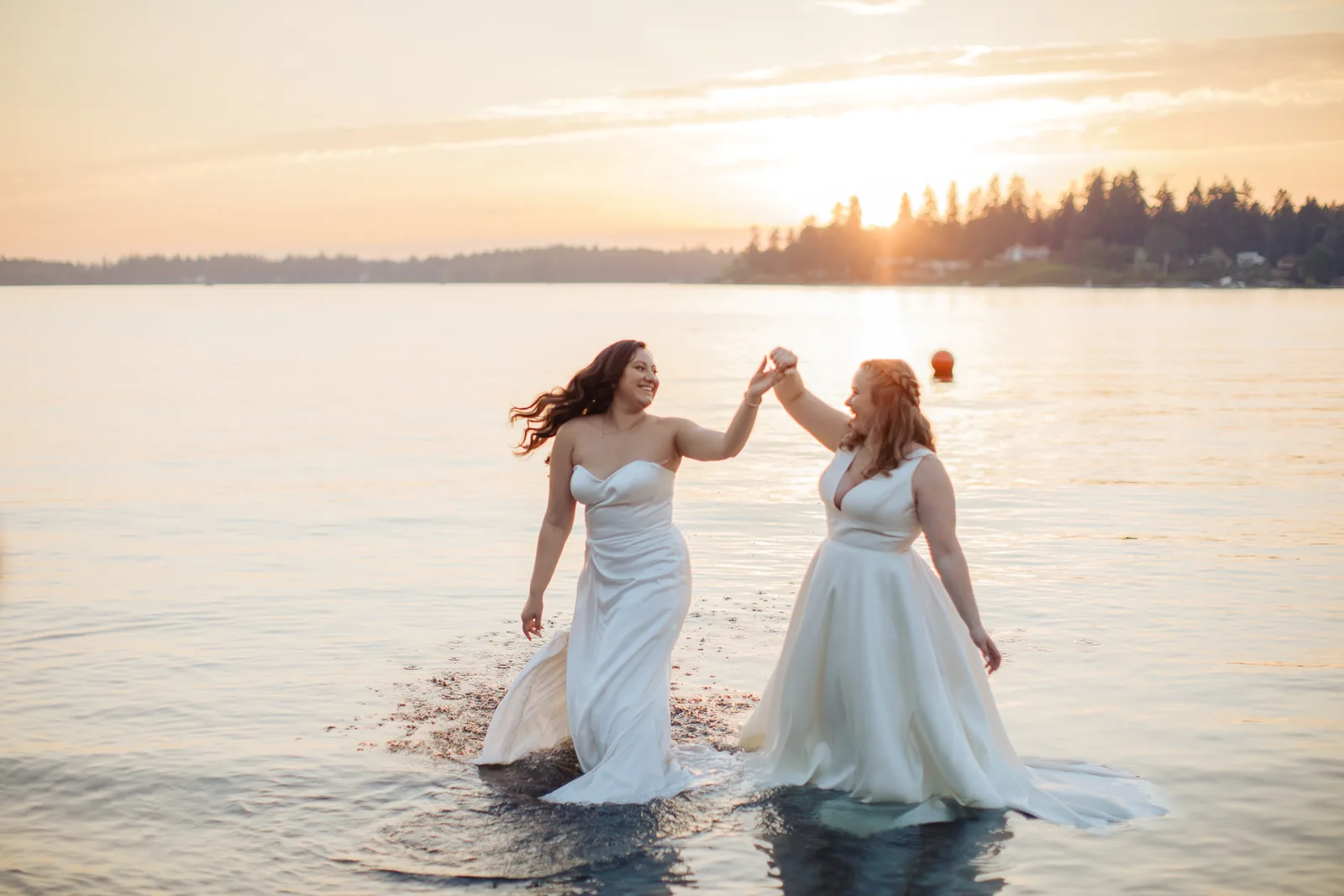
LGBTQ+ weddings are some of the most deliberate weddings we shoot. Because so few defaults apply — no assumed aisle walker, no assumed roles, no inherited rulebook — everything on the day is chosen on purpose. That shows up in the photos.
Here's what we've learned from LGBTQ+ weddings across the US, and what to think about when planning yours.
Quick answer
LGBTQ+ wedding photography isn't technically different from any other wedding photography — same lenses, same lighting principles, same approach to moments. What's different is the planning: no gendered defaults, intentional choices about who walks down the aisle (if anyone does), flexibility on first-look vs. aisle-reveal dynamics, and family-portrait lists that often include chosen family alongside biological.
Getting ready: together or apart
The first structural choice most LGBTQ+ couples make: do you get ready together or separately?
Getting ready together
Same suite. You help each other with ties, buttons, cufflinks, lipstick. There's a shared quiet moment before the day turns into spectacle. The photos from this are consistently some of the most tender of the day — two people putting each other together, preparing each other for what comes next.
Getting ready separately
Each of you in your own room, with your own chosen family, preparing alone. This preserves the emotional weight of the first sight — whether that's a first look, an aisle reveal, or something in between. Works well if you want the ceremony itself to be the moment of first reunion.
Neither is more romantic than the other. They produce different photo arcs.
The ceremony
Here's where the absence of defaults shows up most. Common structural choices:
- Who walks down the aisle? Both partners, each down a different aisle. One partner walks to the other waiting at the altar. Both enter together side-by-side. A chosen-family member walks one partner, a biological parent walks the other. None of these is wrong; whichever you pick should reflect your specific story.
- Who officiates? A friend, a family member, a clergy member from an affirming congregation, a justice of the peace. Same options as any wedding — but for LGBTQ+ couples specifically, vetting officiants for genuine affirmation (not just legal authority) matters.
- Vows. Increasingly personal, increasingly honest, and increasingly unscripted. Many of the best vows we've photographed came from LGBTQ+ couples who built them from scratch rather than inheriting a template.
Pride symbolism without making it the theme
Couples often ask how to incorporate pride symbolism without making the whole wedding a pride parade. Some of the most effective approaches we've seen:
- A single pride flag draped behind the couple at the ceremony — present, visible, not overwhelming.
- Rainbow ribbons in boutonnieres or bouquets — small, specific, meaningful.
- A colorway pulled from the pride palette — e.g., an otherwise neutral wedding with lavender, rose, and gold as the accent colors.
- Rainbow elements in the cake — a ribbon through each layer, a single tier of color, a glitter accent.
- Sign-in display or seating chart using pride flag art.
- Celebrating chosen-family roles explicitly in the ceremony program.
The goal is intentionality. Pride symbolism that feels layered into the day reads more powerful than a pride-themed wedding with rainbow everything.
Family portraits: chosen family as default
At many LGBTQ+ weddings, the family-portrait list is more complicated than at traditional weddings. Some biological family members may not be present or may be present in limited capacity. Chosen family — close friends who fill the role of brothers, sisters, mothers, fathers — need to be photographed with the same formality.
Three things that help:
- Build a full family-portrait list 2 weeks before the wedding, labeled with relationships so the photographer knows who fits where.
- Include chosen-family groupings explicitly — not as an afterthought, but sequenced into the list alongside biological family.
- Brief the photographer on any sensitivity — estranged family members who'll be present but not in photos, name preferences, pronoun preferences.
Photographers who've done this before will handle it seamlessly. Photographers who haven't will look confused. Screen for this in your consultation call.
Reception and dancing
The reception is often where the wedding finds its most authentic self. Traditional first-dance structures (couple's first dance, parent dances) get adapted or replaced:
- A single couple's dance with no parent dances following.
- Parent dances replaced by "important person" dances with chosen family.
- The whole wedding party invited to the floor halfway through the first dance.
- Group dance routines replacing individual ones.
The dance-floor energy at LGBTQ+ weddings is consistently higher than average. People came to celebrate on purpose.
What to ask your photographer
Not every photographer has shot LGBTQ+ weddings, and not every photographer who says they have, has done so with the thoughtfulness the day requires. Questions worth asking:
- How many LGBTQ+ weddings have you photographed in the last 2 years?
- How do you handle pronoun preferences in your client communication?
- Have you photographed a wedding where both partners got ready together? How did you approach it?
- How do you handle family-portrait lists that include chosen family?
- Can you show me a full gallery from an LGBTQ+ wedding (not just hero shots)?
The answers tell you a lot. A photographer who fumbles these questions probably shouldn't be shooting your day.
FAQ
If you're planning an LGBTQ+ wedding and want a photography team that will ask the right questions and honor whatever you choose — start a conversation.
Planning your wedding?
Get a personalized quote from our team