Vogue-Worthy Wedding Photos: Natural & Stunning Tips
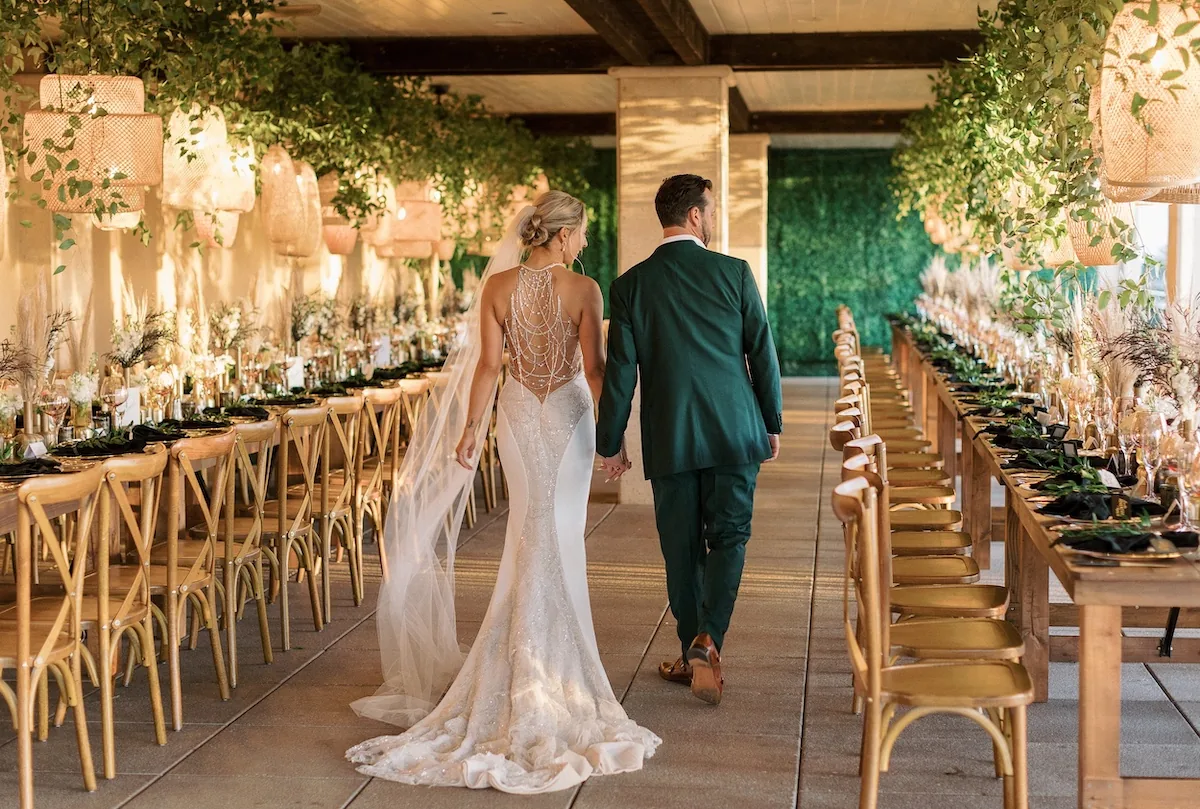
There's a kind of wedding photo that stops you mid-scroll. Confident posture. Cinematic light. Composition that feels intentional. People call it "Vogue-worthy" — editorial in tone, magazine in feel.
The good news: you don't need to be a model to get it. Editorial wedding photography is a skill your photographer has, not a performance you give. Here's how to shoot for it without feeling staged.
Quick answer
Vogue-worthy wedding photos come from strong light, confident posture, thoughtful composition, and restrained editing — executed through micro-adjustments rather than major poses. The best editorial galleries blend composed portraits with candid storytelling so the photos feel elevated but still real. Book a photographer fluent in both modes, plan a 30–45 minute editorial window around good light, and let them frame the scene.
Step 1. Choose a photographer who shoots both editorial and candid
Most wedding photographers are strong in one mode. Some shoot mostly documentary; others shoot mostly editorial. For the Vogue-worthy look, you want a team that does both — and knows when to switch.
Look at their portfolios:
- Editorial strengths: composed portraits, strong light, architectural backdrops, confident posing
- Candid strengths: ceremony reactions, reception energy, in-between moments, family emotion
A gallery that shows both is a gallery you want in your corner.
Step 2. Plan the editorial window around strong light
Editorial photos live and die on light. Plan a dedicated editorial window — 30–45 minutes — at the time of day when your venue lights best:
- Golden hour. The hour before sunset. Warm, directional, dramatic.
- Blue hour. 15–20 minutes after sunset. Cool, moody, high-contrast.
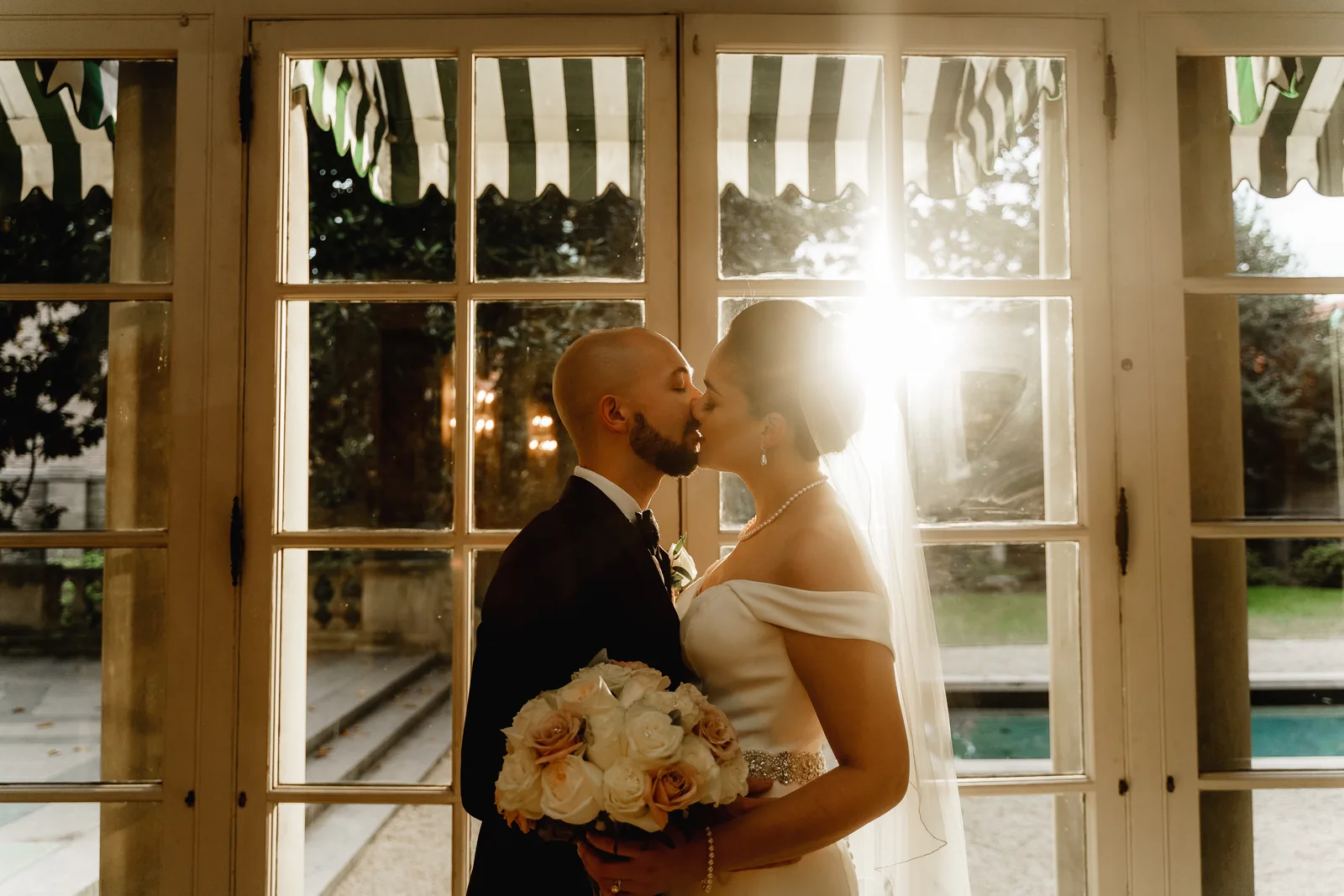
- Backlit architecture. Through windows, under archways, against textured walls.
- Open shade. Clean, even, flattering. Great for midday.
Scout the venue in advance if you can. Ask your photographer where the light breaks.
Step 3. Work with your wardrobe
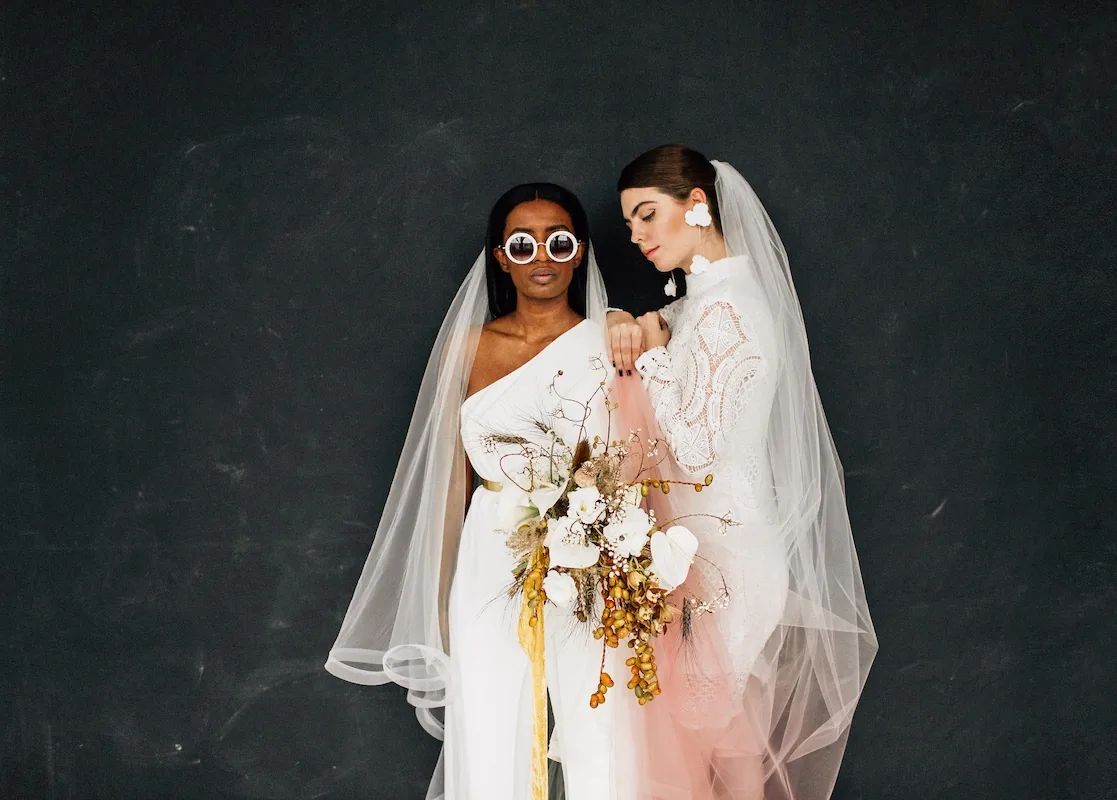
Editorial photography is as much about styling as it is about the camera. Structured silhouettes, clean tailoring, statement accessories — these photograph in a way bare jeans and t-shirts can't.
Share inspiration with your photographer early:
- Fashion references
- Moodboard images
- The dress or suit you've chosen
- Any statement pieces (veil, shoes, jewelry)
When photography and styling align, the result looks intentional. When they don't, it looks random.
Step 4. Trust micro-adjustments, not major poses
The secret to editorial portraits that don't feel stiff: small shifts, not big ones.
A good photographer will say things like:
- "Drop your chin an inch."
- "Relax your back shoulder."
- "Shift your weight to the back foot."
- "Turn your body 5 degrees toward the light."
These tiny adjustments change everything. They don't require you to pose — they require you to let the photographer shape the frame. Trust the micro-direction.
Step 5. Move between composed and candid
Editorial portraits don't have to be still. In fact, they shouldn't be.
Work in cycles:
- Compose. Settle into a frame with subtle direction.
- Break. Laugh. Walk. Reset. Adjust something.
- Compose again. New frame, new position.
The motion between composed frames keeps your faces relaxed. If the entire 30-minute window is one rigid stance, the last shots will look stiff. If you're moving in between, every frame looks alive.
Step 6. Let the photographer frame the scene
Strong composition takes time. A good editorial photographer will:
- Walk the location before shooting
- Position you for architectural lines or symmetry
- Use negative space deliberately
- Shape light with reflectors or flags
- Wait for the light to shift if it helps
Give them the time. A rushed 10-minute editorial window produces one or two strong frames. A 30–45 minute window produces a cohesive set.
What architectural and natural backdrops work
You don't need a European castle. Strong editorial photos can come from:
- Hotel lobbies. Lines, light, symmetry.
- Rooftops. Skyline backdrops, open sky, clean negative space.
- Textured walls. Stone, brick, weathered paint, concrete.
- Minimalist chapels. Clean light through arched windows.
- Coastlines and cliffs. Scale and drama.
- Deserts. Negative space, warm light, strong color.
- Gardens. Layered depth, natural framing.
Your photographer should scout for these before the day.
The balance every great wedding gallery has
The strongest wedding galleries today aren't purely editorial or purely documentary. They blend both:
- Candid storytelling throughout the day — ceremony, reception, family, guests
- Composed editorial portraits in a dedicated 30–45 minute window
- Detail shots that tie the two together — rings, florals, venue details
This combination produces galleries that feel both iconic and real. Pure editorial feels cold. Pure documentary feels unrefined. Both together is the sweet spot.
FAQ
Ready for your editorial moment?
Start a conversation and tell us what direction you're drawn to. We'll show you the work that fits and plan a day around the light that makes it possible.
Planning your wedding?
Get a personalized quote from our team