How to choose a Wedding Cake | Tips, trends and more
Wedding cake sits in a strange middle: a dessert that costs more than most dinners, carries real family meaning, and gets photographed harder than any single food item at the wedding. Choosing one well takes a mix of flavor thinking, design thinking, and budget discipline.
We photograph a few hundred wedding cakes a year. Here's the approach we see work — plus the trends worth following into 2026.
Quick answer
Choose your wedding cake by matching flavor to season, design to wedding style, and portion strategy to budget. Set a spend range first ($6–$12 per serving for standard buttercream, $10–$20+ for custom work), decide whether you want a single display cake or a display-plus-sheet-cake combo, then taste-test before committing. Heart shapes, textured buttercream, and unexpected flavors are the 2026 trends worth following.
Step 1. Set the budget before you tour bakers
Without a number, every tasting will upsell you. Typical US ranges in 2026:
- $6–$12 per serving. Standard buttercream, simple tiers, classic design.
- $10–$20 per serving. Fondant, sugar flowers, intricate piping.
- $20+ per serving. Sculpted designs, edible gold, hand-painted details.
For a 120-guest wedding, that's $720 at the low end and $2,400+ at the high end. Pick a range before you walk into the first bakery.
Step 2. Match flavor to season and menu
Lighter flavors in warm months, richer in cold. The classic pairings that actually work:
- Spring / summer. Vanilla sponge with berries, lemon curd, almond, champagne-pear.
- Fall. Brown butter, spice cake, apple-caramel, maple-walnut.
- Winter. Chocolate ganache, red velvet, gingerbread, dark chocolate with raspberry.
Also think about how the cake pairs with dinner. A rich chocolate cake after a heavy prime-rib dinner is too much. A bright citrus cake after a seafood course is perfect.
Ask your baker about dietary needs early. Gluten-free and dairy-free options exist in most markets but take lead time.
Step 3. Pick the design direction
Classic tiered cakes still dominate, but you have range:
- Classic tiered. Three or four tiers, clean buttercream, timeless.
- Naked cake. Exposed layers, rustic charm, pairs with garden and barn weddings.
- Geometric / modern. Sharp edges, marble finishes, architectural feel.
- Textured buttercream. Basketweave, watercolor strokes, artisanal finishes.
- Heart-shaped. 2026 trend — back from the 1980s with better execution.
- Sculpted. Designed as objects (books, florals, monograms). High cost, high impact.
Pick a direction before the tasting. It keeps the baker from steering you toward whatever's easiest.
Step 4. Solve the portion puzzle
You have three options:
- Cake for everyone. Most expensive, most traditional.
- Display cake + sheet cake. Show-piece up front, back-of-house sheet cake for serving. Saves 20–40%.
- Display cake + dessert bar. Small cutting cake plus macarons, mini pies, doughnut wall, or cheese tower. Guests love the variety.
Options 2 and 3 photograph identically to option 1. Guests won't know unless you tell them.
Step 5. Taste-test before you commit
Most bakers offer a tasting. Take it seriously. Bring:
- A notebook (you will taste a lot)
- Photos of your venue and color palette
- A list of dietary needs
- Questions about delivery, setup, and backup plans
Taste multiple flavors, not just the one you think you want. Your instinct before tasting is usually wrong by at least one flavor.
Step 6. Plan the photography around the cake
The cake is one of the most-photographed items at any wedding. Make sure your photographer can shoot:
- Establishing shot. The whole cake, well-lit, before anyone cuts in.
- Detail close-ups. Piping, texture, sugar flowers, topper.
- Cake server. Often engraved with initials — worth its own frame.
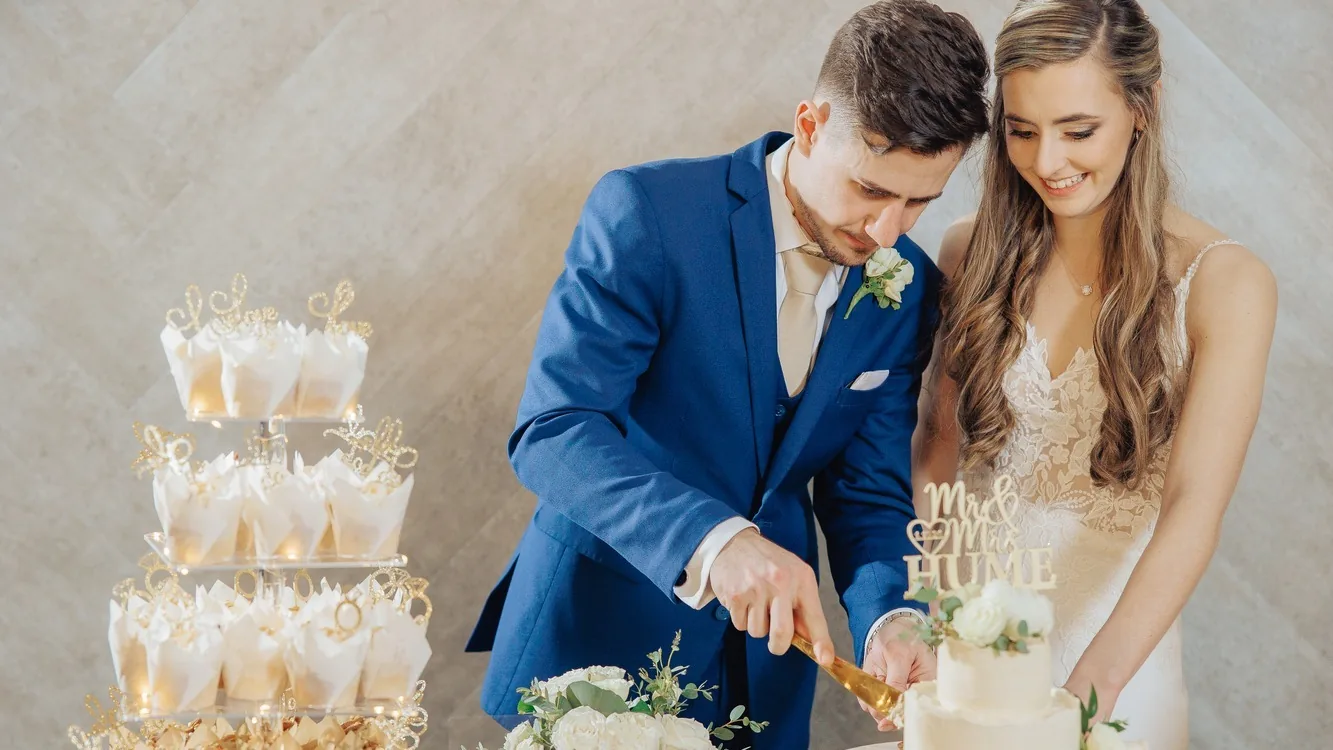
- The cutting moment. Hands, knife, faces. Both partners.
- The first bite. Genuine expression, not staged.
The window to shoot the cake is narrow. It gets cut, then served, then gone. Two minutes of dedicated coverage early in the reception is plenty — as long as it actually happens.
2026 trends worth following
A few things the best bakers are doing right now:
- Textured buttercream over fondant. Feels handmade, reads warmer on camera.
- Edible florals. Seasonal, sustainable, cheaper than sugar flowers.
- Heart shapes on smaller cakes. The comeback is real.
- Savory alternatives. Cheese towers, charcuterie pyramids for couples who aren't dessert people.
- Cake + dessert-bar pairings. Lower cost, higher guest satisfaction.
Alternative sweet endings
If cake isn't your thing, you have options:
- Doughnut wall. Fun, interactive, photographs well.
- Cheese tower. Savory show-piece, pairs with wine service.
- Macaron tree. Colorful, light, cost-effective.
- Mini pies. Flavor variety, personal-size portions.
- Dessert bar. Mix of everything, guests self-serve.
These aren't compromises. They're choices.
FAQ
Capture the cake the right way
A well-photographed cake carries the whole reception section of your gallery. If you want a team that will shoot your cake with the same care as your ceremony, start a conversation.
Planning your wedding?
Get a personalized quote from our team