Golden Hour vs Candlelight: Perfect Wedding Lighting
Wedding photography lives and dies by light. Two of the most beautiful — and most different — lighting conditions you'll encounter on your wedding day are golden hour and candlelight. They're not interchangeable. Each produces a specific mood, requires different skills, and suits different couples.
Quick answer
Golden hour is the 60–90 minute window before sunset where warm, directional natural light produces the classic "glowing wedding portrait" look. Candlelight is dim, intimate, mixed ambient light used for evening ceremonies and receptions — it produces moodier, more editorial photos but requires specific gear and skill. Most weddings use both: golden hour for ceremony and portraits, candlelight for evening reception.
Golden hour: what it is and why it works
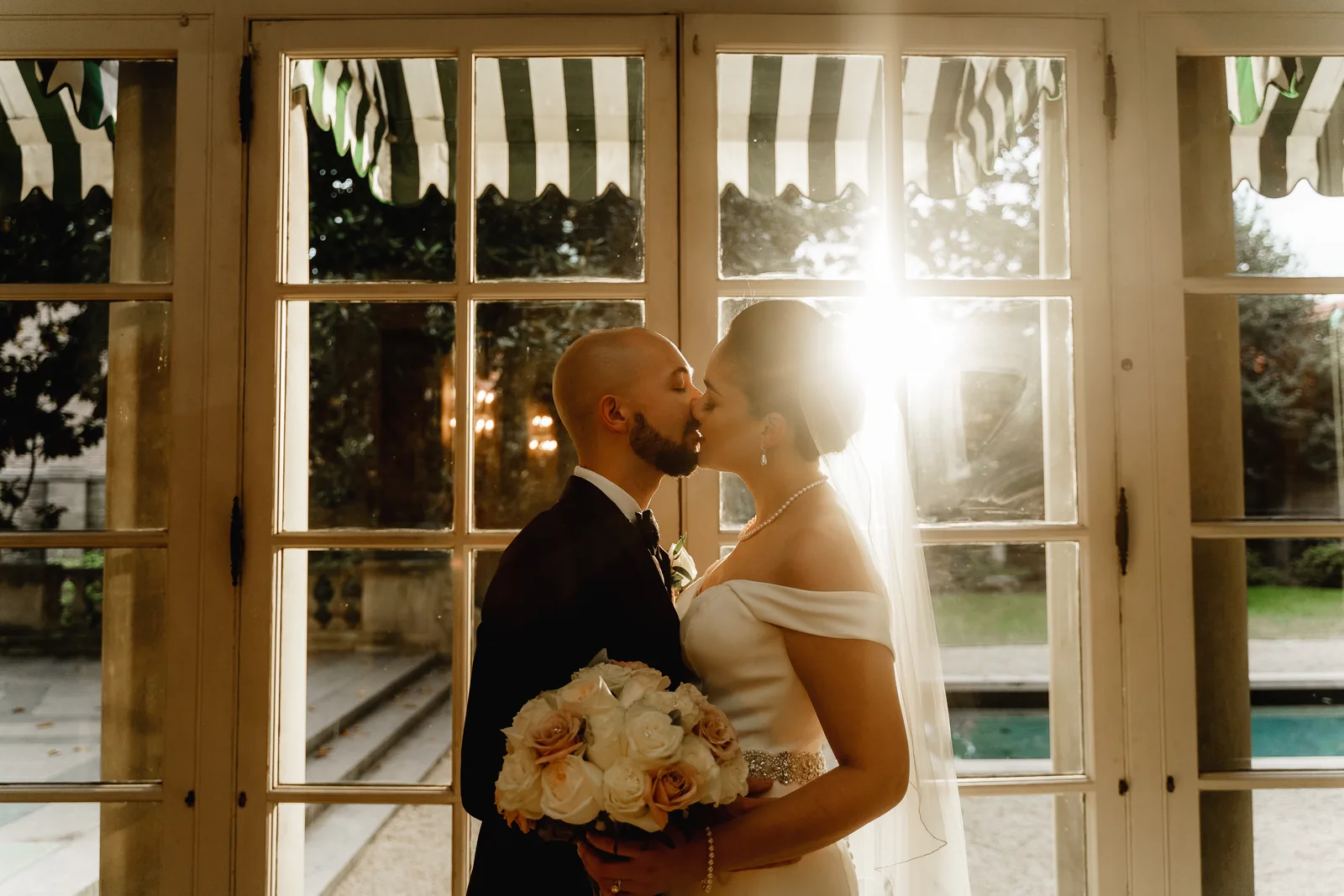
Golden hour is the 60–90 minutes before sunset (and the first hour after sunrise). During this window, the sun sits low on the horizon and its light becomes:
- Warm in color temperature (3,500–4,500 Kelvin)
- Soft because it's filtered through more atmosphere
- Directional from a low angle rather than harsh top-down
- Flattering on skin tones because of how red/orange wavelengths interact with faces
This is why wedding magazines over-index on golden-hour photos. It's forgiving light for everyone — every skin tone, every venue, every partner combination.
When to schedule for golden hour
Plan your couple portraits for the 60–90 minutes before sunset on your wedding date. Everything else on the timeline should flow backward from that fixed point.
- Check sunset time: Look up sunset for your exact wedding date at your venue location. June weddings have ~8:30 p.m. sunsets; November weddings have 4:45 p.m. sunsets.
- Portrait start: 90 minutes before sunset gives you a cushion for any timeline slippage.
- Ceremony start: 2–2.5 hours before sunset so you have time for family portraits after.
When golden hour won't work
- Winter weddings: Sunset is at 4:45 p.m., meaning your portraits have to end around 4:30. That's often in the middle of cocktail hour.
- Overcast or heavy rain: The directional warm quality disappears. You get soft even light instead (which is its own beautiful thing).
- Indoor-ceremony weddings: If the ceremony runs past sunset, you've missed the window entirely.
Candlelight: what it is and what it requires
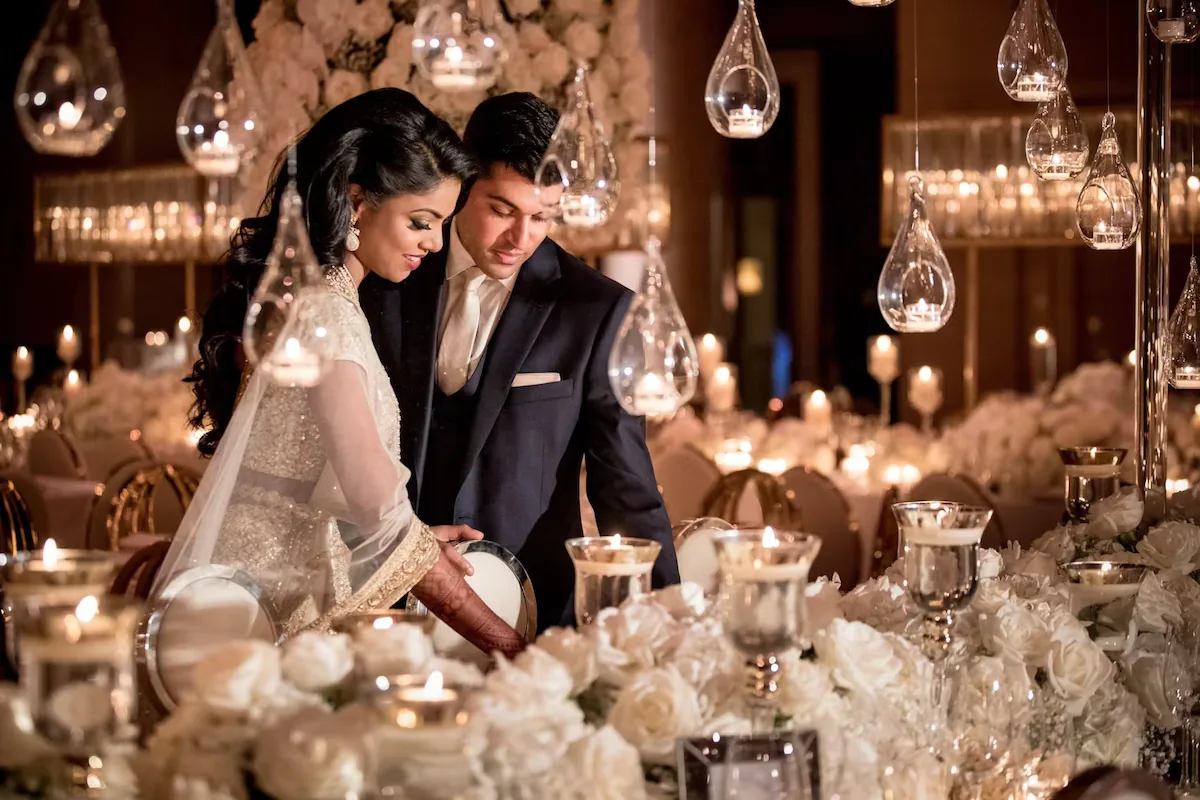
Candlelight wedding photography is the art of shooting in dim, mixed, warm-toned ambient light — usually in the evening, usually indoors. It produces a specific look: moody, intimate, editorial, film-like.
It's also the hardest kind of wedding photography to do well.
What candlelight actually needs
- Fast lenses. f/1.4 or f/1.8 primes to gather enough light.
- High-ISO capable bodies. Modern mirrorless cameras shooting clean at ISO 6400 are non-negotiable.
- Mixed-light management. Candles are ~2,000K. DJ lights are 5,500K. Windows at dusk are 7,000K. Balancing all three takes practice.
- Supplementary light. Often a hidden off-camera flash or LED panel, bounced and diffused, to fill shadows without killing the candle glow.
When candlelight wins
- Evening and night ceremonies. When the sun's already down, embrace it.
- Intimate receptions where mood matters more than brightness.
- Couples who want editorial / film-inspired galleries rather than bright-and-airy.
- Historic venues where candles are part of the atmosphere (old cathedrals, vintage ballrooms).
When candlelight fails
- Photographer doesn't have the gear. Shooting candlelight on a kit zoom at f/4, ISO 800 produces soft dim photos.
- No supplementary lighting plan. Pure candlelight alone is rarely enough for reception-level detail.
- Venue uses fluorescent or green LED house lights that can't be turned off. Color mix becomes unsolvable.
Golden hour vs. candlelight: side by side
| Factor | Golden Hour | Candlelight |
|---|---|---|
| Mood | Airy, cinematic, bright | Intimate, moody, editorial |
| Time of day | Before sunset (or after sunrise) | After sunset |
| Best for | Outdoor portraits, ceremonies | Evening ceremonies, receptions |
| Cost to photographer | Free | Gear-heavy, skill-intensive |
| Skin tones | Warm, forgiving | Warm to ambrer, stylized |
| Couple control | High (choose the spot) | Moderate (venue-dependent) |
| Gallery aesthetic | Classic wedding | Film-inspired, editorial |
| Common pitfalls | Missing the window; wrong-direction sun | Underexposure; mixed color chaos |
You probably want both
Here's the honest version: almost every good wedding gallery includes both.
- Ceremony and portraits: Golden hour if the timing allows.
- Cocktail hour: Usually golden hour trailing into blue hour — stunning in-between light.
- Reception: Candlelight / ambient / mixed indoor light.
- Late-night dance floor: Flash + ambient combination.
- Sparkler exit: Warm ambient from sparklers themselves, the most flattering light of the evening.
A photographer who only does one is telling you something. Ask to see a full gallery with both conditions represented before you book.
How to choose for your wedding
Three questions:
- What time is your ceremony? If it's before 5 p.m. in summer or before 3 p.m. in winter, you have golden hour available. If later, you're in candlelight territory by default.
- What aesthetic are you after? Bright-and-airy pins = golden hour. Dark-and-moody editorial = candlelight.
- What's your venue? Outdoor garden = golden hour native. Historic cathedral = candlelight native. Mixed outdoor/indoor = you're doing both.
FAQ
If you want photographers who can handle both conditions on the same day — start here.
Planning your wedding?
Get a personalized quote from our team