First Look vs. Aisle Reveal: What's Best for You?
The first look vs. aisle reveal decision shapes your entire wedding-day timeline. It changes when your portraits happen, how much cocktail hour you actually attend, how rushed the post-ceremony window feels, and — honestly — how you emotionally experience the day.
There's no right answer. There is a right answer for you. Here's what each looks like in practice.
Quick answer
A first look is a private pre-ceremony moment where you see each other before walking down the aisle — giving you more time for portraits, a calmer ceremony, and actual cocktail-hour attendance. An aisle reveal preserves the traditional first glimpse during the ceremony, producing more emotional public-facing photos but condensing everything else into a rushed post-ceremony window. About 60% of our couples choose a first look; 30% choose aisle reveal; 10% do a hybrid.
The comparison at a glance
| Factor | First Look | Aisle Reveal |
|---|---|---|
| When you see each other | 60–90 minutes before ceremony | During the ceremony |
| Couple portrait window | Before the ceremony (relaxed) | After the ceremony (rushed) |
| Family portraits | Before or after ceremony (flexible) | Immediately after ceremony (tight) |
| Cocktail hour | You attend most of it | You miss most of it |
| Emotional audience | Private (just you + photographer) | Public (all your guests) |
| Lighting control | High — chosen for best light | Limited to ceremony scheduling |
| Timeline buffer | 60–90 minutes of flex | None — everything cascades |
| Ceremony emotion | Calmer, more grounded | Peak anticipation |
| Best for | Relaxed days, longer receptions, both partners who get nervous | Tradition-focused couples, dramatic ceremonies, strict cultural customs |
First look: what it actually feels like
A first look happens in a quiet, pre-chosen location — a garden path, a hotel hallway, a rooftop before guests arrive. One partner waits with their back turned. The other walks up, taps their shoulder, and they see each other for the first time, alone, with just the photographer at a respectful distance.
What happens next is almost always more emotional than couples expect. No audience means no performance — just tears, or laughter, or a long quiet hug. We've shot hundreds of these. The reactions are consistently bigger than the ones at the altar, because nobody has to hold anything back.
The practical upside: after the first look, you can do couple portraits, some wedding-party shots, and (if family is ready) family portraits. By ceremony start, most of the photo work is done. The post-ceremony window becomes celebratory rather than logistical.
Aisle reveal: what it actually feels like
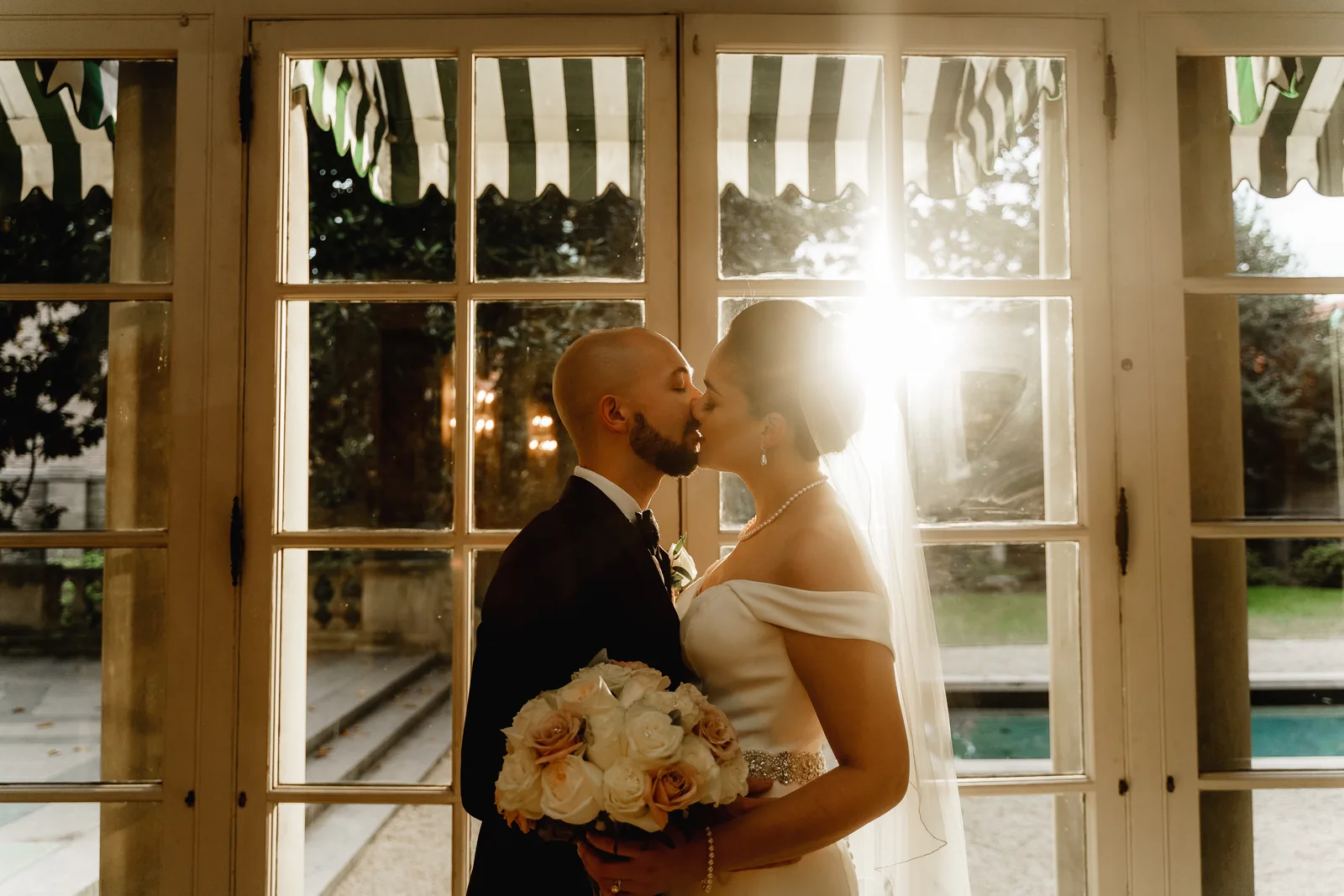
An aisle reveal is the moment most people picture when they think "wedding." The bride walks in, the partner waiting at the altar sees them in full view for the first time, in front of everyone — and the whole room watches.
The emotional current is different. Higher stakes, louder, more public. Parents cry. Friends cry. The partner at the altar often doesn't know where to look. It's the moment that goes in the slideshow.
The logistical trade-off: everything photography-related has to happen in the 45–90 minutes between ceremony end and reception start. That's family portraits, couple portraits, any wedding-party shots, and maybe 10 minutes of cocktail hour if you're lucky. It works — but it's tight, and every delay eats into your cocktail-hour attendance.
The three reasons couples pick a first look
- They want to actually attend their cocktail hour. This is the most common reason, by a wide margin.
- One or both partners are nervous and want a calming moment before the public ceremony.
- The ceremony is late in the day (5 p.m. or later) and the light for portraits after will be gone.
The three reasons couples pick an aisle reveal
- Tradition matters to them or their family.
- The ceremony is outdoors with great light and they want the aisle moment to be the visual centerpiece.
- Cultural or religious customs require the partners not to see each other beforehand.
Hybrid options worth considering
First touch
You hold hands around a doorway or corner, unable to see each other. You can talk. Exchange private vows. Calm each other's nerves. Still experience the aisle reveal.
This is our favorite compromise. It gives you the emotional grounding of a first look without trading away the traditional moment. Best for couples who want both but feel forced to choose.
Private vows (separate from ceremony vows)
Write two sets of vows — one public (what your guests hear) and one private (what you exchange during a quiet first-look moment). The private ones tend to be more honest, more specific, more real. The public ones can stay the ones your grandmother can hear.
Letter exchange
If you want something even more private than a first look, exchange written letters during getting-ready — each of you reads the other's letter alone. This produces some of the most beautiful getting-ready photos we shoot, and you still get the full aisle reveal.
The timeline impact (real numbers)
For a 10-hour wedding with a 4 p.m. ceremony, here's how each choice reshapes the day:
With a first look:
- 11:00 — Getting ready (both partners)
- 1:30 — First look + couple portraits
- 2:30 — Wedding party portraits
- 3:00 — Family portraits (pre-ceremony)
- 3:45 — Couple hidden before ceremony
- 4:00 — Ceremony
- 4:45 — Ceremony ends, remaining family portraits (10 min)
- 5:00 — You attend cocktail hour (45 min)
- 5:45 — Reception starts
With an aisle reveal:
- 11:00 — Getting ready (both partners)
- 2:00 — Solo portraits each (individually)
- 3:00 — Wedding party portraits (split, no couple together)
- 4:00 — Ceremony
- 4:45 — Ceremony ends
- 4:50 — Family portraits (30–45 min, pressured)
- 5:30 — Couple portraits (20–30 min of rushed time)
- 6:00 — You arrive at reception, having missed cocktail hour entirely
Neither is wrong. They just produce different days.
FAQ
If you want help working out which option fits your day — start a conversation.
Planning your wedding?
Get a personalized quote from our team