Bridal Guide | Chapter 2: Wedding Planners
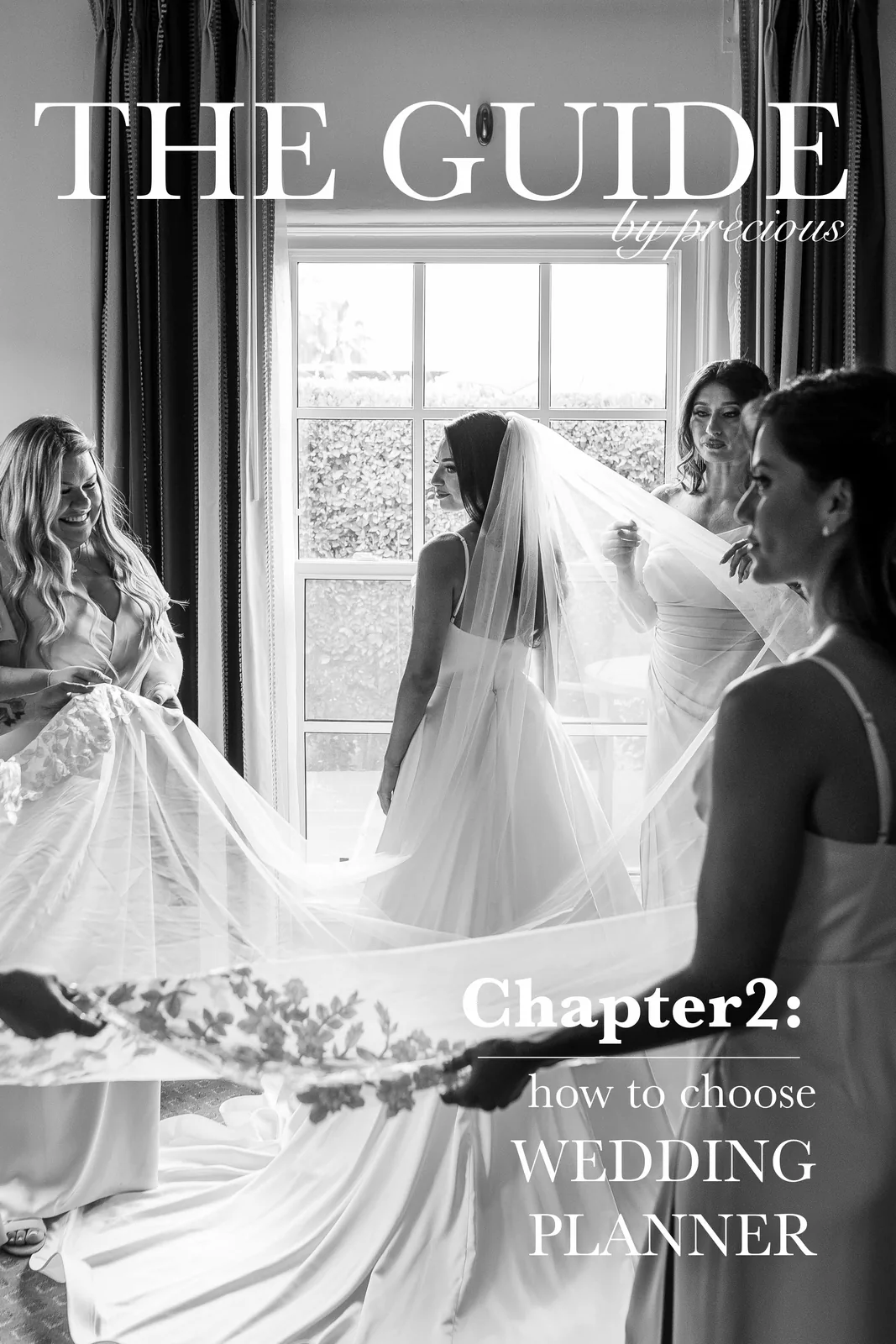
You don't have to plan a wedding alone. The couples who enjoy their engagement most aren't the ones with the biggest budgets or the simplest guest lists — they're the ones who hire the right person to carry the logistics so they can carry the meaning.
This chapter breaks down who does what in the planning world, what it costs, and the ten checkpoints we've watched our couples use to choose someone they actually like working with.
Quick answer
A full-service wedding planner owns the concept, vendors, budget, and day-of logistics from 12–18 months out. A coordinator (sometimes called month-of) steps in 4–8 weeks before the wedding and runs the final sprint and the day itself. A concierge handles white-glove details — guest logistics, travel, gifting — layered on top of either role. Budget 10–15% of total wedding spend for full-service planning.
What a wedding planner actually does
Good planners are part creative director, part project manager, part therapist. The creative-director part designs the look and feel — venue, palette, florals, tablescape, the arc of the day. The project-manager part owns the spreadsheet: the timeline, the vendor roster, the payment schedule, the contingency plans. The therapist part is real too. Planners absorb decision fatigue so you don't have to.
Specifically, a full-service planner will:
- Develop a concept that reflects your story — not a template from a style guide
- Recommend and vet venues that fit your guest count, budget, and aesthetic
- Source and negotiate contracts with photographers, caterers, florists, musicians, and rentals
- Build and maintain the master timeline and vendor-facing run-of-show
- Coordinate every vendor the week of the wedding and on the day itself
- Troubleshoot everything that goes sideways — and something always does

Planner vs. coordinator vs. concierge
These three roles get blurred in marketing copy. Here's the honest version:
| Role | When they start | What they own | Typical fee |
|---|---|---|---|
| Full-service planner | 12–18 months out | Concept, vendor selection, contracts, budget, design, timeline, day-of | 10–15% of total spend, or $4K–$12K+ flat |
| Coordinator (month-of / day-of) | 4–8 weeks out | Final timeline, vendor confirmations, rehearsal, day-of execution | $1,500–$3,500 |
| Concierge (white-glove layer) | Varies | Guest travel, welcome bags, VIP logistics, post-event errands | Flat fee or hourly |
Venue coordinators are not wedding coordinators. The person the venue assigns to your event works for the venue — their job is to make sure the venue's part runs smoothly. Your coordinator works for you, and covers the 80% of the day that happens outside the venue's scope.
How to choose — the ten checkpoints
1. Set your budget first
Decide what percentage of your total wedding spend will go to planning — typically 10–15% for full-service, or a flat fee for coordination — before you make the first call. Walking into interviews without a number makes you vulnerable to upsell.
2. Define the role you need
Full-service, coordinator, or concierge. The three roles solve different problems. Pick one before you call anyone; don't let a planner talk you into their tier because it's their tier.
3. Build a shortlist of three to five
Pull names from venues you love, from couples whose weddings you've admired, and from Instagram searches of your wedding style. Beyond five, the comparison gets noisy.
4. Review the portfolio for fit, not flash
Look specifically for past weddings that resemble yours — guest count, venue style, aesthetic. A planner who's great at 300-guest ballrooms isn't automatically great at 60-guest garden ceremonies. The best proof is recent work that looks like the day you're imagining.
5. Check references and recent reviews
Ask for two references from weddings in the last 12 months. Recency matters — teams and standards change. Ask the references a specific question: "What went wrong, and how did she handle it?" That's where the real answer lives.
6. Interview them on a call
Good planners ask more questions than they answer on the first call. Watch for listening skills, honesty about the tension between budget and vision, and whether they push back on anything. A planner who agrees with everything on the first call will agree with everything on the last call too — not what you want.
7. Confirm availability and scope
Verify they're free on your date, what's included in the fee, what's explicitly excluded, and — critically — how many weddings they book the same weekend. A planner running three Saturday weddings isn't fully yours.
8. Discuss communication rhythm
How often will you meet? What response time can you expect on email? Who covers if the lead planner gets sick the week of your wedding? These feel boring until month six, when they become everything.
9. Read the contract carefully
Payment schedule, cancellation terms, overtime, kill fees, and — especially — the clause about substitutes if the planner can't be there on the day. This is the paragraph most couples skip and later regret.
10. Trust the room, then sign
Once the logistics check out, ask yourself one question: do I want to spend the next 12 months on the phone with this person? If yes, sign. If not, keep looking. Chemistry is not a nice-to-have in a role this involved — it's the thing.
If you'd rather stay in the driver's seat — hire a coordinator
A coordinator is the right call if you enjoy planning and want to stay hands-on, but you don't want to be the person walking around on your wedding day with a clipboard. They take the plan you've built, stress-test it, confirm every vendor, build the minute-by-minute timeline, and run the day.
Coordinators are underrated. Most of the weddings we film that run beautifully have a coordinator running point, whether or not the couple hired a full-service planner.
Before you meet with anyone, know these three numbers
You'll save yourself a month of back-and-forth by walking into every planner interview with clear answers to:
- Total wedding budget (a range is fine — "$50K to $70K" — but not "we haven't decided")
- Guest count (even a rough one: "120 to 150")
- Preferred wedding style (a moodboard with 10–15 images works better than adjectives)
Planners who are right for you will translate those three inputs into a concrete proposal. Planners who aren't will ask you to "tell them more about your vision" for forty minutes and send a generic quote.
Frequently asked questions
A partner for the day, not just the planning
Once your planner has locked the vision, we come in to make sure it's captured the way you felt it. Browse our full-day coverage to see how we pair with planners and coordinators across your timeline — from getting-ready through last dance.
Looking for the rest of the bridal guide? Continue with Chapter 3: Styles and Formats or start from Chapter 1: Developing Your Artistic Eye.
Sincerely yours, Precious Pics
Planning your wedding?
Get a personalized quote from our team