2026 Wedding Photography Trends: Fashion-Forward & Bold
Fashion-forward wedding photography is one of those phrases that's been marketed past the point of meaning. Plenty of studios claim it. Many of them deliver something that looks like every other shoot with slightly moodier color grading.
The actual craft is older and narrower than the marketing suggests. Here's what it means when we use the term, and what's worth paying for when you see it in a proposal.
What's changing
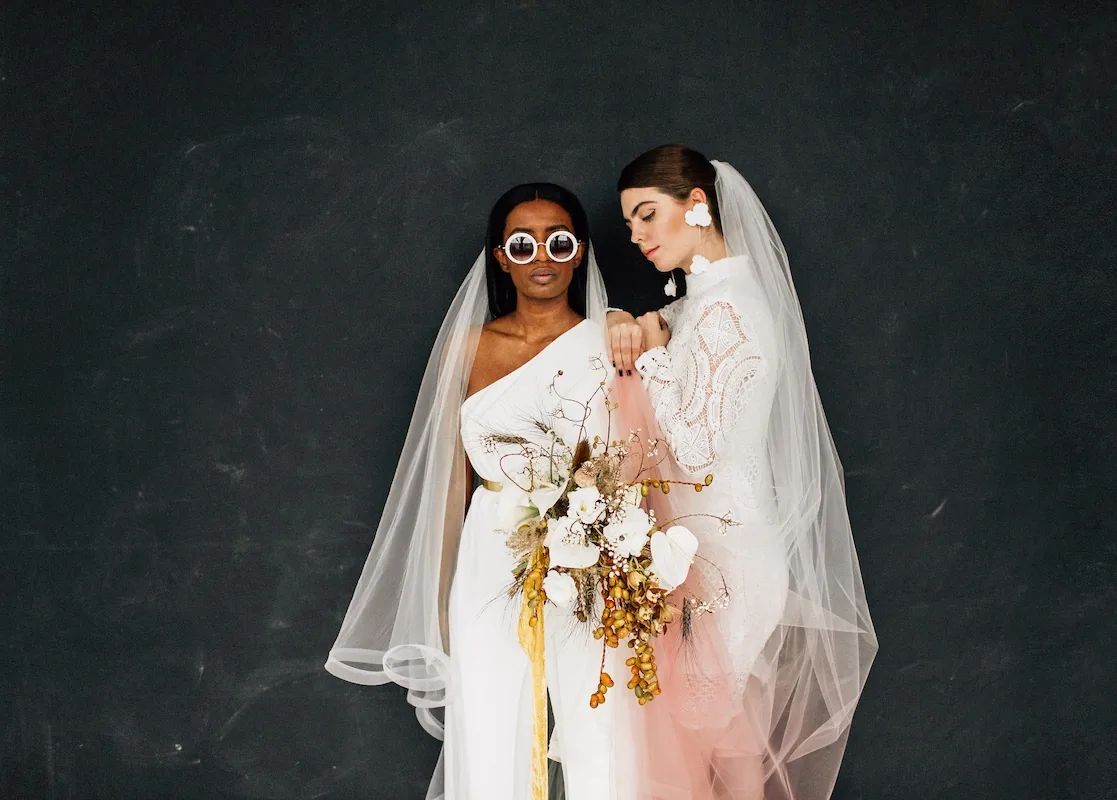
The demand is real. About a third of our 2026 bookings are asking for at least some fashion-forward coverage, up from single digits three years ago. What's shifted is the reference point — couples are less inspired by Vogue-style bride-and-flowers spreads and more by contemporary fashion editorial (clean, architectural, quiet). The frames want negative space, confident posture, and light that looks carved rather than layered.
That's a different craft from traditional wedding portraiture. It needs different prep.
Why it matters for couples
Fashion-forward photography produces a specific kind of image — the two or three frames per gallery that look like they could hang on a gallery wall. Not most of the gallery. Those specific frames.
If those frames don't matter to you, don't pay extra for this style. If they do, they're the most printed images in the whole set. Worth the prep time.
How we do it
The shoot block, specifically
A fashion-forward wedding is really a normal wedding with a 20–40 minute editorial block carved out of it. Usually this sits inside the couple-portrait window. It requires:
- Pre-scouted location. We walk the venue at the same time of day as the planned shoot. We know exactly where the light will be.
- Wardrobe coordination. We ask for a look-book image or two in advance so we're not meeting the dress for the first time on the day.
- Minimal direction, precise prompts. "Walk toward me." "Turn your jaw 15 degrees." "Don't smile until your partner does." Not poses — movements.
- One lens, one lens change. A 50 or 85 prime for most of the block, one wide for the context frame. We don't swap gear constantly.
The light
Fashion photography is almost entirely a lighting discipline. We use:
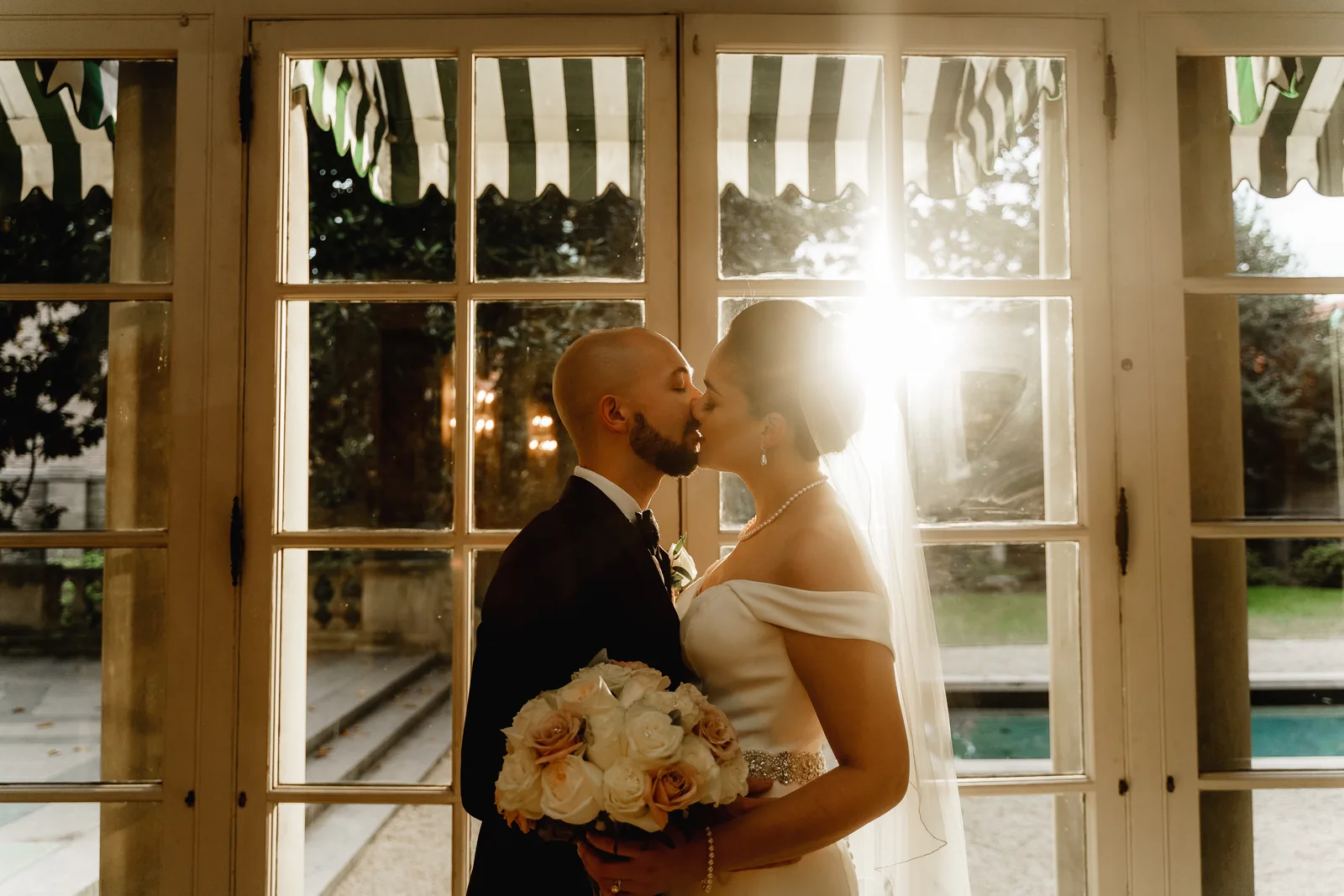
- Directional window light for indoor portraits.
- Backlit golden hour for exteriors.
- Controlled flash only when natural light genuinely fails. If a photographer is relying on heavy off-camera flash to produce "editorial" looks at weddings, the flash is doing the work, not the vision.
What falls flat
Fashion-forward frames fail in three common ways:
- Over-styled venue. Heavily detailed florals, busy arches, ribbon-everywhere receptions. These overwhelm the subject. Fashion photography wants negative space; an over-designed venue doesn't give you any.
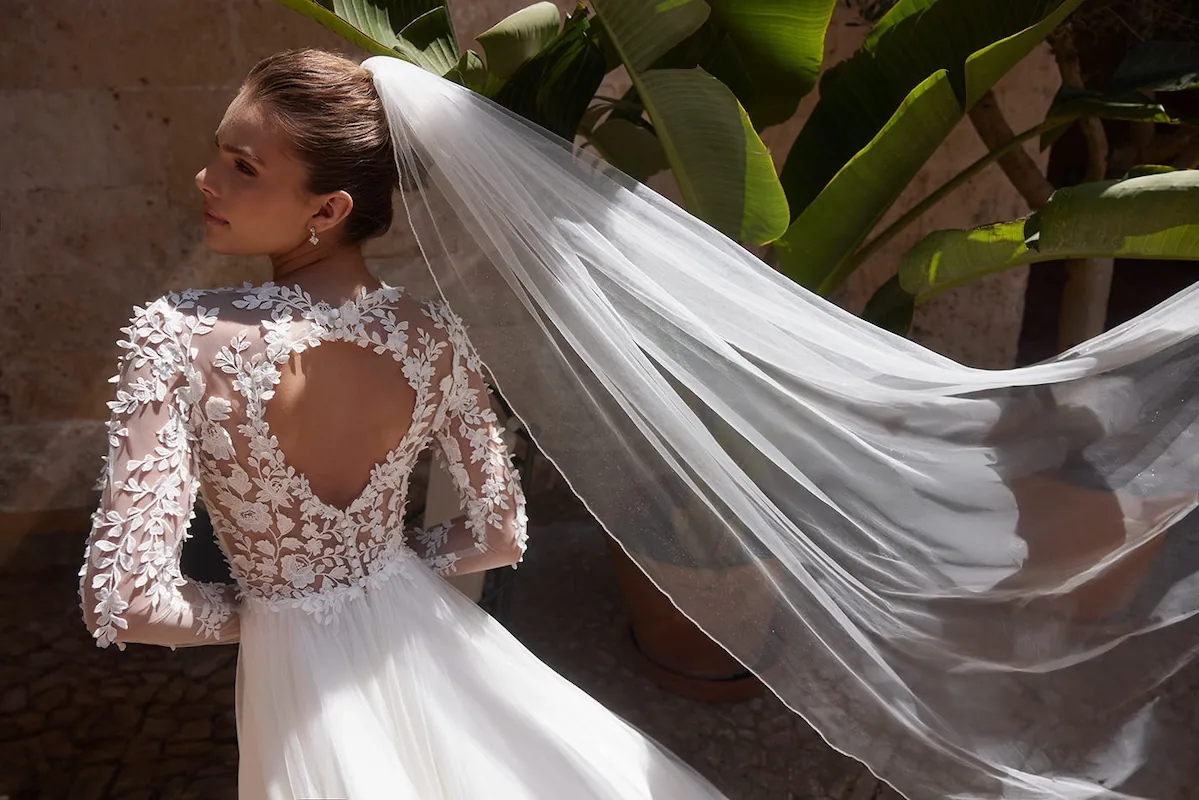
- Wardrobe that fights the light. Heavily beaded or sequined gowns kick light back unpredictably. Matte fabrics and clean lines photograph much better under editorial conditions.
- Couples who weren't prepped. If no one tells you how to stand, and the shooter is asking for "editorial energy" on the day, the frames are going to look forced. Prep matters.
Where it works best
- Historic estates with architectural features. Ornate wrought iron, stone staircases, grand doorways. The architecture does half the work.
- Modern galleries and lofts. Clean lines, white walls, natural light through big windows. Perfect for minimalist editorial.
- Urban rooftops at blue hour. Skyline context, directional evening light.
- Open landscapes. Beach, desert, field. Negative space plus dramatic backdrop.
Indoor hotel ballrooms with chandeliers are the hardest venues to shoot fashion-forward. Possible, but only in the few minutes of prep light before guests arrive.
Where it doesn't
- Weddings where the couple doesn't want to be directed. Forced. The frames know.
- Intimate backyard settings. There's no architecture to frame against. Pick a different style here — documentary works better.
- Kid-centric weddings where the kids are the stars. Fashion-forward doesn't serve them. Go documentary.
What to look for in a studio
Three questions worth asking before you book someone who claims fashion-forward coverage:
- "Can I see three full galleries with fashion-forward work in them?" Not one, three. The skill has to be consistent.
- "Who will actually shoot the editorial block on our day?" At some studios, the top shooter does first hour and hands off. Ask who's on your portraits.
- "What lighting do you use for this work?" The answer should involve natural light first, controlled supplementation second. If it's flash-heavy, that's a different style.
Frequently asked questions
Pick the two or three editorial frames you want from your wedding, and the rest of the day gets easier to plan around them.
Planning your wedding?
Get a personalized quote from our team