Future of Wedding Photography: Trends for 2025
"Future of wedding photography" articles have run every January for a decade. Most of them are wish lists. This one is a status report — what's actually running in the weddings we shoot in 2025, what's working, what we skip, and where we'd spend a couple's budget instead.
What's changing
Three technologies have landed in real wedding work in 2025:
- AI-assisted editing. Culling and color, not creative decisions. Saves hours per wedding, which is why turnaround times have collapsed industry-wide.
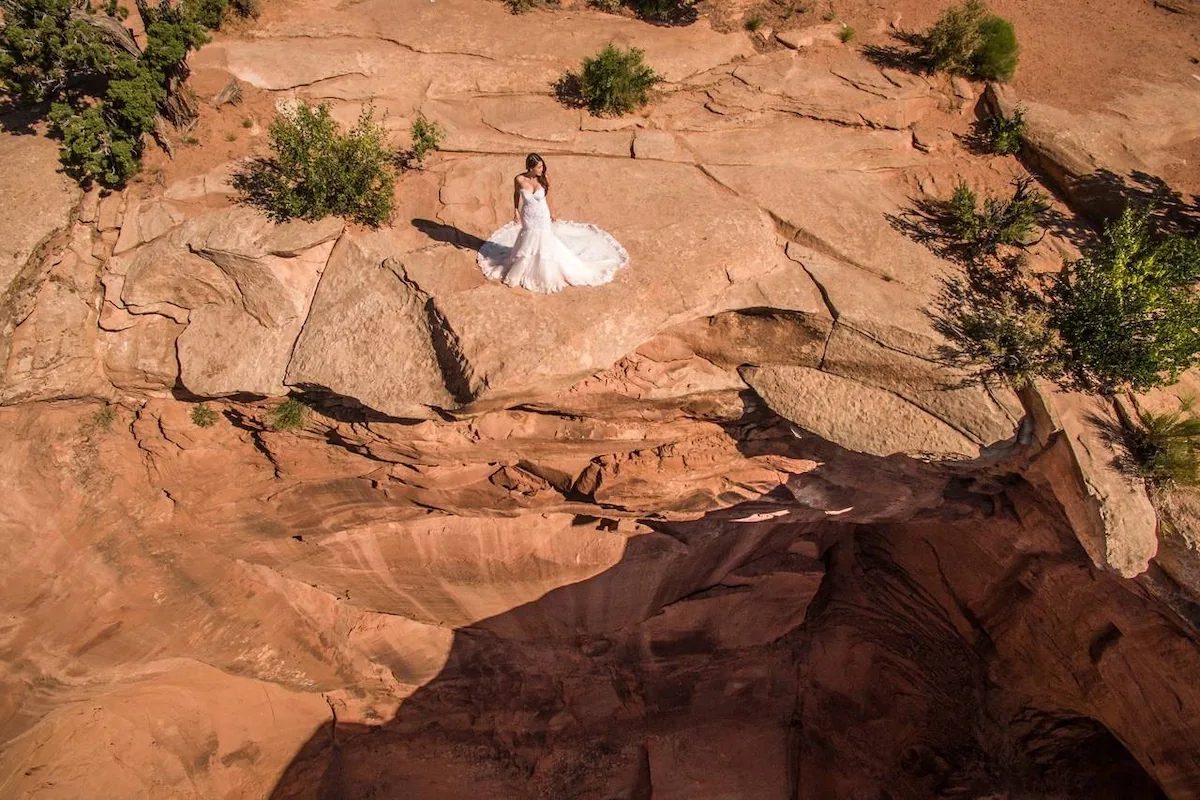
- Drone coverage. More accessible, better in low light, lighter rigs. Still completely useless indoors.
- Hybrid photo and video. Single team, one creative direction, two deliverables. Better when it's genuinely collaborative. Worse when it's just a bundle from one vendor.
What hasn't changed: a wedding still happens once, the light still moves the same way, the people in the frame still decide whether the frame lives or dies.
Why it matters for couples
Three concrete differences you'll see in 2025 weddings vs. 2022:
- Delivery time. Full edited galleries in 14 days is normal now. If a studio still quotes 8 weeks, they're not using modern workflow.
- Drone included in more packages. Not all, but more. Check the specifics — some studios include drone as a default, others charge $400–$900.
- One team covering both photo and video. About 60% of our 2025 bookings are hybrid. The rest still want specialists.
How we actually do it
AI in the edit room
We use AI for culling (picking keepers from 2,500 frames) and for color normalization across a gallery. Every creative decision — retouching, story selection, hero frames, the grade — still gets made by a person. If a studio's entire edit pipeline is automated, the galleries all start looking the same.
Drone coverage
Our drone operators are FAA Part 107 certified. We fly before the ceremony, during cocktail hour, and at send-off. Never during vows. Never in sustained wind above 20 mph. On an outdoor wedding with the right venue, 3–5 minutes of drone footage earns its place in the highlight film. On an indoor wedding, we skip it and put the budget into a second shooter.
Hybrid photo + video
The thing that makes hybrid work: the photographer and videographer have shot together dozens of times. They know how to share angles without blocking each other, when to switch sides, how to handle ceremony audio without picking up the photographer's shutter. Bundled teams from vendors who've never worked together don't have this. Ask the studio how often their photo and video shooters work the same wedding.
What we'd skip
Four things marketed as "future of wedding photography" that haven't earned their place in our day-of work:
- VR/AR wedding albums. Nobody has watched theirs twice. Save the money.
- 360-degree cameras during the ceremony. Gimmick. The footage is unusable unless you're building a VR experience nobody will open.
- Fully AI-retouched galleries. Skin goes plastic. Backgrounds go dead. Conservative hand-retouch wins.
- Same-night full gallery delivery. Physically possible, quality-destroying. Five-frame social set is fine. Full gallery in 14 days is the right speed.
The part technology can't help with
Every 2025 trend article ends with a line about how "human connection still matters." It's true and it's also slightly cheap — here's the specific version. The difference between a good wedding photographer and a great one in 2025 is:
- Predicting the first-look reaction a half-second before it happens, and being on the right side of the couple.
- Knowing when to lower the camera and let a moment be private.
- Reading a family tension in 10 seconds and moving the family portrait order so the difficult pair doesn't end up beside each other.
None of that is in the edit pipeline. All of it shows up in the gallery.
Frequently asked questions
The tools are faster. The job still takes patience.
Planning your wedding?
Get a personalized quote from our team