Perfect Beach Wedding Photos: Sun & Sand Tips
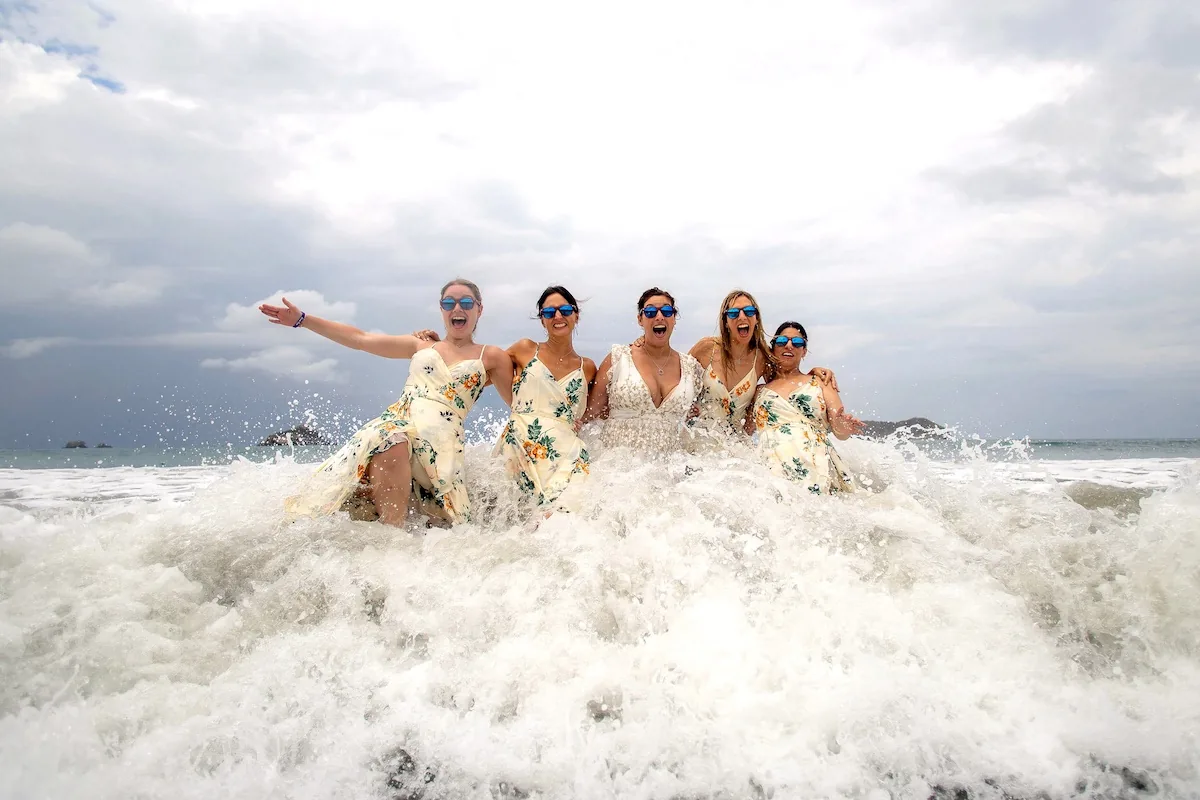
A beach wedding looks simple from a mood board. Turquoise water, barefoot vows, sunset kiss. In practice, it's one of the harder wedding formats to execute well — the same elements that make it beautiful (sun, wind, sand, waves) are the ones that will wreck the timeline if you don't plan around them.
What follows is the real version of beach-wedding planning, from a team that shoots them every year from Malibu to Miami to Maui. The decisions that matter, and the ones you can skip.
Quick answer
Schedule the ceremony to end 60–90 minutes before sunset, check the tide table for your date, and lock a covered backup venue within 15 minutes of the beach. Style for the environment (light fabrics, flat shoes, secure veils), anchor every ceremony decor element against wind, and build 20 minutes between ceremony and portraits for sand cleanup. Midday ceremonies photograph poorly; evening ceremonies end in flash photography. Golden hour is the only real window.
Step 1: Time the ceremony around sunset, not the other way around
This is the decision that makes or breaks beach photography. Midday beach light is the worst light on the planet: harsh, top-down, squinting-inducing, blown-out highlights on skin and dress alike. Every photographer who shoots beach weddings will tell you the same thing — the only good light is the hour before sunset.
Work backward from your beach's sunset time for your actual wedding date:
- Sunset minus 20 minutes — couple portraits at peak golden color
- Sunset minus 45 minutes — end of ceremony, cocktail hour begins
- Sunset minus 75 minutes — ceremony starts
- Sunset minus 2 hours — guests arriving, pre-ceremony candids, still warm
That means if sunset is 7:45 pm in June, ceremony starts at 6:30 pm. If sunset is 5:30 pm in November, ceremony starts at 4:15 pm.
Under no circumstances schedule a noon or 1pm beach ceremony for photography reasons. If your cultural or religious traditions require it, plan accordingly — a shaded canopy, a diffuser overhead, portraits scheduled for a separate golden-hour session after the reception.
Step 2: Use wind as an asset, not a problem
Beaches are always windy. The coastal wind that feels annoying to guests is doing almost all the work in making your photos feel alive — veil movement, hair catching the light, dress fabric tracing shapes that wouldn't exist on a calm day.
Plan with the wind, not against it:
- Secure the veil with real hair clips, not just the comb. Two bobby pins at minimum. A pulled-off veil mid-ceremony is the single most common beach-wedding catastrophe.
- Pick fabrics that flow. Chiffon, organza, silk georgette, light tulle. Heavy ballgown silk doesn't move; it just fights you.
- Brief the officiant to speak up. Wind kills ceremony audio. Either project or use a clip-on mic.
- Weighted floral installations. Sandbags at the base of any arch, no loose banners or garlands that can blow away. Your florist should know.
- Dress the groom for the breeze too. Linen suits hold their shape better than cotton; skip the stiff pocket square.
Wind in the 10–15 mph range is photographically ideal. Over 25 mph, it becomes a problem. Have a conversation with your planner about wind thresholds and what triggers a move.
Step 3: Style for the setting
Beach-wedding style is its own discipline. Most of the mistakes we see come from couples dressing for a ballroom that happens to be on sand.
For the couple:
- Light-fabric gowns (chiffon, tulle, organza) that move with the breeze
- Skip the cathedral-length train — sand will own it in 30 seconds
- Flat sandals, wedges, or barefoot. Stilettos sink.
- Grooms in linen, cotton, or lightweight wool blends. Keep the color palette light (cream, pale blue, sand, soft gray).
- No leather dress shoes on sand. Loafers, leather-soled sandals, or bare feet.
For guests:
- Put shoe guidance in the invitation. "Beach ceremony — barefoot, wedges, or sandals encouraged" saves everyone a bad entrance.
- Light fabrics and muted palette colors. White is still reserved for the bride.
- Shawls or pashminas for evening ceremonies — ocean temp drops after sunset.
Step 4: Anchor every decor element
The beach-wedding decor list is short because everything has to survive wind:
- Arches or arbors — sandbagged at every leg, weight flowers over loose fabric
- Aisle markers — pampas in weighted urns beat rose petals every time (petals blow)
- Chairs — bamboo folding or wood cross-backs, heavier than plastic
- Signage — wood-staked or easel-mounted with weighted bases
- Food at cocktail hour — passed, not stationed. Open-air buffets attract sand and seagulls.
If it's lightweight and pretty, it will end up 200 feet down the beach by photo time. Anchor or skip.
Step 5: Build cleanup buffer into the timeline
Sand gets everywhere. Hands, feet, hair, gear, dress hems, lenses. The 20-minute buffer between ceremony and portraits is not optional — it's when guests brush off, change shoes, the dress gets lightly shaken, and the photographer cleans salt spray off gear.
Plan explicitly for:
- Shoe change station — a basket for ceremony barefoot/flats, another basket of flats for the reception walk
- Wet wipes at the ceremony exit — for hands and face
- A spare clean spot for the dress — not dragging it back across the same sand
- Ring rinse — a bowl of fresh water at the venue. Saltwater eats metal plating.
Sand in the rings is normal. Sand in the camera lens is expensive. A well-prepared team has it handled; a less-prepared one doesn't.
Step 6: Have a real backup
The cover-your-eyes version: a thunderstorm rolls in at 3pm, red-flag warnings go up at 4pm, the ceremony is at 6pm. What happens?
Your backup plan answers:
- Where does the ceremony move? A specific identified venue within 15 minutes — a hotel ballroom, private home, or covered pavilion. Not a vague "the restaurant across the street."
- Who calls the move? The planner. Not the couple, not the parents.
- When is the decision made? Typically by noon on the wedding day.
- How are guests notified? A pre-written text blast via the planner's team. Have the message drafted in advance.
- What do vendors do? Florist moves installations, caterer shifts catering, photographer adjusts shot list.
Coastal weather can swing in 90 minutes. The couples who have the calmest weddings are the ones whose planners have done the hard thinking before the day.
Step 7: The locations we actually book beach weddings
Across the US, the beach venues our couples request most:
- Southern California — Malibu (private stretches via Point Dume or Zuma), Laguna Beach (Victoria Beach for sunset), Santa Monica (hotel-adjacent ceremonies only; public-beach rules are strict)
- Florida Keys — Islamorada, Key West. Winter and spring only; July/August is brutal.
- Florida Gulf — Anna Maria Island, Sanibel (post-rebuild), Rosemary Beach, Seaside
- Hawaii — Maui (private-beach weddings via resort partners), Kauai (permit ceremonies on public beaches)
- Coastal Carolinas — Outer Banks, Charleston harborfront, Kiawah
- New England — Cape Cod, Block Island, Nantucket. Late May through September.
- Mexico Caribbean — Tulum, Playa del Carmen, Puerto Morelos for couples doing destination weddings
Every one of these venues has its own quirks: permit windows, tide patterns, wind patterns, access rules. A photographer who's shot your specific beach before is worth more than one with a prettier portfolio.
Frequently asked questions
Planning a beach wedding?
We shoot beach weddings across the US — California, Florida, Hawaii, the Carolinas, New England, and a handful of destinations beyond. If you're picking dates or locations and want to talk through timing, light, and the weather plan before you book anyone, start a conversation.
Planning your wedding?
Get a personalized quote from our team