Wedding Photography Styles That Shape Your Memories
Ask 10 photographers what style they shoot and you'll get 10 different answers: documentary, editorial, photojournalistic, timeless, fine art, classic-with-a-modern-edge. Half the labels are marketing, not craft.
The real question isn't which label to pick. It's how you want to feel looking at these photos in 10 years — and whether the photographer you're hiring actually produces galleries that match that feeling.
Quick answer
There are roughly seven working wedding photography styles: classic, documentary, fine art, editorial, light-and-airy, dark-and-moody, and black-and-white. Most strong galleries blend two or three deliberately — a dominant style (say, documentary) with 15–20% of a secondary (say, editorial portraits). Monostyle galleries date faster. Pick your style by looking at a photographer's full past weddings, not portfolio highlights.
The seven styles actually in use
1. Classic / traditional
Formal portraits, balanced composition, neutral color, minimal artistic intervention. The style your parents' wedding album used and the style that ages slowest.
Good for: family-forward weddings, couples who want grandparents to love the photos, weddings with heavy ceremony formalities. Weak for: couples who want the gallery to feel distinctly theirs. Shelf life: longest. A classic gallery from 1995 still works; a moody gallery from 1995 doesn't exist because the style didn't.
2. Documentary / photojournalistic
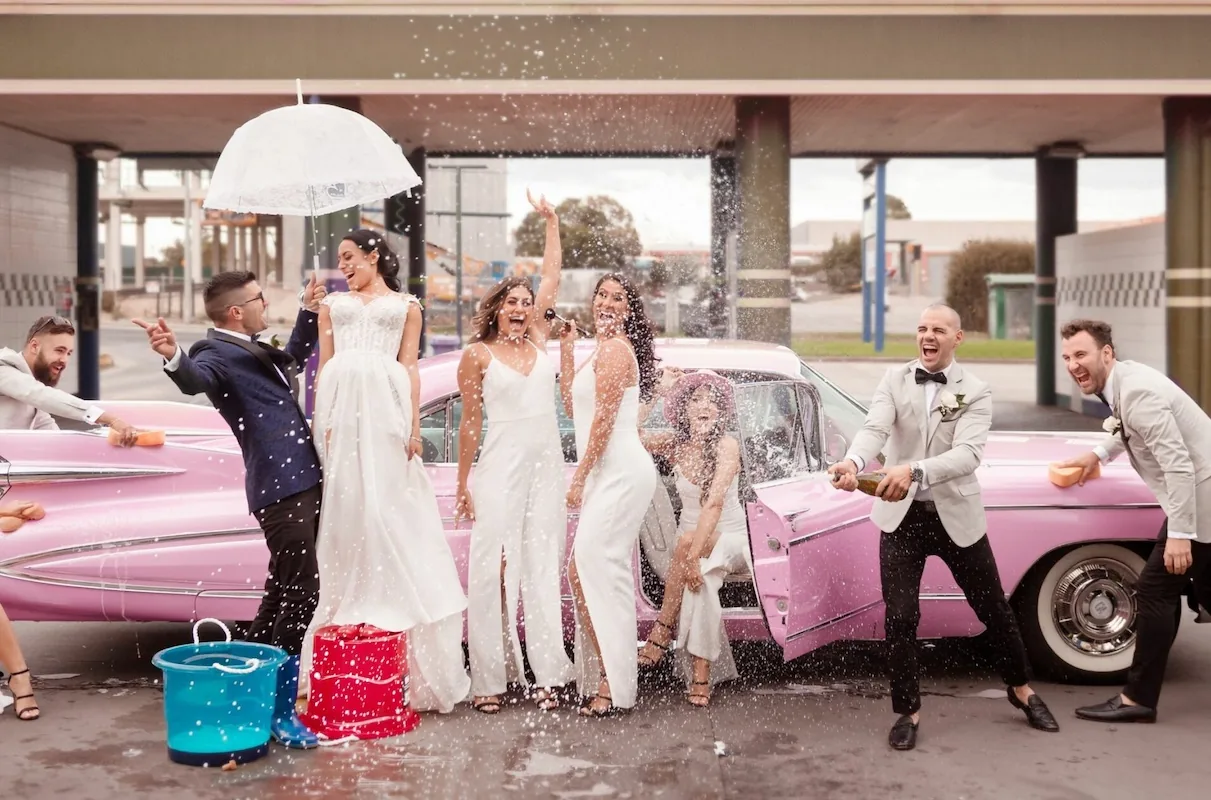
Unscripted coverage of the day as it happens. Minimal posing, maximum storytelling. The style that produces galleries couples cry over at delivery.
Good for: couples who want to remember how the day actually felt, weddings with rich emotional content, anyone camera-shy. Weak for: couples who want a lot of polished portrait-style frames. Shelf life: long. The documentary approach doesn't time-stamp because it's capturing the content of the day, not imposing a look on it.
3. Fine art
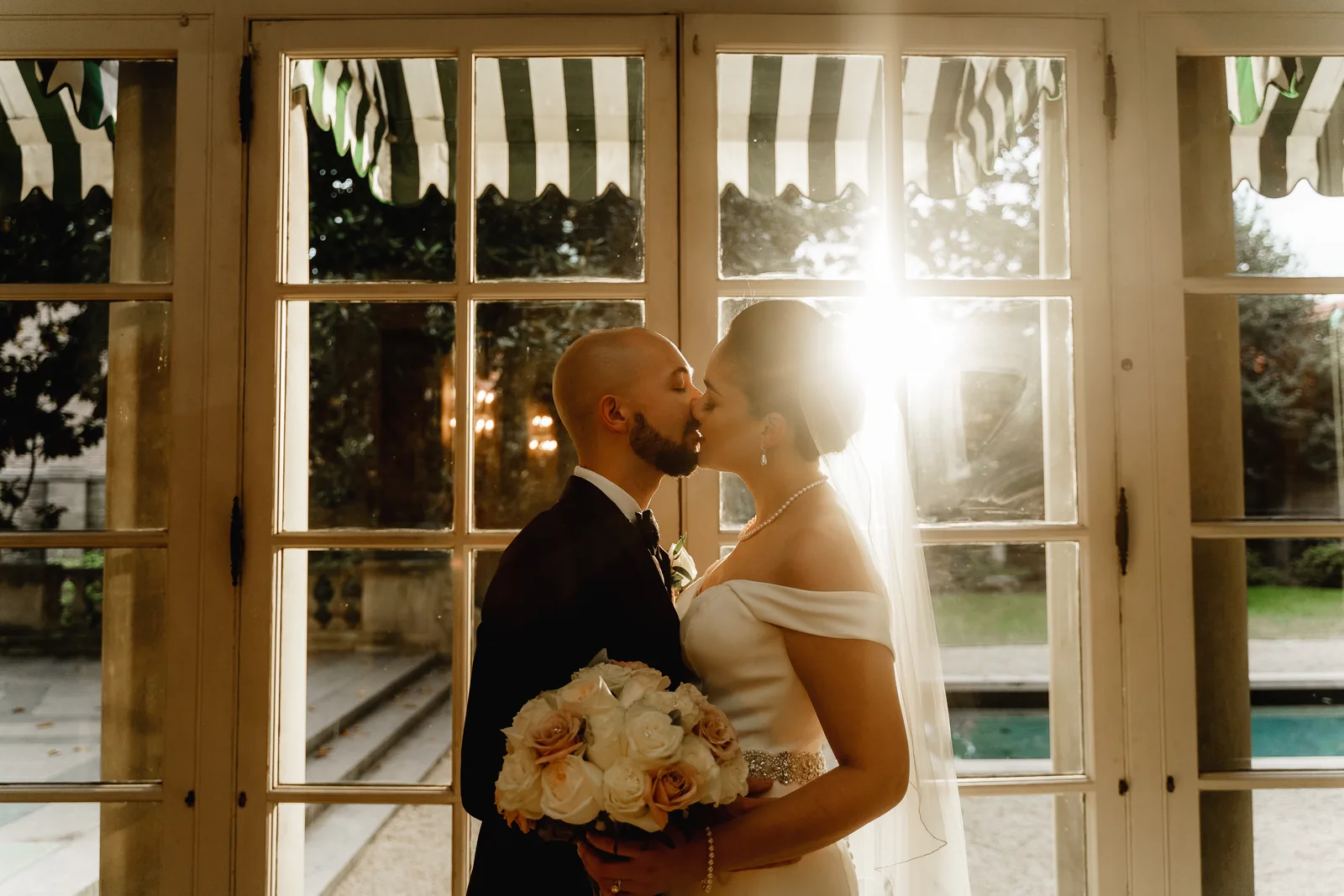
Painterly, composed, often film-inspired. Careful lighting, thoughtful backgrounds, slower pace. Fewer frames but each one more deliberate.
Good for: couples who want gallery-wall images, aesthetically ambitious weddings, venues with strong visual identity. Weak for: fast-moving receptions where composition time isn't available. Shelf life: medium-long. Fine art ages well when the content is strong; it ages poorly when the aesthetic is doing the lifting.
4. Editorial
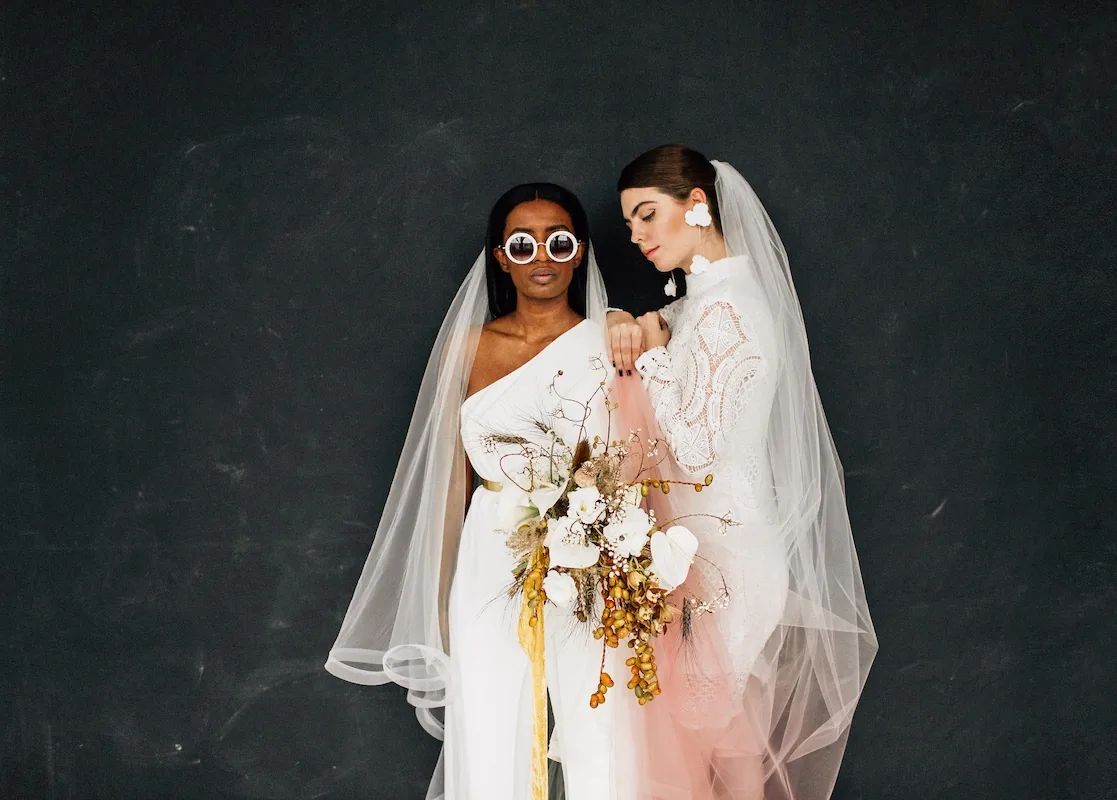
Fashion-photography energy applied to weddings. Bold poses, dramatic backgrounds, high-contrast lighting, magazine-style rendering.
Good for: couples who want Vogue-style frames, highly styled weddings, venues with interesting architecture. Weak for: intimate or documentary-heavy moments. Editorial reads posed, not candid. Shelf life: medium. The strongest editorial work survives; the derivative editorial work ages fast.
5. Light-and-airy
Soft tones, pastel color, high-key exposure, bright whites. The Instagram-dominant style of 2018–2022.
Good for: outdoor weddings with abundant natural light, brides wanting a romantic-floral feel. Weak for: venues with moody lighting, evening receptions, couples who want emotional weight in the images. Shelf life: shortest. Light-and-airy is already reading dated; the galleries shot in this style in 2019 look clearly of-their-era in 2026.
6. Dark-and-moody
Shadows, contrast, deep greens and browns, cinematic rendering. The reaction to light-and-airy.
Good for: indoor venues, moody outdoor locations, couples who want drama. Weak for: bright-sunny outdoor weddings. Fighting the light to add mood looks forced. Shelf life: short-medium. Like light-and-airy, it's a specific era's aesthetic and will date.
7. Black-and-white
Not a standalone style but a rendering choice applied to any of the above. Strips color, emphasizes emotion and form.
Good for: emotional moments, stark lighting, timelessness. Weak for: frames where color is the content (florals, decor, venue palette). Shelf life: longest of all. Black-and-white photos from any era tend to read timeless.
The mix most great galleries use
Close to none of the weddings we deliver are monostyle. The galleries our couples keep coming back to are built as a deliberate blend:
- 60–70% documentary coverage — the spine of the day, unscripted, emotional
- 15–20% classic portraits — formal family, wedding party, couple portraits your parents' generation will love
- 10–15% editorial or fine-art portraits — 10–15 minutes of golden-hour couple portraits with real composition and intention
- 20–30% of the total delivered in black-and-white — applied across the above, for the frames where emotion is the content
That's the ratio that tends to age best. A gallery that's 100% one style is a gallery that will feel dated the year after the year that style peaks.
How to pick the mix that fits your wedding
Three honest questions:
1. What do you want to feel when you open the gallery in 10 years?
- "I want to remember what that day actually felt like" — documentary-heavy
- "I want the photos to feel like art" — fine-art-heavy
- "I want my kids and parents to love looking at these" — classic-heavy
- "I want something that screams our personality" — editorial-heavy
Pick the answer that's most honest, not the answer that sounds coolest.
2. What does your venue and day actually look like?
Light-and-airy at a candlelit urban venue doesn't work. Dark-and-moody in a garden at noon doesn't work. Let the venue and time of day do half the style decision.
3. Does your photographer actually produce what you want — in their past galleries?
This is where couples get stuck. A photographer can market themselves as "documentary" but deliver 80% posed portraits. The portfolio is the answer. Ask to see three full past weddings that look like the one you want. Full galleries, not highlight reels.
How the style affects what gets remembered
The quiet thing about photography style: it doesn't just record the day, it shapes what you remember.
If your gallery is 100% classic portraits, you'll remember the day as formal and composed — even if it wasn't.
If your gallery is 100% documentary, you'll remember the day as messy and alive — even if it wasn't quite.
If your gallery leans editorial, you'll remember the day as styled and cinematic.
All three couples had the same wedding. Their memories diverge because the gallery does the heavy lifting. That's why the mix matters. A well-blended gallery lets you remember the day as it actually was — polished when it was polished, unscripted when it was unscripted, intentional when you made it intentional.
Across different venues and locations
Style choices also interact with venue. A few patterns we see repeatedly:
- Urban weddings — editorial and fine-art work well against architecture; light-and-airy usually doesn't
- Garden and outdoor daytime — classic and documentary with some light-and-airy moments
- Barn and rustic — documentary and warm-color classic; avoid editorial unless the couple really wants it
- Beach and destination — documentary for the ceremony, fine-art for the portrait session; black-and-white carries beach well
- Ballroom and hotel — classic-heavy with editorial portrait session; documentary for the reception
These aren't rules, just gravity wells. Fighting the venue's natural style adds work; leaning into it usually reads cleaner.
Frequently asked questions
Finding the right style for your wedding
If you're reviewing portfolios and trying to figure out what you actually want, we're happy to walk through past full galleries with you and help you see what style is really doing the work. Start a conversation.
Planning your wedding?
Get a personalized quote from our team