Candid Wedding Photos Through Music & Dancing
Every well-built wedding gallery we deliver has the same shape: ceremony images that carry emotion, portraits that carry composition, and dance-floor images that carry energy. The third category is where most couples are surprised by how much they love the results — and where most under-planned weddings underdeliver.
Here's how to get the most out of the part of the day where people actually let their guard down.
Quick answer
Dance-floor photography is mostly about anticipation, not luck. Brief your photographer on the music plan, coordinate with the DJ on lighting, schedule coverage past the 60–90-minute energy peak, and plan six anchor moments: first dance, parent dances, cultural dances, floor opening, last song, and whatever happens around midnight. Everything else the photographer catches in between is the gravy.
Step 1. Brief the photographer on the music plan
Good candid work starts before the music does. Share the DJ's setlist or at minimum the high-energy timings. Knowing the big drop is at 10:15pm changes where the photographer stands at 10:10pm.
This is a five-minute email the week before the wedding. It shifts the dance-floor gallery from hit-or-miss to reliable.
Step 2. Light the room with mood and clarity
DJ lighting is built for the dance floor, not for the camera. Deep saturated reds and pure blues look great in the room and kill skin tones in photos. Ask the DJ to keep at least one warm white uplight on the floor. Your photos will hold color without flattening the mood.
Step 3. Block the six anchor moments
These are non-negotiable on our shot list:
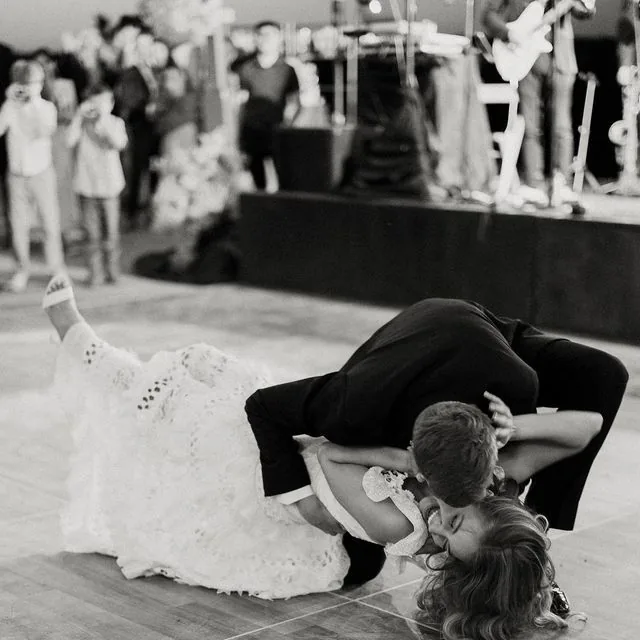
- First dance. Longest uninterrupted emotional moment of the reception.
- Parent dances. Father-daughter, mother-son, or a modern variation. Usually where the tears come out.
- Cultural dance. Hora, baraat, second line, line dances, salsa circle — whatever your heritage runs. These are iconic and photograph incredibly.
- Floor opening. The moment guests rush the floor. Energy spike, easy to miss.
- Last song. The ending — gallery closer.
- The midnight breakout. The unplanned moment that happens in every good wedding. Grandma dancing. The dog joining. The groomsman doing something. Tell your photographer to stay for this.
Step 4. Think about camera distance
Dance-floor photography works when the photographer is close. Not three tables away with a long lens — close. Inside the circle when the hora lifts the chairs. On the floor when the first dance spins. A good photographer will dress and move to blend in.
If you see a wedding gallery where the dance shots all look zoomed-in from the edge of the room, that's a photographer who didn't commit. Hire one who will.
Step 5. Encourage a few intentional small moments
The dance floor isn't all big energy. Some of the best frames come from quiet beats inside the chaos:
- A forehead kiss during a slow song
- A shared laugh mid-spin
- A quick step into the hallway for a breath
- A parent watching from the edge of the room
You don't have to plan these. You just have to not rush off the floor every three minutes.
Step 6. Let the night breathe
The reception is the one part of the wedding you should not over-choreograph. The ceremony can be timed to the minute. The portraits can be shot-listed. The dance floor shouldn't be. Tell the DJ when the anchor moments need to happen, then let the rest flow.
The cultural dances deserve their own planning
If your wedding includes a cultural dance that not every guest will know — a hora, a baraat, a second line, a saree-ceremony entrance — spend a few minutes briefing the photographer specifically on that moment:
- Where does it start?
- Who are the key participants?
- How long does it last?
- What's the iconic shot?
Cultural dances are often the most-shared frames from the whole wedding. They reward preparation.
FAQ
Want us on your dance floor?
We shoot dance-floor coverage as a core part of every wedding — not as an afterthought. If you want a gallery where the reception carries the same weight as the ceremony, start a conversation.
Planning your wedding?
Get a personalized quote from our team