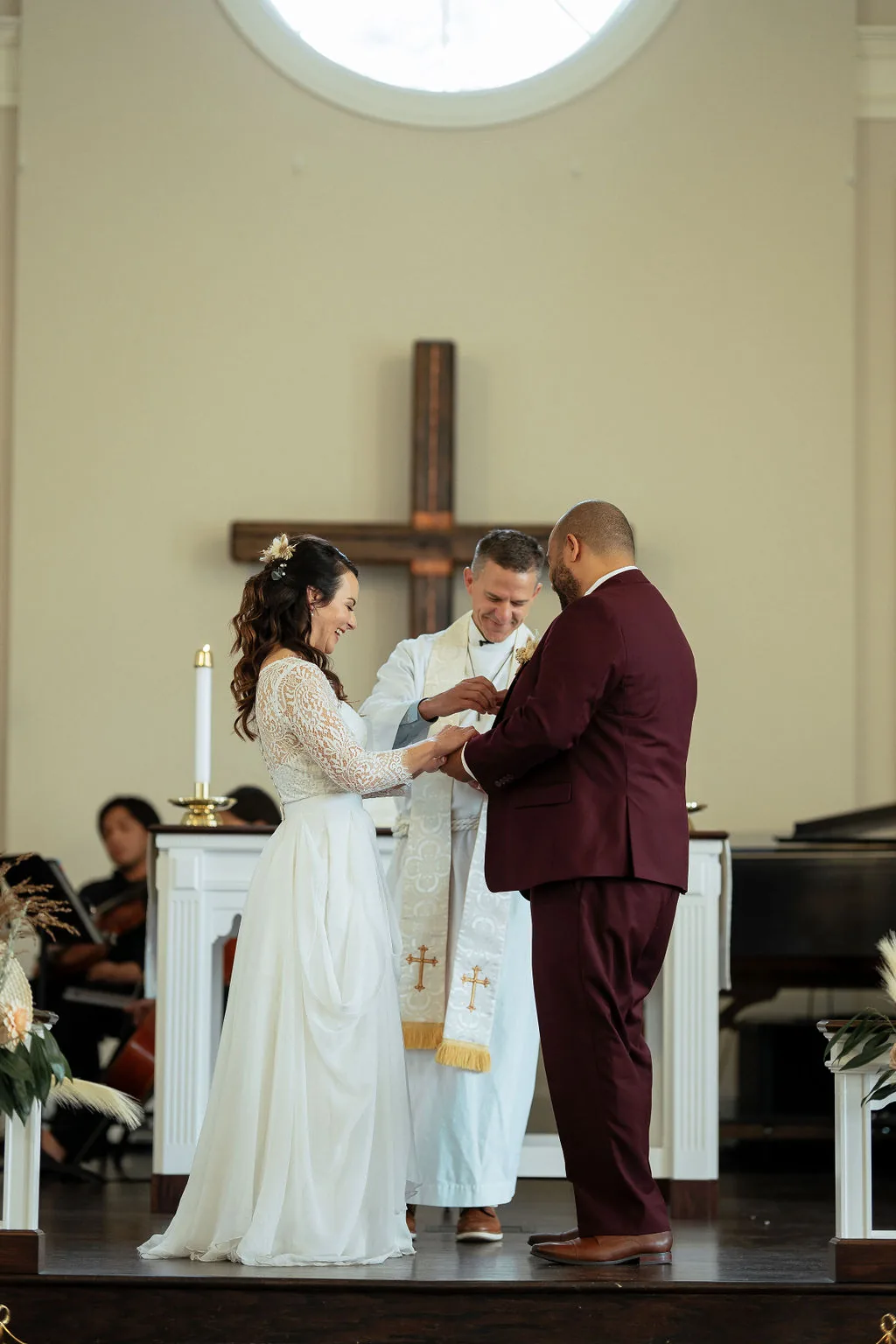
How long should a wedding ceremony actually be?
Aim for 20–30 minutes for a straightforward ceremony with vows, readings, and a ring exchange. Simple ceremonies run 12–15 minutes; elaborate ones with multiple readings or rituals stretch to 45 minutes. Guests' attention spans aren't infinite, shorter is usually better.
The sweet spot is 20–25 minutes, long enough to feel substantial but short enough to keep energy high. A basic structure takes roughly 2 minutes for a processional, 1 minute for opening remarks, 5 minutes for vows, 2 minutes for rings, 2 minutes for readings, 2 minutes for a unity ritual if you want one, and 1 minute for closing and first kiss. Add 3–5 minutes for any personal touches or comments from your officiant. If you include multiple readings, sand ceremonies, or other rituals, you'll hit 35–45 minutes. Your officiant should time the full script during rehearsal so there are no surprises.
Should we write our own vows or use traditional ones?
You can do either, or blend both. Custom vows feel more personal and emotionally meaningful, but traditional vows are beautiful and time-tested. Pick what feels authentic to you and your partner.
Writing your own vows lets you speak directly about your relationship, inside jokes, and promises specific to your dynamic. They're riskier (emotional delivery, the possibility of stumbling over words), but often the moment guests remember most. Traditional vows offer structure and allow you to focus on the moment rather than remembering words. Many couples do a hybrid: traditional framework with one custom line or phrase inserted. If you're writing your own, draft early, read them aloud multiple times to get comfortable, and keep them under 2–3 minutes each, longer feels indulgent to guests.
What should we avoid in a ceremony script?
Avoid offensive humor, inside jokes guests won't understand, religious references that exclude people, generic platitudes, or anything too explicit about your relationship. Keep it warm, inclusive, and genuine, never try too hard to be funny.
Common missteps: an officiant making jokes that land flat or exclude parts of your guest list, a script so packed with inside jokes that half the room is lost, or vows that get too intimate or crude. Stick with humor only if you're naturally funny, most couples aren't when public speaking. Avoid clichés like 'better half' or 'completing me.' Keep religious or spiritual language meaningful to you but accessible to your guests. And remember: your ceremony is 20 minutes, it doesn't need to entertain like a comedy show. Warmth and authenticity matter more than trying too hard.
How do we involve family in the ceremony script without it becoming too long?
Use 1–2 short readings (under 2 minutes each) from family members, a blessing from a parent, or a meaningful poem. Avoid multiple people speaking, it eats time and can feel disjointed.
A single family reading grounds the ceremony in something beyond just you two, and it's a meaningful role for someone important. Pick a 1–2 minute piece: a poem, a short passage, or a blessing. If multiple family members want to participate, they can stand in the wedding party or offer a short blessing or toast at the reception instead. One reading works; three readings slows momentum. Keep the script focused on the couple's voices, officiant, the couple's vows, maybe one family moment. The reception is the place for toasts and family stories.
What's the best way to structure a ceremony script if we're not religious?
Open with your officiant welcoming guests, move into personal vows or words about your relationship, include a meaningful reading or ritual, add the ring exchange, and close with a pronouncement and first kiss. The structure works whether or not there's religion involved.
A secular ceremony follows the same arc as a religious one, just swap out religious language for universal themes like commitment, partnership, and love. Your officiant might open with something like, 'We're gathered to celebrate the commitment between [names].' You exchange vows that speak to your specific relationship. A reading from literature, poetry, or a personal statement works as well as scripture. A unity ritual (handfasting, candle-lighting, planting a tree) adds meaningful symbolism. Close with an exchange of rings, a pronouncement ('I now present you as spouses'), and a kiss. This structure feels substantial and intentional whether it's religious or not.
How do we make sure our officiant says our names correctly during the ceremony?
Give your officiant a written script with both your names spelled out phonetically. Review it together during rehearsal and have them practice saying your names aloud. Correct them gently in the moment if they mispronounce.
This sounds small but it happens, an officiant mispronounces a name during a big moment and it sticks in the photos and video forever. Write your names (both first and last) phonetically in the script ('John-Michael' or 'Rah-heal' for Rachel), then during rehearsal, listen as they say it aloud and confirm it's right. If they're still off, let them know kindly and have them practice a few times. Your officiant wants to get this right, they'll appreciate the guidance. A professional officiant will ask for this ahead of time anyway.