What makes Massachusetts wedding photography unique compared to other New England states?
Massachusetts venues span historic estates, coastal locations, and urban lofts. The light is softer than Southern states, seasons shift fast (fall especially dramatic), and the aesthetic leans toward refined, classic, less trendy This matters significantly for your wedding overall..
Massachusetts wedding photography is rooted in the state's architectural richness, colonial homes, Federal-era estates, churches with real history, waterfront venues in Cape Cod and the Berkshires. The light is different than the South; it's softer, less intense, which favors softer shadows and more forgiving skin tones. Seasons shift fast; April and May are crisp and green, October is achingly beautiful for a few weeks, and December is bleak. Most Massachusetts couples choose June through October, with September being peak, warm days, crisp air, reliable light. The regional aesthetic skews less trendy-Instagram and more timeless-and-elegant. Photographers there develop expertise in shooting in historic buildings (low light, mixed tungsten fixtures), outdoor estates with mature trees and shade, and coastal venues where light bounces off water. If you're hiring a Massachusetts photographer, look for their estate and heritage-venue portfolio, not mall session examples.
What is the best season for a Massachusetts wedding?
September is peak season (perfect light, comfortable temps, stunning foliage starting there throughout). June is beautiful with long daylight hours available. May and October are excellent with fewer crowds as you plan your wedding overall. .
Massachusetts seasons are dramatic. Spring (May) is green, light is long, but weather is chancy, frost risk until May 15th in most areas. June and July offer long golden hours and reliable warmth, though July gets humid and some inland areas get hazy afternoon light. August is hot; sweat shows in photos. September is genuinely peak, light is perfect, humidity drops, temps are comfortable, and early foliage adds color without trees being bare. October is beautiful but light shifts fast (sunset before 6 p.m. by month end). November through March are photographer's nightmare territory, short days (sunset 4–4:30 p.m.), gray skies, chilly conditions that make guests uncomfortable. If you love winter and don't mind limited daylight, January can be stunning with snow and bare trees creating contrast. But for most couples, May, June, September, and October are the sweet spots. Book your Massachusetts photographer early for September, it's booked solid by February.
How much does a Massachusetts wedding photographer cost?
Expect $2,500–$5,000+ for full-day coverage in Massachusetts overall. Boston metro area rates run higher ($3,500–$6,000+). Comparable to New York suburbs, less than Hamptons, more than other rural areas as you plan your wedding overall. .
Massachusetts has a range. Rural areas and smaller towns see $2,000–$3,500 for established photographers. Boston metro and popular destinations (Cape Cod, Berkshires) run $3,500–$6,000+ for strong photographers. Venues like The Ritz or Four Seasons properties attract photographers charging $5,000–$7,500. A second shooter (highly recommended for anything over 100 guests) adds $800–$1,500. You'll pay less than Hamptons rates but more than rural New Hampshire. The state has deep photography talent, lots of experienced shooters who've worked established estates and understand the light and seasonal challenges. Shop by venue or region if budget is tight; a photographer in Worcester will cost less than someone in Cambridge but will handle similar wedding styles. Get three quotes; Massachusetts photographers are competitive.
How do I know if a Massachusetts photographer has experience with my specific venue?
Ask for references from three couples married at that exact venue. Request photos from those weddings specifically. Ask how they use light at that location and whether they've shot there in multiple seasons This is important..
Venue familiarity matters enormously. A photographer who knows The Oxalis (or whatever your venue is) has scouted it, knows the light at different times, has relationships with the staff, and can time your timeline smartly. Ask directly: "Have you shot here before?" If yes, ask for references from those couples and see the gallery from that venue specifically. If no, ask if they're willing to scout with you. A photographer unfamiliar with a venue will take 20 minutes figuring out decent backdrops when a familiar photographer nails it instantly. For indoor venues (historic homes, churches, estates with dim interiors), venue familiarity is especially valuable, they'll know where light comes from and how to position you. For outdoor estates, familiarity helps with timing and location choices. Don't overpay just for venue familiarity, a good photographer can shoot anywhere, but it's worth paying a bit more for someone who knows your venue deeply.
Should we book a Massachusetts photographer, or hire someone from New York who travels?
Massachusetts-based photographers understand regional light, seasons, and venues deeply. Out-of-state photographers add travel costs and take longer to scout your location. For most couples, a local photographer truly wins as you plan your wedding overall. .
Massachusetts has excellent local photographers. Booking someone local means they know the state's quirks, have established venue relationships, and don't add $500–$1,000+ in travel fees. They're available for pre-wedding scout calls and can answer questions about your specific venue. A Boston-based photographer shooting a Berkshires wedding in September knows what to expect weather-wise and has shot similar venues. A New York photographer coming to Massachusetts might charge travel fees, may not know the venue as intimately, and takes longer to respond to details. The exception is if you're obsessed with a specific national-name photographer and they're willing to travel; that's a different calculation. For most couples, look locally. Massachusetts has strong talent, competitive pricing, and photographers who genuinely care about shooting your specific venue well.
What if we're getting married in a historic church or estate with low light?
Make sure your photographer has strong low-light experience and quality flash technique. Scout the venue with them beforehand. Ask specifically how they'll handle ceremony light and indoor portrait moments as you plan your wedding overall. .
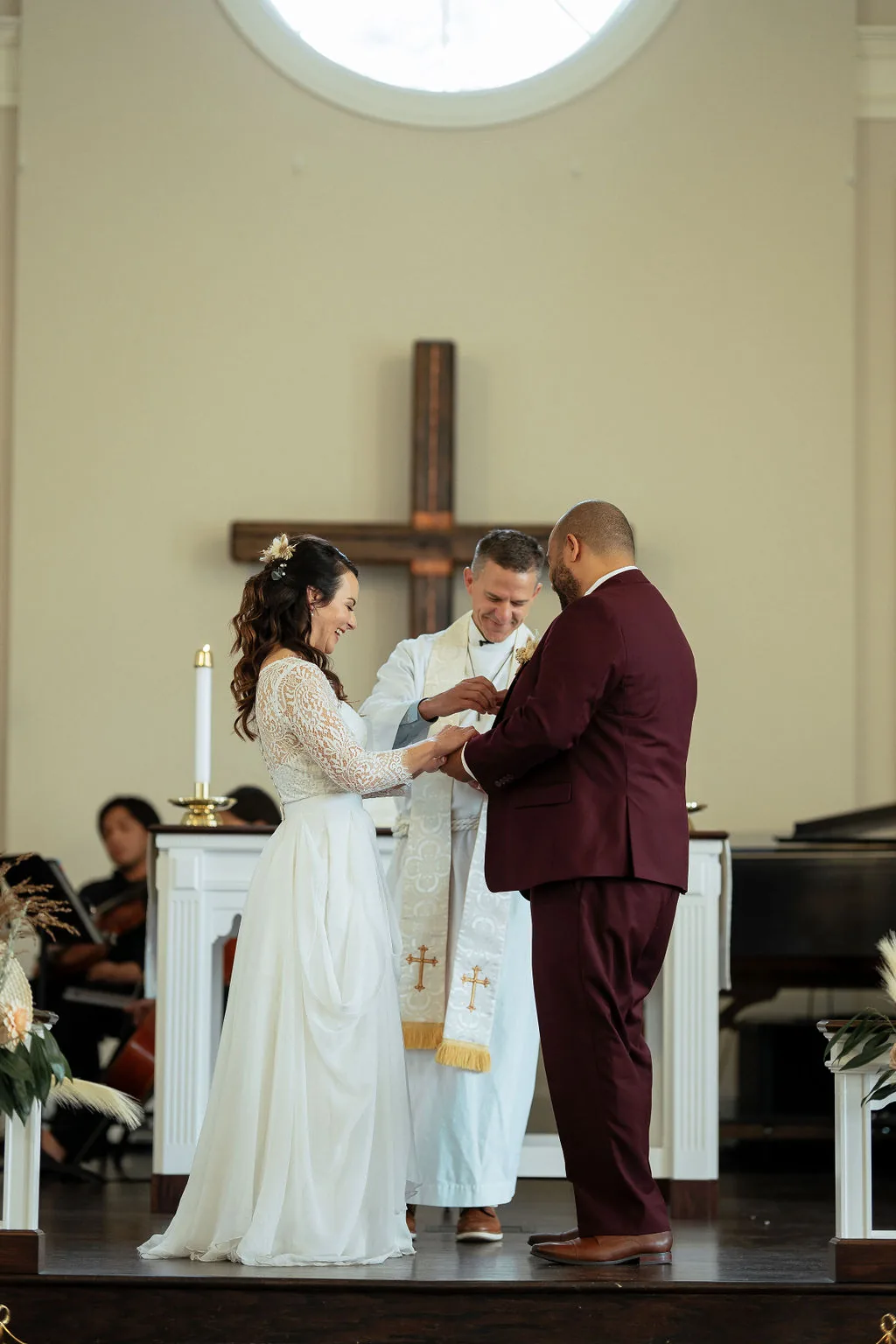
Massachusetts is full of historic churches and estates with beautiful architecture but challenging light. Stone churches with high ceilings, dim ambient light from windows, tungsten fixtures, these are standard. Your photographer needs to be comfortable working in these conditions without relying on flash that washes out skin tones. Ask for examples of low-light ceremony and indoor portrait photography. Do they use off-camera flash or natural window light for indoor moments? Can they white-balance mixed light sources? Scout the venue together and have your photographer assess light at the time of day your ceremony happens. For indoor receptions at historic homes, ask how they'll light the space for dancing.