What should a bride wear in summer if her dress won't keep her cool?
Layers strategically. A lightweight shrug, thin cardigan, or lace overlay over your dress keeps off sun and wind without overheating. Choose breathable fabrics like cotton or linen blends for undergarments and a strapless or sleeveless dress base underneath.
Summer heat (85–95°F) requires different dress choices than fall. Seek dresses with built-in ventilation, thin fabrics, open backs, or sleeveless designs. Skip heavy ballgown skirts that trap heat. A lightweight cover-up for the ceremony (especially outdoor ceremonies in direct sun) lets you remove it for cooler receptions. For undergarments, moisture-wicking strapless bras in breathable fabrics work better than structured ones. Hair up (bun or updo) keeps heat off your neck. Bring emergency powder and blotting papers for touch-ups. We've shot summer weddings where brides stayed visibly cool and comfortable, it's all about smart fabric choices.
What do you wear under a winter wedding dress to stay warm?
Thermal shapewear, wool-blend hosiery, and long sleeves or boleros keep you warm without bulk under your dress. A cathedral-length veil or fur stole draped over your shoulders during the ceremony adds elegance and insulation.
Winter ceremonies (below 45°F) are brutal without planning. Thermal shapewear designed for winter absorbs body heat without visible lines. Wool-blend hosiery (not thin silk) provides real warmth. Sleeves built into your dress are ideal; if your dress is sleeveless, a fitted long-sleeve bolero or lace jacket layers naturally. A cathedral veil, fur shawl, or pashmina over your shoulders during the ceremony keeps you warm and photographs beautifully. Hand muffs were made for this exact problem. For outdoor ceremonies, insist on indoor space for exchanging vows. Shivering doesn't photograph well, it shows as tension in your face.
Is a sleeveless dress okay for a fall wedding, or does it look wrong?
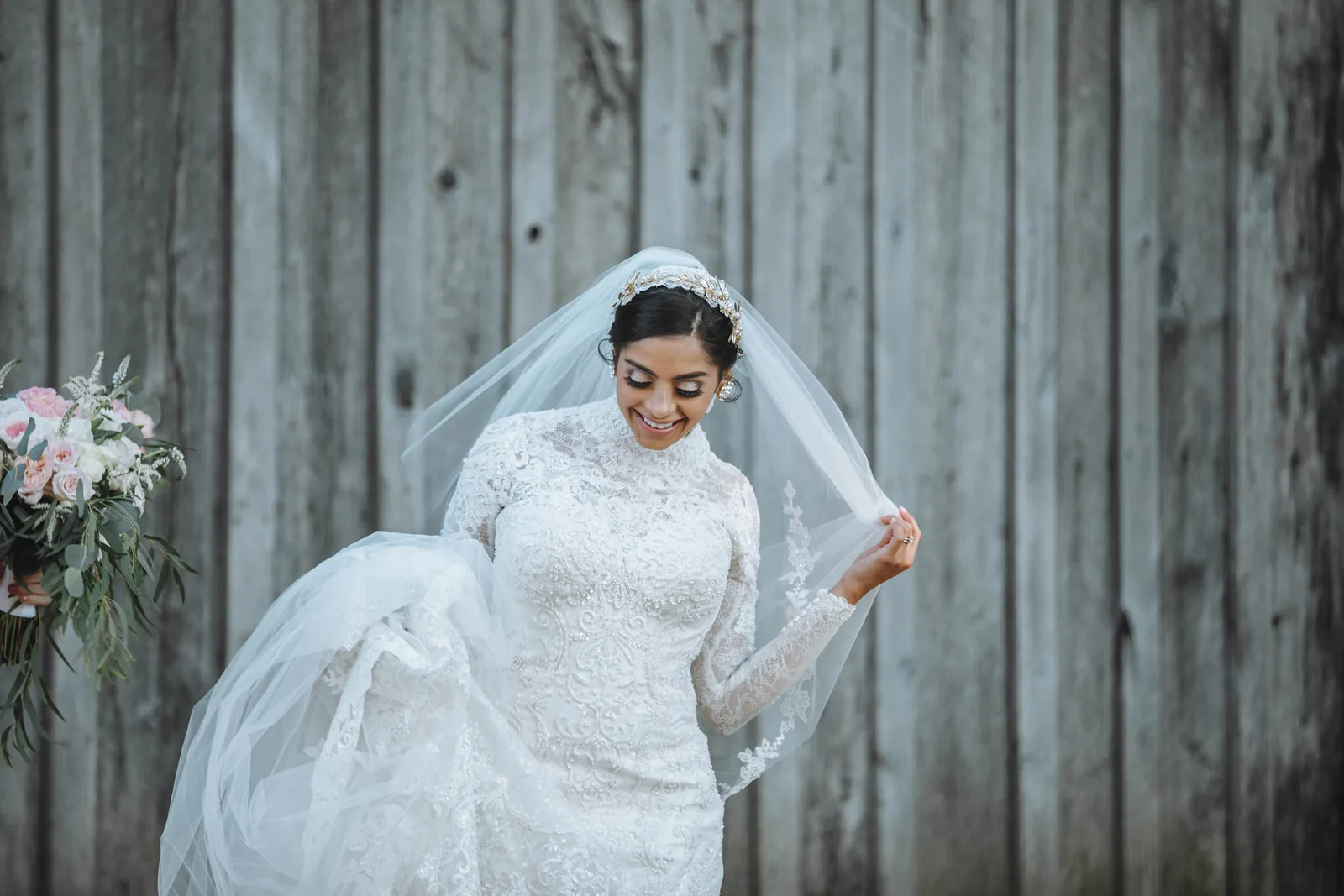
Sleeveless dresses work fine for fall ceremonies held indoors or in mild weather (55–65°F). For outdoor September weddings or cooler October ceremonies, add long sleeves, three-quarter sleeves, or a bolero jacket to stay warm and look seasonally appropriate.
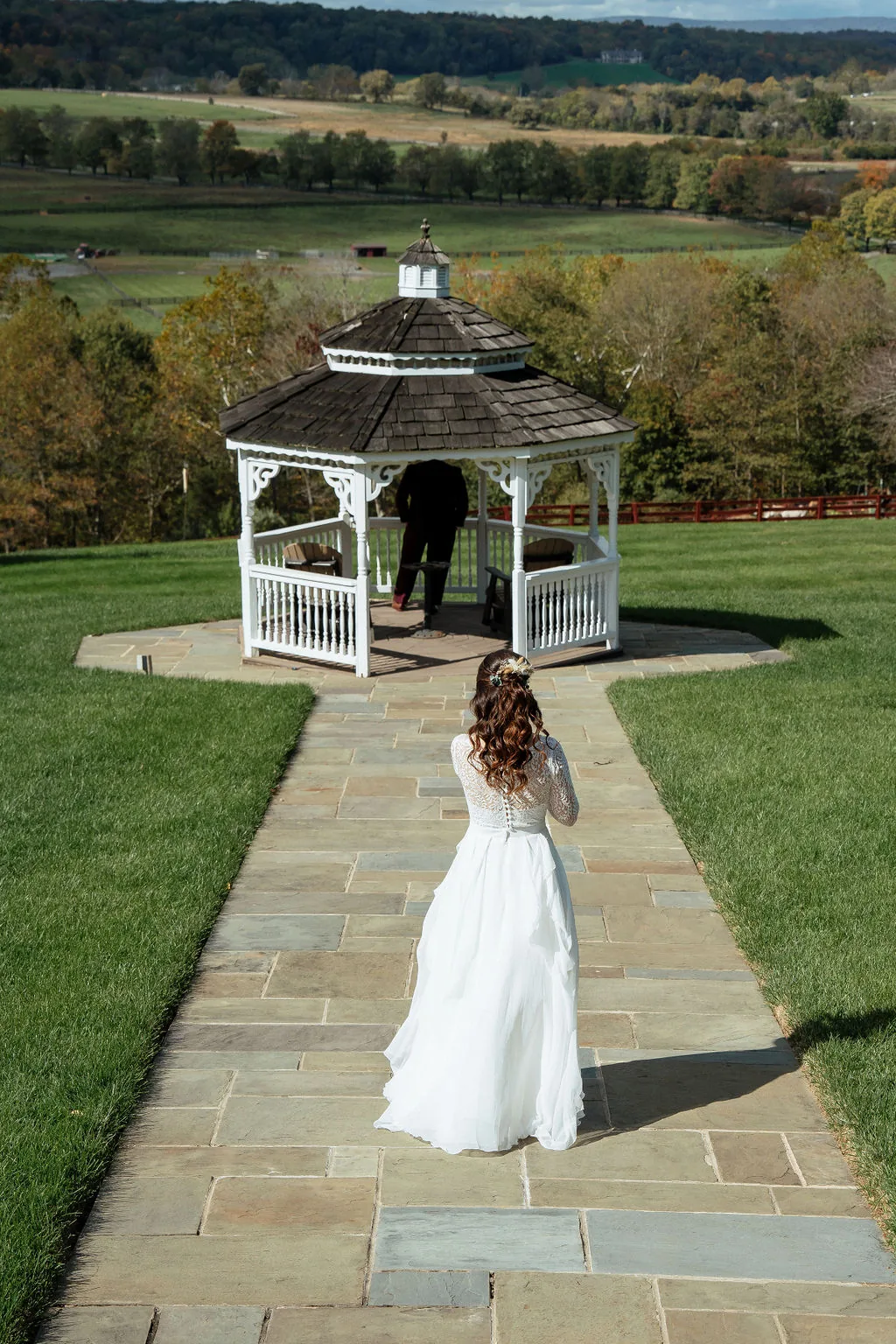
Temperature and timing matter more than the calendar. Early fall (September, 70–75°F) is warm enough for sleeveless; late fall (October–November, 50–60°F) demands sleeves. Sleeveless also photographs slightly more summery, so if you want distinctly autumnal photos, sleeves reinforce that. A lace bolero or cardigan over sleeveless creates an elegant layered look. Long sleeves in lace feel elegant and romantic in fall light. If you're committed to sleeveless, choose fabrics with visual warmth (ivory over white, champagne tones) and consider a ceremony bolero that you remove for reception.
How do seasonal weather changes affect dress fabric choices?
Summer demands lightweight silks and cotton blends that breathe; fall and winter need structured fabrics like dupioni, taffeta, or heavier satins that hold their shape and provide subtle insulation. Spring works with most fabrics since temperatures vary widely.
Thin, flowing fabrics (charmeuse, chiffon) are perfect for summer because they move with breezes and don't trap heat. They look less formal photographically, which suits outdoor summer settings. Heavy, structured fabrics (taffeta, dupioni, heavier satins) photograph with more drama and weight, suiting fall and winter ceremonies indoors. Winter dresses often benefit from subtle texture (beading, lace overlays) that adds visual interest in cooler, dimmer light. Spring is flexible because temperatures swing 40–70°F, so a dress that transitions between seasons (like a lightweight satin that works with layers) is practical.
Should groom and groomsmen adjust their attire for different seasons?
Absolutely. Summer suits should be lightweight (linen blends, tropical wool), with optional vests and jackets removed. Winter requires heavier wool, coats, and structured vests. Fall and spring suit standard wool weights with seasonal color choices.
Grooms in summer heat face real discomfort in heavy wool suits. Lightweight suits in cream, gray, or navy photograph beautifully and keep groomsmen from overheating during long ceremonies. Winter suits need heavier wool (not thin tropical weights) that provide actual warmth and photograph with visual weight. Overcoats or dress coats over suits look sharp and keep everyone warm outdoors. Fall suits in charcoal or navy look seasonally appropriate with minimal adjustment. Color matters too, light suits in summer, darker suits in winter and fall. Fabric weight choices affect not just comfort but also how the suit photographs under different seasonal light.
What colors photograph best for wedding attire in each season?
Summer: cream, white, ivory, champagne, and pastels photograph beautifully in bright sunlight. Fall: ivory, champagne, warm golds, and deep jewel tones. Winter: ivory, white, champagne, and jewel tones look striking. Spring: pastels, ivory, champagne, varies widely by exact timing.
Summer light is bright and slightly harsh, so warm ivory and champagne tones are more flattering than pure white (which can blow out in direct sun). Pastels photograph softly. Fall light is golden and warm, so your dress should complement that warmth, cream, champagne, and deeper ivories look richer. Winter light is cooler and sometimes dimmer, so ivory photographs well and jewel-tone accents add visual interest. Spring is transitional and unpredictable. We've shot hundreds of weddings across seasons, and the couples who looked best were those who matched their dress color to seasonal light, not to what looked good on their screen.