How much should I actually spend on a wedding dress?
There's no single "right" price, wedding dresses range from $300 to $3,500+, and stunning photos come at any budget level. We've shot hundreds of weddings and honestly, your guests won't remember the price tag. What matters is how confident you feel on your wedding day.
Budget dress shopping is more about priority than sacrifice. If a dress matters deeply to you, allocate $800–$1,500 for a quality gown that'll photograph well and last through alterations. If you'd rather spend on your honeymoon or venue, affordable options at $300–$600 deliver excellent photos, the lighting, your smile, and fit are what actually show up in pictures. Many couples surprise themselves by loving a second-choice dress in their preferred price range. The dress is one element of your photos; styling, lighting, and confidence matter far more.
Where do you find affordable wedding dresses without sacrificing quality?
Start with sample sales, trunk shows at local boutiques, and online retailers like BHLDN, Lulus, and Needlework. Don't overlook consignment shops, experienced seamstresses work there, and you're buying a dress that already fit another bride beautifully.
Sample sales happen year-round at bridal shops, ask when yours has them. Trunk shows let you see multiple designers in one afternoon at a single location. Online retailers often post seasonal sales with significant markdowns. Consignment shops in DC and nearby areas carry designer dresses at 40–60% off retail prices. Budget $100–$300 for alterations regardless of where you buy. A well-fitted affordable dress photographs far better than an ill-fitting expensive one. Shopping strategically across these options typically saves $500–$1,500 while maintaining quality.
Can I buy a wedding dress online if I'm on a tight budget?
Yes, but measure yourself carefully and check the return policy first. Online dresses ($300–$700) often need alterations, so budget that cost in. We've shot weddings with online dresses that looked stunning, the fit and confidence matter most.
Online shopping works best when you've tried similar styles in person first, so you know your actual size range. Measure your bust, waist, and length precisely using a friend's help. Order 4–6 months ahead and budget $150–$300 for alterations (hem, bust, sides). Check reviews for fit specifics before purchasing. Some brides order two sizes to be safe, knowing they'll need to alter anyway. The hidden cost isn't the dress itself, it's getting it altered properly by someone experienced in online dress construction.
What are the best ways to save money on a wedding dress?
Buy off-season (January and July are peak sale months), consider a simpler style that's easier to alter, or shop sample sales where dresses cost 30–50% less. Skip overly trendy details you might regret in photos.
Off-season timing saves the most money, stores clear inventory aggressively in January and July. Simpler silhouettes (sheaths, A-lines) require fewer alterations than complex gowns, cutting tailoring costs significantly. Sample sales specifically offer 30–50% discounts because gowns are tried on in-store. Avoid heavily beaded or intricate laces unless that style truly matters to you, they're harder to alter and exponentially more expensive to fix. A timeless dress also photographs better across changing light and years of viewing. These strategies combined often reduce your dress budget by $800–$1,500.
Is a used or consignment wedding dress worth buying?
Absolutely. Consignment dresses are typically worn once, cleaned professionally, and cost 40–60% less than new. We've photographed hundreds of brides in secondhand gowns, nobody can tell, and you're saving real money.
Quality consignment shops inspect dresses carefully and note any stains or damage upfront. Most are in pristine condition since brides wear them only one day. You'll find designer names at fraction prices, sometimes $1,000+ dresses for $400–$600. The advantage: you can try on the exact dress, see exactly how it's constructed, and walk out the same day. Bring the dress to an experienced seamstress for alterations; consignment shops typically have referrals for seamstresses who are familiar with and experienced in working with consignment gowns and their unique needs.
How do I know if a cheap wedding dress will photograph well?
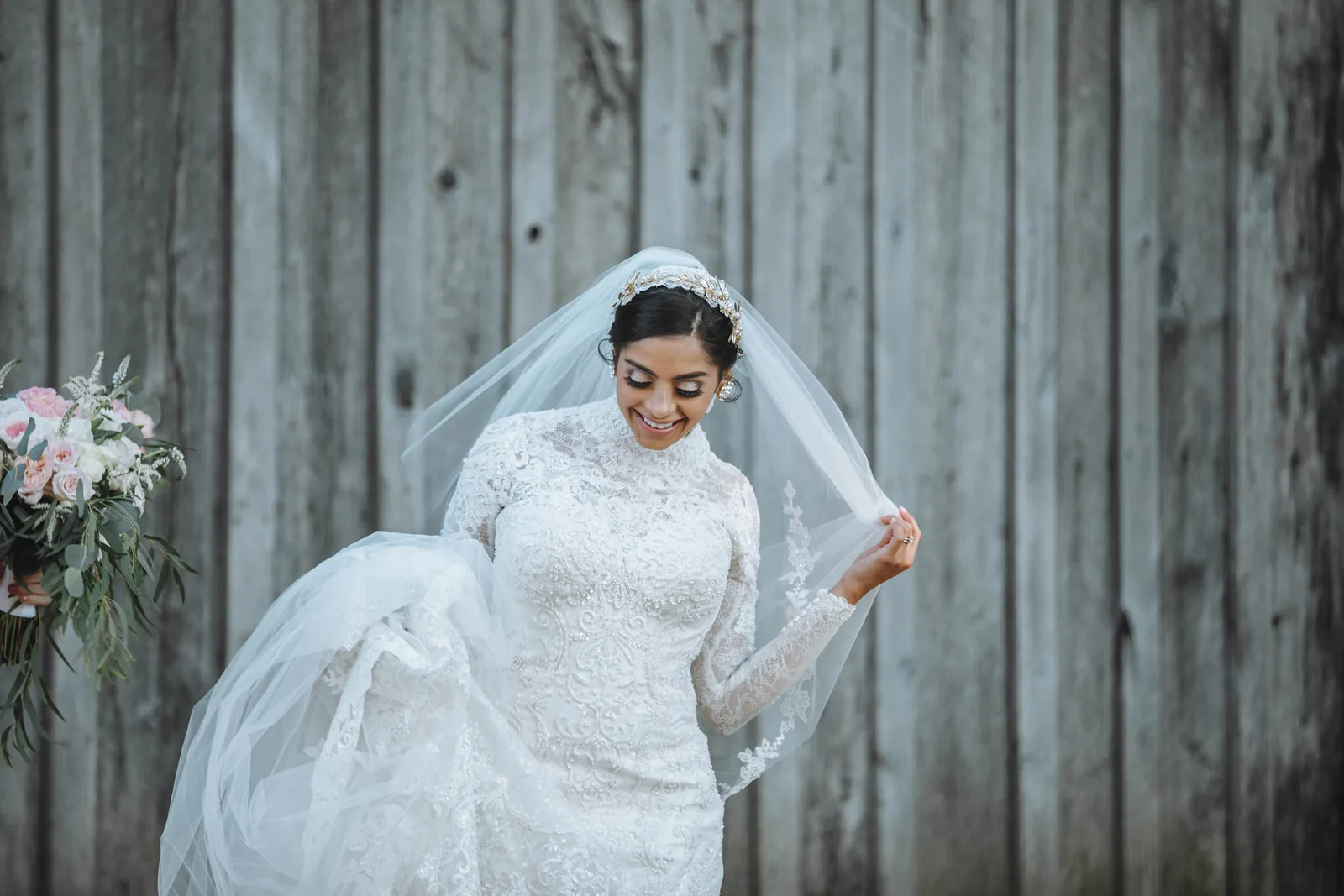
Look for solid construction (straight seams, quality fabric), flattering cut for your body, and proper fit after alterations. The camera sees fit and confidence way before it sees brand names. Well-lit photos rely on shape and silhouette, not price tags.
Inspect seams carefully, they should be straight and secure throughout. Cheaper fabrics (polyester blends) can still photograph beautifully if they drape without wrinkles. What kills photos is poor fit. Your alterations are where the quality investment pays off: a $500 dress altered perfectly beats a $2,000 dress that's too loose or tight. Try on any dress under natural light if possible. In our experience, confidence in your appearance matters infinitely more than the dress's price, and that shows unmistakably in every single photo.