What's the difference between bistro lights, fairy lights, and Edison bulbs, and which looks best for weddings?
Bistro lights are evenly-spaced large bulbs with a vintage café aesthetic, fairy lights are tiny twinkling bulbs for delicate magical feeling, and Edison bulbs are oversized vintage-looking bulbs that make bold statements. Your choice depends on venue, style, and the mood you want.
Bistro lights (also called café lights or market lights) have large bulbs spaced evenly on a cable, creating a classic, balanced look. They're warm, visible from a distance, and work in any venue. Fairy lights are tiny bulbs clustered or spread out, creating a delicate, magical feeling, great for intimate spaces or overhead canopies. Edison bulbs are large, filament-visible bulbs on a cable, giving a very vintage, industrial look. All three come in warm white (yellowish, romantic), cool white (bright, modern), or even color options (rare). Warm white is most flattering. Fairy lights in trees create an enchanted canopy; bistro lights define a space; Edison bulbs make a bold statement.
Do you need special permits to install string lights, and how is the installation actually done?
Always check with your venue first, many require permits or have specific restrictions on what you can install. Most venues either handle installation themselves or recommend their trusted installer. DIY is possible but requires solid structural support points and real electrical safety knowledge.
Your venue's contracts specify what's allowed. Some include string lights in their package; others charge extra. Some venues don't allow DIY installation for liability reasons. Permits vary by location: outdoor residential installations might not need permits, but commercial venues usually do. Your venue coordinator knows the requirements. If you're DIYing, you need secure mounting points (mature trees, structural beams, posts), weatherproof extension cords rated for outdoor use, and ideally an electrician to check your setup. String lights need to be strung fairly taut. Improper installation can fail mid-reception. Most couples hire the venue's recommended installer.
How much does string light installation cost, and is it cheaper to buy lights and hire an installer or rent from a vendor?
Rental typically runs $300–1,000 depending on length and setup complexity, plus installation fees of $200–500. Buying lights yourself ($50–300) and hiring an independent installer can be cheaper for simple setups, but renting guarantees everything works properly.
A basic string light rental (100 feet of bistro or fairy lights) from an event rental company runs $300–600, plus installation ($200–500). More complex setups (covering a large area, Edison bulbs, multiple strands) can cost $1,000+. If you're buying lights and hiring an independent installer, you pay for lights ($50–300) plus labor ($300–800). For simple setups, buying and hiring might be cheaper. For complex installations, rental is often safer because the rental company guarantees they'll work and handles removal. Also consider: you'll own lights afterward if you buy versus returning rentals. If your wedding is evening only, lights might be on 4–6 hours.
When do string lights actually look good? Are they visible during daylight, and when should you turn them on?
String lights look genuinely beautiful after dusk, starting around 20–30 minutes after sunset depending on season. Daytime string lights are barely visible and subtle. Evening string lights transform a space. Timing depends on your wedding date and time.
A key misconception: string lights need darkness to actually look beautiful. Turn them on too early (while there's still daylight), and they're barely visible. The sweet spot is 20–30 minutes after sunset, when the sky has shifted from blue to purple/dark but isn't completely black. That's typically 8–9 p.m. in summer, 5–6 p.m. in winter. Your electrician or venue coordinator can time the on switch (usually automatic on a timer) or your DJ can manage it. If your wedding reception ends at 10 p.m., you get maybe 2–3 hours of full string light beauty in summer. This is one reason outdoor receptions pair string lights with dancing.
What happens if it rains or is windy, and how durable are string lights?
Most outdoor string lights are weather-resistant to light rain but aren't actually designed for downpours or sustained winds. Check your lights' IP rating (weatherproofing level) and confirm your insurance covers outdoor installations. A backup plan is always smart.
Standard string lights are weather-resistant to light rain but aren't designed for downpours. If heavy rain happens, the ceremony might shift indoors, but the lights should still work (unless there's lightning risk). Wind isn't typically a problem for properly installed lights, but gusty winds might sway them or loosen them slightly. Some venues require insurance coverage for outdoor installations. Your event insurance or venue liability policy should cover it. If weather is a genuine concern (frequent thunderstorms, hurricane season), have a backup plan: what if you need to move inside? Will the lights still be visible? An open-sided tent with string lights overhead is a good compromise.
How do string lights affect how your wedding photographs, and what should you tell your photographer?
String lights are beautiful for photos at night, creating warm glowing backgrounds and flattering overhead lighting. Tell your photographer where the lights are so they can position themselves to use them well.
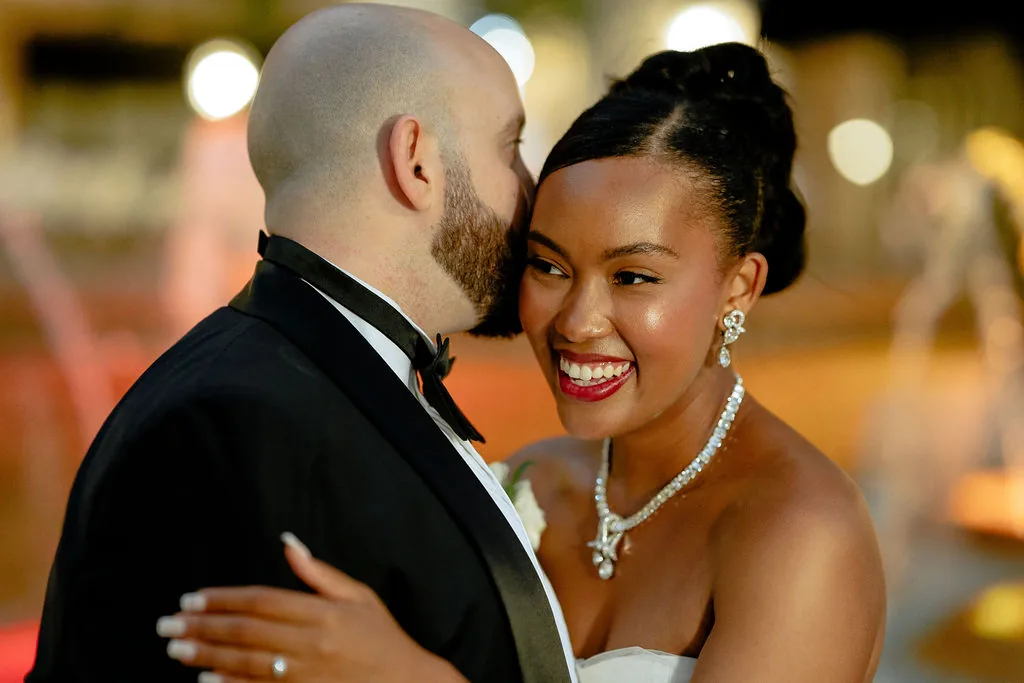
Evening receptions lit by string lights look magical in photos. The warm glow is flattering for skin, and overheads lit by bistro or fairy lights create gorgeous backgrounds. Your photographer can position themselves to use the lights as rim-lighting or as background elements. Tightly-spaced lights create a full bright backdrop; spaced-out lights create a patterned glow. Edison bulbs create bolder light elements. Tell your photographer: "We have string lights overhead in [this area]. We'd love you to use them for dancing photos, cake-cutting, etc." They'll adjust their positioning accordingly. Tight close-ups of you two under string lights, with bokeh in the background, are stunning.