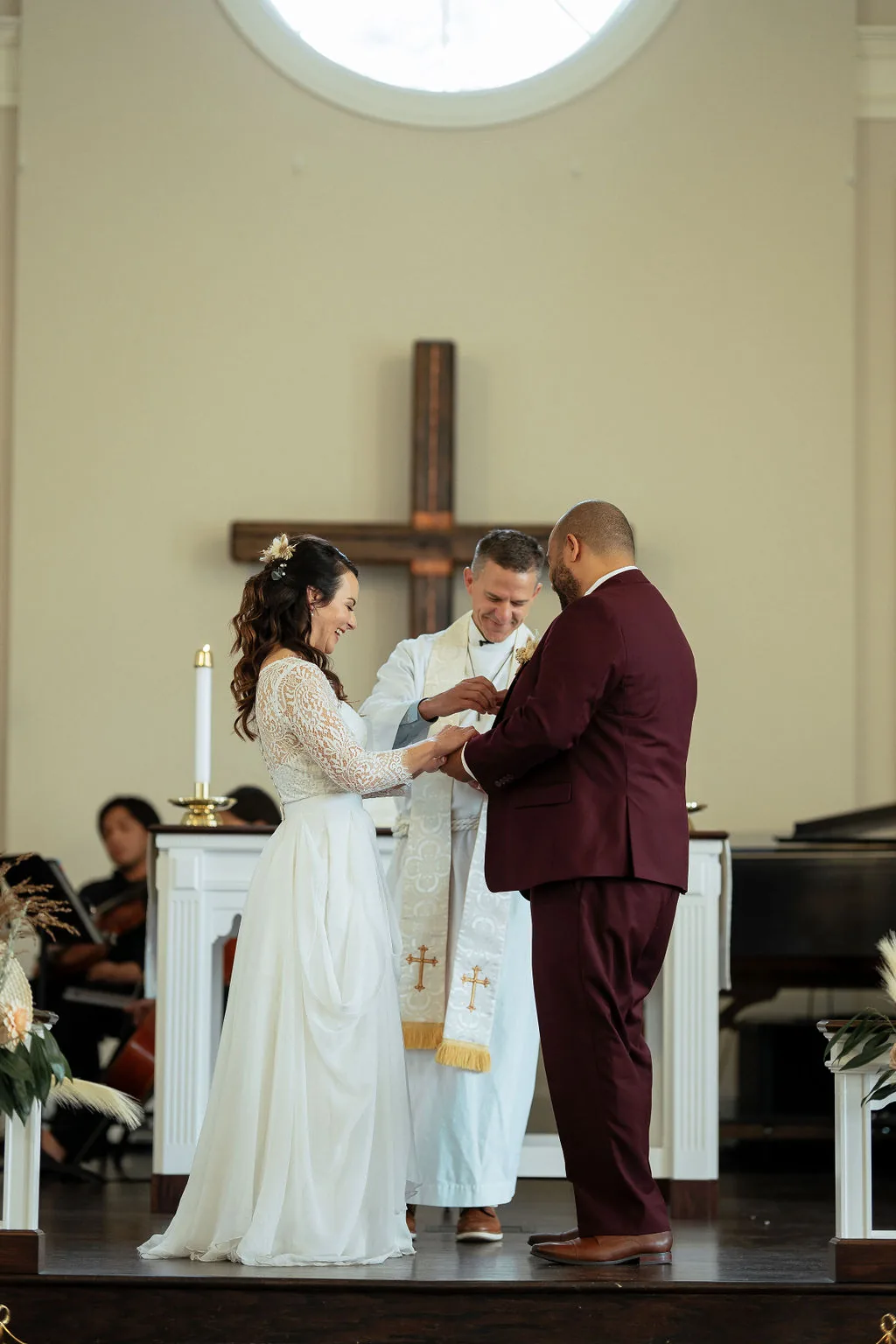
What's the best way to hand off rings so the photographer doesn't miss the moment?
Give rings to your officiant or groomsman well in advance, minutes before you're called to walk down the aisle. The officiant holds them until the moment arrives, then hands them to you or reads a line that signals the photographer. This prevents dropped rings and missed shots.
Timing is critical: rings should be in the officiant's pocket or on a designated pillow at least 30 seconds before you exchange them. Tell your officiant to hand off the rings slowly and deliberately, it gives your photographer time to capture the moment and the groom time to place it smoothly. Some couples have the ring bearer carry a pillow and hand it to the officiant during the procession. Others use a small box or ring saver (a small cushion with a hole that sits on the ring to prevent it from sliding off the pillow). Your photographer will guide you on this during rehearsal.
Is a ring bearer always necessary, or can we skip it?
You don't need a ring bearer. Many modern couples carry their rings themselves, ask an adult to hand them off, or use a small pillow without a bearer. Ring bearers are a tradition, not a requirement. Choose what feels right for your wedding.
Ring bearers add a sweet moment but also introduce a child (or small pet) into a high-stakes part of your ceremony. If you skip it, you might carry rings in a pocket, have a groomsman hold them, or place them on a pillow that your officiant holds. Some couples use a ring saver, a small cushion that prevents rings from sliding, so the ring bearer just needs to walk down the aisle without managing an actual ring. If you do use a bearer, consider picking a confident kid (8+ years old) and have an adult backup plan in case they freeze or get overwhelmed.
What happens if a ring is dropped or lost during the exchange?
Stay calm and keep going. Your officiant usually handles it smoothly, retrieving the ring and continuing. Having a backup ring or a second officiant nearby helps. Most guests won't even notice if you recover quickly.
Ring mishaps happen more often than you'd think. Some officiants are trained to pause, joke, and recover. Others will skip ahead and say something like 'I pronounce you...' while someone grabs the ring from the floor. If a ring truly goes missing, you can revisit the exchange moments later during the recessional or after the ceremony. This is why some couples have a backup ring at home and why your wedding insurance matters. The key is that your officiant doesn't panic, they'll guide the moment naturally and keep the energy moving.
Should we engrave our rings before the wedding?
Yes, order engravings at least 8 weeks before the wedding. Most jewelers take 2–6 weeks. Keep engravings simple (names, dates, or initials only) to avoid typos. Get them done before you ship rings to your wedding location.
Engravings are a nice personal touch, but they take time. Order early from your jeweler and review the proof carefully. Common choices: both names and the date on the inside of each ring, or a short meaningful phrase. Avoid long quotes, they're hard to fit and easy to get wrong. If you're keeping rings in your wedding location (not traveling with them), make sure they're insured and stored in a safe place. Some couples engrave backup rings differently (just a date or initials) so they're easy to tell apart if something goes wrong.
Can we use a family heirloom ring instead of buying new ones?
Absolutely, heirloom rings add emotional meaning and family history to your exchange. Have them professionally appraised and inspected 2–3 months before the wedding to catch any repairs needed. If you're resizing or restyling, leave time for the jeweler's work.
Family rings carry real significance but sometimes need work: sizing, cleaning, or repairs for loose stones. Take heirlooms to a trusted jeweler early, don't wait until two weeks before your wedding. If the ring doesn't fit yet, plan for custom sizing. Some couples use heirlooms as the bride's ring and buy a band for the groom, or incorporate an heirloom diamond into a new setting. Whatever you choose, get it inspected and ready well in advance so you're not stressed about it the week before.
How do we incorporate rings into our ceremony if we're not having an officiant?
You can exchange rings with a witness holding them, incorporate a friend's spoken blessing, or skip a formal exchange and simply put rings on each other. There's no 'right' way, do what feels authentic to you.
Some couples write vows that include a line about the ring ('I give you this ring as a symbol...'), pause dramatically to place it, and let that moment stand without extra words. Others ask a trusted friend or family member to stand nearby and hand off the ring when the moment feels right. Some ceremonies have no formal ring exchange at all, you simply put rings on each other and continue with your vows. The ritual matters, but the exact words and procedure don't have to follow a template.