Can we actually use a museum or gallery for a wedding, or is it just for touring?
Many museums and galleries rent their spaces for private events, though usually with restrictions. Not every museum allows weddings, some prohibit them entirely. Ask directly and expect limitations on hours, décor, music, and alcohol.
Some art museums, natural history museums, and independent galleries actively rent event spaces for private occasions and have entire event departments. Others prohibit private events to protect the art and maintain the space's integrity. When you're researching, call the museum's events or private function department (not the front desk) to ask whether weddings are allowed and what the requirements are. Museums that do host events often have strict policies: limited operating hours (events must end by 9 PM), no dancing or loud music, restrictions on food and alcohol, roped-off exhibit areas, and required insurance. The trade-off is stunning, sophisticated backdrops that feel special and exclusive.
What restrictions do museums typically have on decorations?
Most museums prohibit tape, tacks, or anything that damages walls or art. Some restrict the number of florals or require you to use their approved décor partners. Confirm what you can and cannot do in writing before booking.
Museums protect their collections and architecture, so décor rules are strict. No tape, tacks, or adhesives on walls. No attaching anything to art or displays. Florals might be restricted (some museums require freestanding arrangements only, not garlands draped on walls). Many museums mandate you use approved vendors for any setup or decoration. You might be able to add subtle linens, candles, and arrangements, but not dramatic installations. Get a detailed written list of permitted décor from the museum. Some require you to submit a floral/décor plan for approval weeks ahead. This sounds restrictive, but museums are often so architecturally stunning that minimal décor is actually fine.
Can we have a real dinner reception at a museum, or are we limited to cocktail events?
Some museums allow full sit-down receptions; others permit only cocktail receptions or require you to use their catering. Ask about kitchen facilities and whether outside catering is allowed. Catering logistics are often more complex at museums.
Museums that rent their spaces typically have professional kitchens and in-house catering teams who can execute full receptions. Others have limited kitchen facilities and require you to use an approved caterer. Some restrict events to cocktail-hour-only to reduce setup complexity and time constraints. When you contact the museum, ask: Can we do a seated dinner reception? What catering options do we have (in-house, outside approved vendors, outside any vendor)? How much kitchen access does your caterer get? What's the timing window (when can staff arrive, when must we be out)? These logistics are often more complex than a traditional venue, so get clarity early.
How do we handle photography at a museum with artwork displayed?
Most museums restrict flash photography (it damages art) and may forbid photography in certain galleries. Confirm with your photographer ahead of time which areas are off-limits and where flash is allowed. Plan portraits in non-art areas.
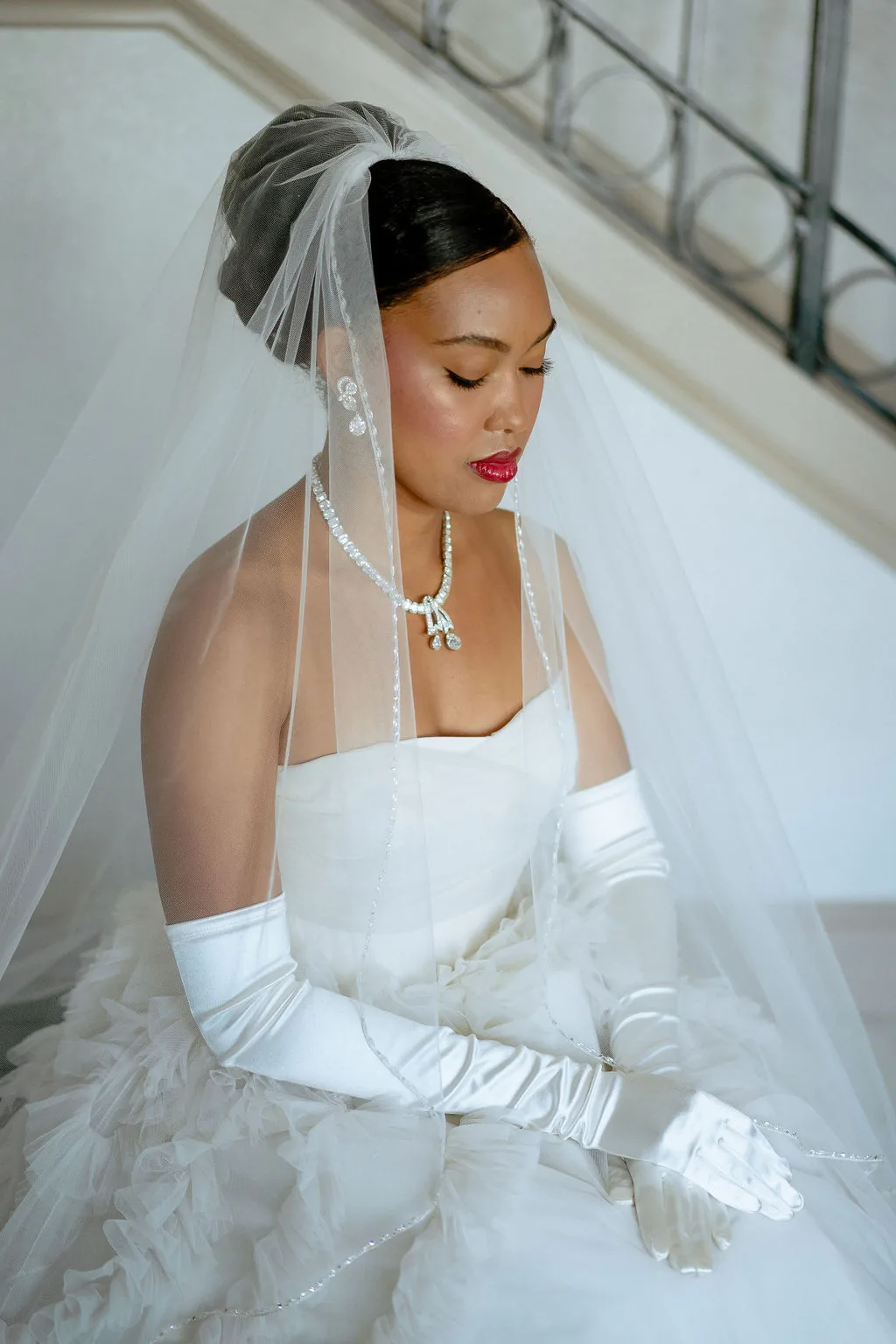
Museum photography rules vary. Some prohibit flash entirely to protect artwork and lighting; others allow ambient light photography only. Some rope off exhibit areas during private events so your photographer can't wander. Ask the museum's events coordinator for a photography policy in writing and share it with your photographer. Most museums allow professional photographers in designated areas, often the museum's entrance, event space, or a specific gallery. Your photographer might not be able to use the beautiful art gallery you wanted as a backdrop if it's off-limits or if flash isn't allowed. Plan couple portraits in permitted areas. Some museums have stunning architectural elements (staircases, atriums) separate from art galleries that work beautifully for photos.
What's the price range for museum and gallery events?
Museum rental fees typically range $2,000–$8,000+ depending on the museum's prestige, location, and which spaces you're renting. Smaller independent galleries run $1,000–$3,000. Most require in-house catering, which adds significantly to overall cost.
A small or regional museum might charge $2,000–$4,000 for a private event. Well-known or prestigious museums in major cities charge $5,000–$10,000+ just for the rental. Catering through the museum is usually required or strongly encouraged, and it's typically more expensive than outside vendors, figure $50–$100+ per person. You're also paying for the prestige, architecture, and curatorial experience. If budget is tight, smaller independent art galleries or less-famous museums offer similar sophistication at lower cost. Some universities also rent their museums for private events at competitive rates. Get a full estimate from your top choice that includes rental, catering, bar, and any required insurance or staffing so there are no surprises.
Will the artwork actually be on display during our wedding?
Sometimes. Most museums can rope off or close certain exhibit areas so your event doesn't interfere with the museum's regular operations or vice versa. Ask whether exhibits will be on display during your event, it might change the ambiance.
Some private event spaces within museums are separate from active galleries, no art displayed, no public traffic, full control of the space. Others are working galleries where the museum continues to operate exhibits around your event. This affects the feel: an active gallery with art feels cultural and special; a closed gallery feels exclusive but might be less visually interesting without the art. During your venue visit, ask what the space looks like during a private event. Will exhibits be on display? Will the museum be open to the public, or is the entire space private? Will certain areas be roped off? Understanding the actual setup during your date helps you visualize the space and make better décor decisions.