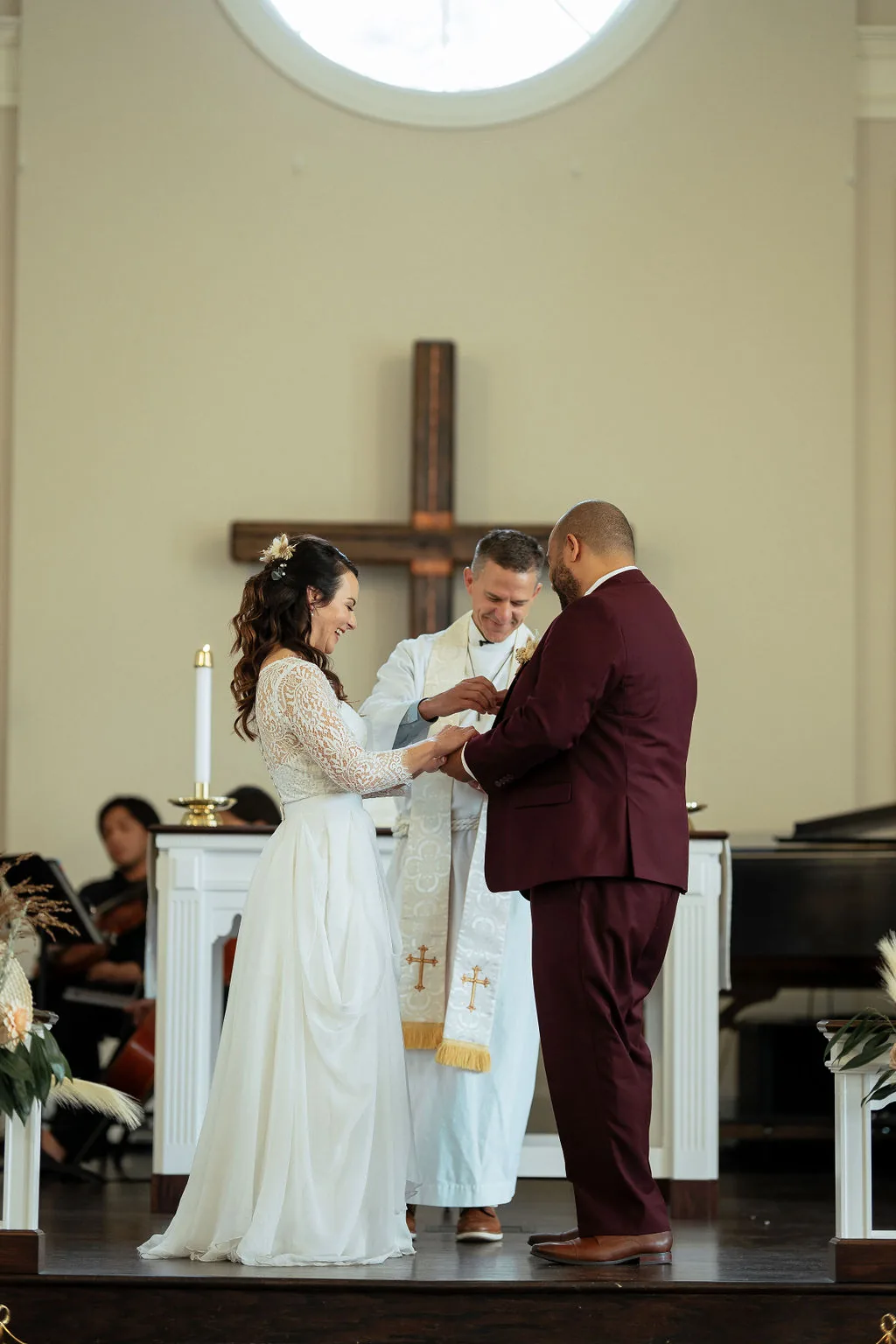
What's the biggest lighting challenge when photographing a wedding ceremony indoors?
Low ambient light, mixed color temperatures (tungsten fixtures plus windows), and harsh shadows are main challenges. Your photographer needs strong flash technique, natural-light positioning, and ability to white-balance mixed light well This matters significantly for your wedding overall..
Indoor ceremonies have three main light problems: (1) Not enough light, cathedrals, historic churches, estate interiors are often dim. (2) Mixed sources, stained glass windows, candles, overhead tungsten fixtures, natural window light all blend. (3) Unflattering shadows, direct overhead fixtures create raccoon-eye shadows, or side-lit windows create harsh profiles. A skilled photographer addresses these with off-camera flash (bounced, never direct), strategic window positioning, and understanding how to white-balance mixed sources so skin looks warm but not orange. They should scout the venue beforehand, understand light direction at your ceremony time, and have a positioning plan (where do they stand to use available light best?). Some photographers use ambient-only technique (no flash) with high ISO and trust available light; others use careful flash work. Either way, they need proven low-light experience. Ask for examples of indoor ceremony photography, check if faces are exposed clearly, shadows are managed, and overall light feels natural not artificial.
Should we have additional lighting installed at an indoor venue?
Ask your photographer first before planning additional lighting. Some venues allow external lighting; others don't (historic sites, churches). Professional lighting rig can improve results significantly as you plan your wedding overall. This matters significantly for your wedding overall..
Venue lighting is often non-negotiable (churches and historic sites strictly prohibit external lighting; some banquet halls allow it). If your venue permits and your photographer recommends it, professional uplighting or added fill light can improve results, especially for receptions. This isn't standard, most photographers work with available light. Ask your photographer: "Should we add lighting to improve photos?" If yes, they often have recommendations or vendor partnerships. Lighting rental runs $800–$2,500 depending on complexity. For receptions with dancing in a dim ballroom, subtle added light can help. Discuss with your photographer upfront.
What type of indoor venue has the best light for wedding photography?
Venues with large windows, high ceilings, and minimal tungsten overhead fixtures are ideal. Historic homes with good window placement, hotel atriums with skylights, banquet halls with full-wall windows work well This matters significantly for your wedding overall..
Light quality varies dramatically by indoor venue type. Historic homes with large windows facing north or east (soft, indirect light) are beautiful. Modern loft spaces with floor-to-ceiling windows and minimal dark decor photograph well. Church interiors with high ceilings and tall windows (even if dim, there's nice directional light). Hotel atriums with skylights or wall windows give light from above and sides. Conference rooms and basement ballrooms with no windows and flat overhead tungsten lighting are the hardest. If you're choosing a venue, ask your photographer to scout it beforehand and assess light quality. A photographer can help you understand a space's photographic potential.
How should we position getting-ready photos indoors?
Use natural window light whenever possible. Position closer to windows; avoid being backlit by windows (which silhouettes you). If the room is dim, use bounce as you plan your wedding overall. This matters significantly for your wedding overall..
Use natural window light whenever possible. Position yourself (and your photographer) near the window to use natural light. Sit facing into the room with light coming from the side (flattering direction). Avoid sitting with the window directly behind you (you'll be silhouetted). If the room is very dim and far from windows, your photographer should use off-camera bounce flash (bounced off ceiling or a reflector, never direct at you) to add light. Direct flash looks harsh; bounced light looks soft. Some photographers use reflectors and high ISO instead. Either way, they should position you in the brightest corner of the room available.
Do we need a microphone or sound system for our ceremony if we're indoors?
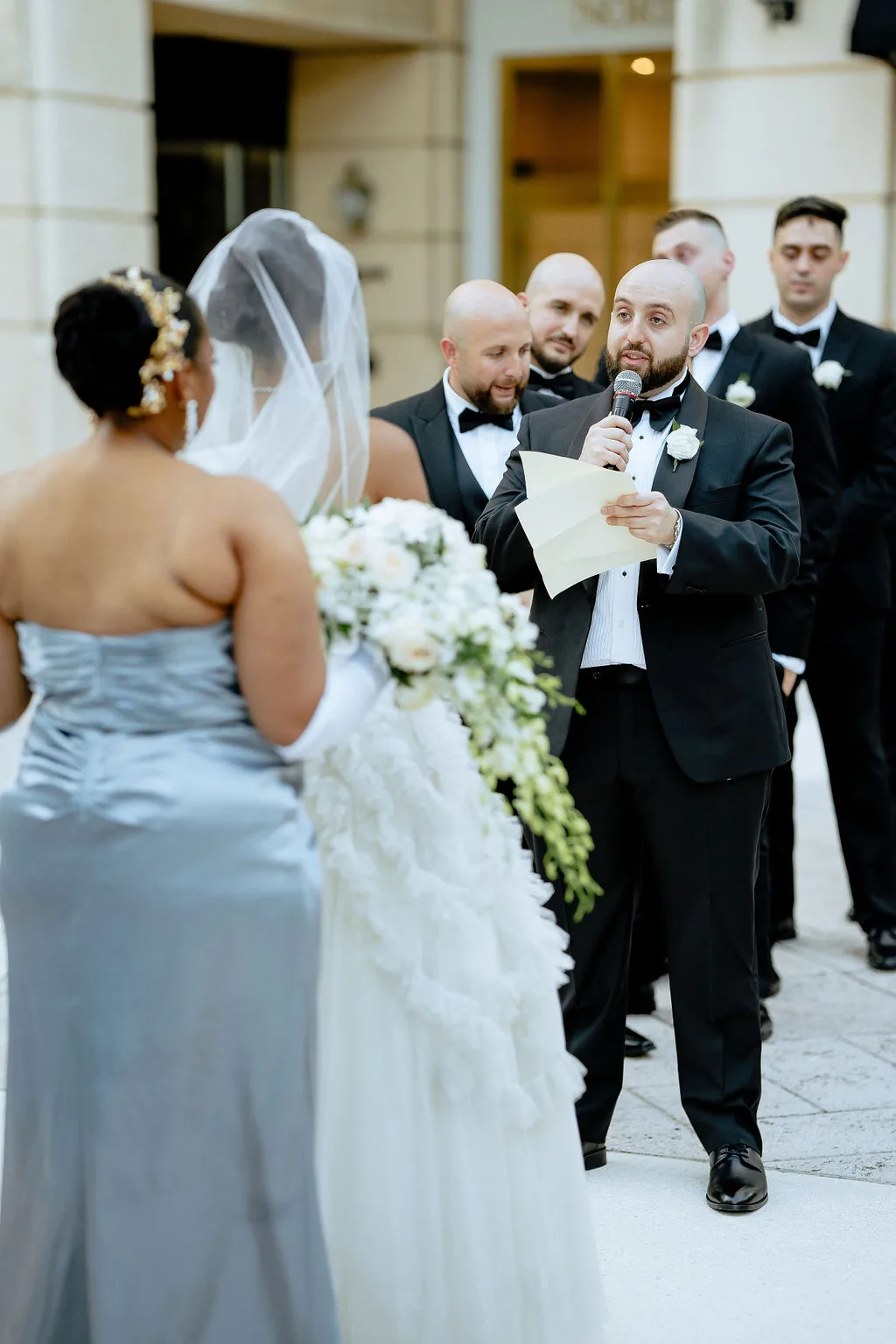
Yes, especially for larger indoor ceremonies. A microphone or lapel mic guarantees guests hear vows. For photography, position the mic stand or lapel mic carefully as you plan your wedding overall. This matters significantly for your wedding overall..
Indoor spaces without good acoustics need amplification so guests hear vows and readings. Large stone churches and ballrooms especially. A simple lapel mic on your officiant is invisible and effective. A standing mic at a lectern is more visible in photos. Position it to the side of your ceremony space so your photographer can shoot vows without the mic stand in frame. If using a lapel mic, position it under clothing or off-center so it's not distracting visually. Your photographer should know about the mic setup so they can position accordingly. Audio quality isn't your photographer's job, but mic placement affects the visual composition of ceremony photos. Discuss placement with both your officiant and photographer beforehand. A lapel mic is almost always less visually intrusive than a standing mic, which matters if you want clean ceremony photos.
How do we avoid that flat, washed-out indoor lighting look in our photos?
Position yourself toward windows if possible, use bounce flash strategically (not direct), and ask your photographer about their editing approach. High-quality white-balance matters significantly as you plan your wedding overall. This matters significantly for your wedding overall..
That flat, washed-out indoor look happens when there's minimal directional light and overhead fluorescent fixtures are the main light source. Avoid this by: (1) Positioning toward any available window or soft natural light. (2) Using reflectors or bounce flash to add dimension. (3) Choosing a photographer skilled at color correction, they understand how to white-balance mixed tungsten and natural sources. Ask to see examples of their indoor ceremony and reception photography specifically. Do the images have depth and dimension, or do they look flat? A strong photographer makes indoor venues look rich and dimensional even when light is challenging.