The Best Winter Wedding Dress Trends of 2024
Winter wedding dresses have changed more in the last two years than in the decade before. The strappy summer silhouettes that dominated Pinterest through the 2010s have given way to something heavier, more structured, and — honestly — better-looking in winter light.
These are the trends we're actually seeing at the altar, not the ones magazines predicted.
What's changing
Winter brides used to hide the season. Now they're leaning into it. The dress is heavier. The fabric is texturally richer. The accessories are functional instead of decorative — capes that actually keep you warm, not just draped-over-the-shoulder shrugs.
The shift is real enough that bridal designers who used to make one winter-adjacent gown per collection now lead with them. Watch any current bridal runway — the opening looks are almost always the structured, high-neck, long-sleeve winter silhouettes.
High necklines and long sleeves
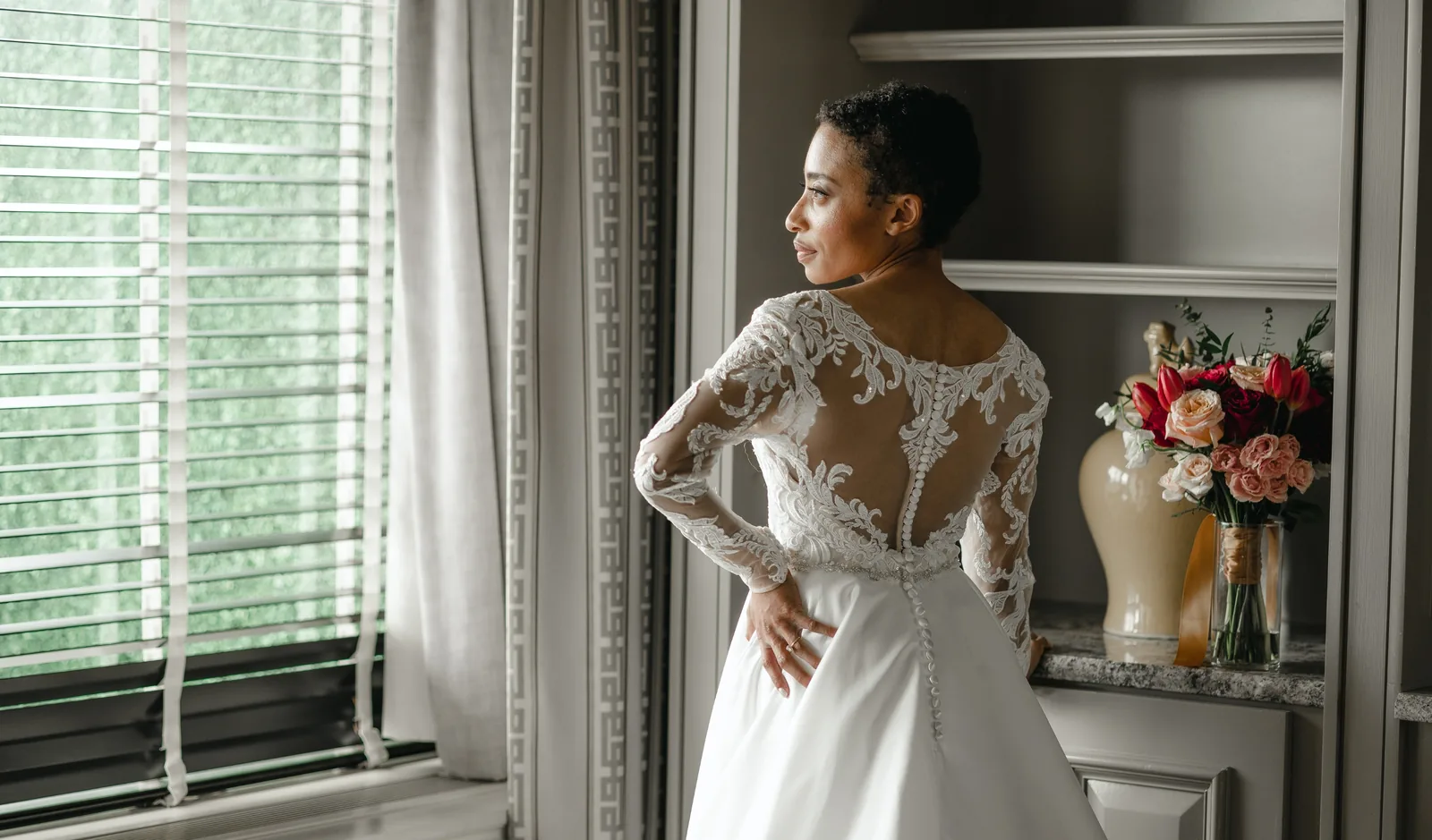
This is the biggest single trend. Mock necks, crew necks, and modest scoops paired with full-length sleeves.
It works in winter for two reasons. First, it's genuinely warmer in drafty venues — which is most venues in December and January. Second, it photographs with more shape. A strapless summer dress reads flat under winter's overcast light; a structured high-neck catches shadow and looks dimensional.
Intricate details — lace, beadwork, embroidery
Smooth satin looks beautiful in bright sun. In winter's softer light, it can go flat. Heavy lace, beading, and embroidered overlays do the opposite — they catch the available light and create depth the fabric alone couldn't.
If you're choosing between a clean satin sheath and a lace-covered version of the same silhouette for a December wedding, the lace will almost always photograph better. This isn't taste; it's physics.
Dramatic sleeves — the 2024 signature
Not just long sleeves. Dramatic sleeves. Bishop sleeves, fitted with a cuff. Bell sleeves that fall past the wrist. Puff shoulders with a fitted forearm. The silhouette from the elbow up is where the design energy went this year.
The flip side: dramatic sleeves need room. Narrow aisles, seated ceremonies in tight venues, and anyone hugging you during the receiving line all interact with the fabric. If your ceremony is in a packed ballroom, factor the sleeve width into the dress fitting.
The one accessory worth the investment
A fur or faux-fur cape. It's the only outerwear we see brides genuinely using and loving — not posing with for one photo then ditching.
It photographs beautifully on an outdoor portrait walk. It keeps you warm enough to spend 10 unrushed minutes outside at golden hour instead of 90 rushed seconds. And it's fully removable for the ceremony and reception, so none of your interior photos are affected by it.
Faux versions photograph identically to real ones; there's no reason to go real unless you inherited something.
How we do it — photographing winter gowns
Winter gowns want diffused light, not bright sun. That's convenient, because diffused light is what winter mostly gives you. We shoot indoor bridal portraits near north-facing windows when possible. For outdoor work, we look for covered porches, overhangs, or any architectural feature that turns harsh snow-reflection into softer overhead light.
Dark details — navy velvet, black trim, heavy embroidery — need more exposure than the dress itself. We meter for the dress and let the dark details fall naturally; trying to hold detail in both at once gives you washed-out whites.
Frequently asked questions
Winter dresses finally got a decade that suits them.
Planning your wedding?
Get a personalized quote from our team